Articles | Volume 32, issue 1
https://doi.org/10.5194/ejm-32-89-2020
© Author(s) 2020. This work is distributed under
the Creative Commons Attribution 4.0 License.
the Creative Commons Attribution 4.0 License.
https://doi.org/10.5194/ejm-32-89-2020
© Author(s) 2020. This work is distributed under
the Creative Commons Attribution 4.0 License.
the Creative Commons Attribution 4.0 License.
Research article
| 
23 Jan 2020
Research article |
| 23 Jan 2020
| 23 Jan 2020
Halilsarpite, a new arsenate analogue of walentaite, from the Oumlil mine, Bou Azzer district, Morocco
Tomas Husdal
Natural History Museum, University of Oslo, P.O. Box 1172, Blindern, 0318 Oslo, Norway
Ian E. Grey
CORRESPONDING AUTHOR
CSIRO Mineral Resources, Private Bag 10, Clayton South, Victoria 3169, Australia
Henrik Friis
Natural History Museum, University of Oslo, P.O. Box 1172, Blindern, 0318 Oslo, Norway
Fabrice Dal Bo
Natural History Museum, University of Oslo, P.O. Box 1172, Blindern, 0318 Oslo, Norway
Anthony R. Kampf
Mineral Sciences Department, Natural History Museum of Los Angeles
County, 900 Exposition Boulevard, Los Angeles, CA 90007, USA
Colin M. MacRae
CSIRO Mineral Resources, Private Bag 10, Clayton South, Victoria 3169, Australia
W. Gus Mumme
CSIRO Mineral Resources, Private Bag 10, Clayton South, Victoria 3169, Australia
Ole-Thorstein Ljøstad
Elgveien 30, 2406 Elverum, Norway
Finlay Shanks
School of Chemistry, Monash University, Clayton, Victoria 3800,
Australia
Related authors
No articles found.
Inna Lykova, Ralph Rowe, Glenn Poirier, Henrik Friis, Kelsie Ojaste, and Stephanie Barnes
Eur. J. Mineral., 38, 419–429, https://doi.org/10.5194/ejm-38-419-2026, https://doi.org/10.5194/ejm-38-419-2026, 2026
Short summary
Short summary
The paper describes bainbridgeite-(NdCe), Na2Ba2NdCe(CO3)6∙3H2O, from the famous Mont Saint-Hilaire complex, Quebec, Canada, the first known mineral with Ce and Nd atoms preferentially concentrated at two different sites of the structure
Anthony R. Kampf, Joy Désor, and Chi Ma
Eur. J. Mineral., 38, 209–216, https://doi.org/10.5194/ejm-38-209-2026, https://doi.org/10.5194/ejm-38-209-2026, 2026
Short summary
Short summary
This paper describes the new mineral plumbogottlobite from the Glücksstern mine, Gottlob Hill, Friedrichroda, Gotha District, Thuringia, Germany. It occurs as thick, square, orange-brown, tabular crystals up to about 0.2 mm in diameter. The mineral is the lead (Pb) analogue of the mineral gottlobite, which occurs at the same locality and is identical in appearance. Plumbogottlobite is a late-stage, low-temperature hydrothermal mineral occurring on baryte and hausmannite.

Ian Edward Grey
Eur. J. Mineral., 37, 819–828, https://doi.org/10.5194/ejm-37-819-2025, https://doi.org/10.5194/ejm-37-819-2025, 2025
Short summary
Short summary
The paper describes an analysis of the crystal structures of the minerals of the triphylite, alluaudite, zwieselite, and graftonite groups, from the perspective of the ubiquitous presence of 2-polyhedra-wide ribbons formed from corner linking of M2(PO4)2Φ8 cyclic tetramers. The study helps to unify the crystal chemistry of the four most dominant primary Fe and Mn phosphate mineral groups in granitic pegmatites.
Ian E. Grey, Christian Rewitzer, Rupert Hochleitner, Anthony R. Kampf, Stephanie Boer, William G. Mumme, Nicholas C. Wilson, and Cameron J. Davidson
Eur. J. Mineral., 37, 169–179, https://doi.org/10.5194/ejm-37-169-2025, https://doi.org/10.5194/ejm-37-169-2025, 2025
Short summary
Short summary
Fluormacraeite is the first type mineral to be described from the Plößberg pegmatite, Upper Palatinate, Bavaria, Germany. The crystal structure of fluormacraeite has been refined using synchrotron data that has resolved a small monoclinic distortion due to ordering of K and H2O. The general crystal–chemical properties of the monoclinic paulkerrite-group minerals are discussed.
Anthony R. Kampf, Joy Désor, and Chi Ma
Eur. J. Mineral., 36, 873–878, https://doi.org/10.5194/ejm-36-873-2024, https://doi.org/10.5194/ejm-36-873-2024, 2024
Short summary
Short summary
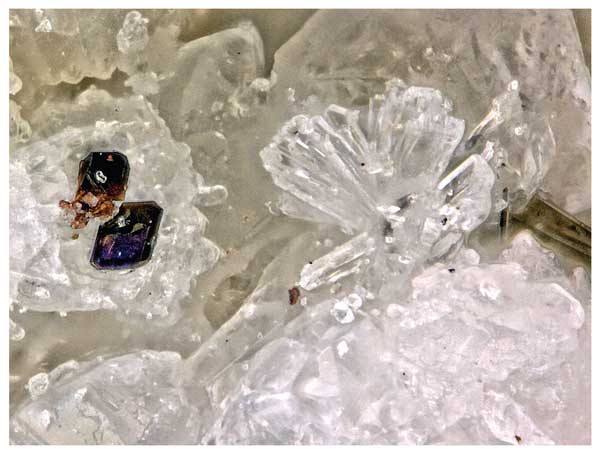
Karlseifertite is a new member of the dussertite group of the alunite supergroup from Tsumeb, Namibia. It is the first member of the dussertite group to be described based upon valency-imposed double site occupancy in the octahedrally coordinated cation site. It is also the first member of the alunite supergroup containing essential Ge.
Anthony R. Kampf, Gerhard Möhn, Chi Ma, George R. Rossman, Joy Désor, and Yunbin Guan
Eur. J. Mineral., 36, 605–614, https://doi.org/10.5194/ejm-36-605-2024, https://doi.org/10.5194/ejm-36-605-2024, 2024
Short summary
Short summary
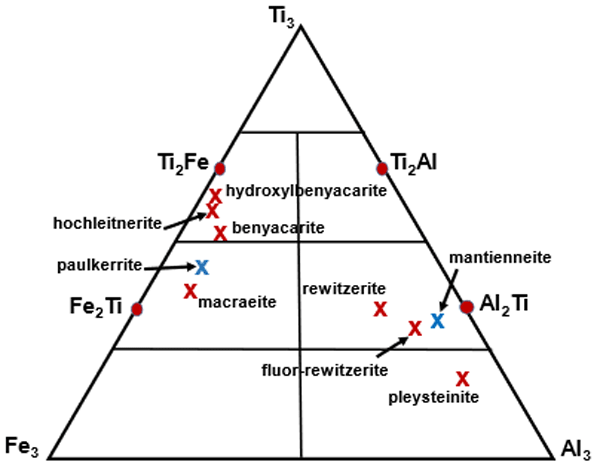
Rotherkopfite is the first member of the neptunite group that does not contain lithium in its chemical formula. It was found at Rother Kopf, Eifel volcanic fields, Germany, where in occurs in cavities in a quartz–sanidine fragment embedded in a volcanic rock. Rotherkopfite occurs as dark brownish-red crystals, up to about 0.2 mm across. The intriguing crystal structure is based on two interwoven three-dimensional frameworks.
Rupert Hochleitner, Ian E. Grey, Anthony R. Kampf, Stephanie Boer, Colin M. MacRae, William G. Mumme, and Nicholas C. Wilson
Eur. J. Mineral., 36, 541–554, https://doi.org/10.5194/ejm-36-541-2024, https://doi.org/10.5194/ejm-36-541-2024, 2024
Short summary
Short summary
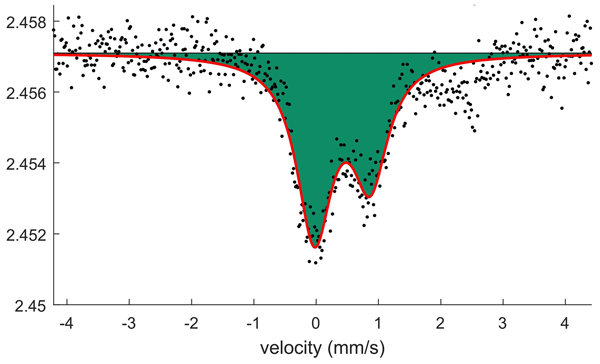
The paper describes the characterisation of fluor-rewitzerite, a new mineral species belonging to the paulkerrite group. The crystal structure of fluor-rewitzerite has been refined using microfocus synchrotron diffraction data, which allowed 25 of the possible 30 H atoms to be located, thus establishing key features of the H bonding. Crystallochemical trends are reviewed for seven recently characterised monoclinic paulkerrite-group minerals.
Dan Holtstam, Jörgen Langhof, Henrik Friis, Andreas Karlsson, and Muriel Erambert
Eur. J. Mineral., 36, 311–322, https://doi.org/10.5194/ejm-36-311-2024, https://doi.org/10.5194/ejm-36-311-2024, 2024
Short summary
Short summary
We described two new minerals, igelströmite and manganoschafarzikite, from the Långban manganese–iron deposit in Värmland, Sweden. The chemical formulae are Fe3+(Sb3+Pb2+)O4 and Mn2+Sb3+2O4, respectively. They belong to a new mineral group, where all members have the same crystal structure. It is called the minium group, after the lead-oxide mineral that is the oldest known substance of this kind.

Inna Lykova, Ralph Rowe, Glenn Poirier, Henrik Friis, and Kate Helwig
Eur. J. Mineral., 36, 301–310, https://doi.org/10.5194/ejm-36-301-2024, https://doi.org/10.5194/ejm-36-301-2024, 2024
Short summary
Short summary
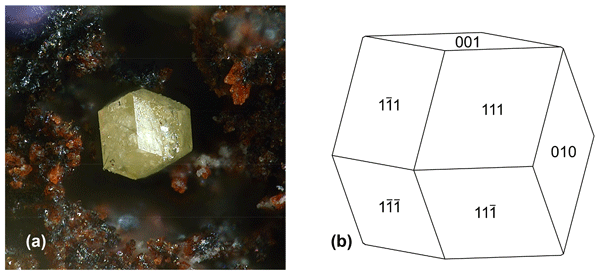
The first lanthanum-dominant mckelveyite group mineral, alicewilsonite-(YLa), Na2Sr2YLa(CO3)6∙3H2O, was found at the Paratoo copper mine, South Australia, Australia.
Ian E. Grey, Christian Rewitzer, Rupert Hochleitner, Anthony R. Kampf, Stephanie Boer, William G. Mumme, and Nicholas C. Wilson
Eur. J. Mineral., 36, 267–278, https://doi.org/10.5194/ejm-36-267-2024, https://doi.org/10.5194/ejm-36-267-2024, 2024
Short summary
Short summary
Macraeite is the fourth type mineral to be described from the Mangualde pegmatite, Portugal, and is the first paulkerrite-group mineral to be characterised from the locality. Its crystal structure has been refined using synchrotron diffraction data, and its chemical analysis, Raman spectrum, and optical properties are reported.

Inna Lykova, Ralph Rowe, Glenn Poirier, Henrik Friis, and Kate Helwig
Eur. J. Mineral., 36, 183–194, https://doi.org/10.5194/ejm-36-183-2024, https://doi.org/10.5194/ejm-36-183-2024, 2024
Short summary
Short summary
The new mckelveyite group mineral bainbridgeite-(YCe) was found at Mont Saint-Hilaire, Quebec, Canada.
Fabrice Dal Bo, Henrik Friis, Marlina A. Elburg, Frédéric Hatert, and Tom Andersen
Eur. J. Mineral., 36, 73–85, https://doi.org/10.5194/ejm-36-73-2024, https://doi.org/10.5194/ejm-36-73-2024, 2024
Short summary
Short summary
We report the description and the characterization of a new mineral species, found in a rock sample from the geological formation called the Pilanesberg Complex, South Africa. This is a silicate mineral that contains a significant amount of sodium, calcium, iron, titanium and fluorine. Its atomic structure shows that it is related to other wöhlerite-group minerals. This work provides new insights into the crystallization conditions that ruled the formation of the Pilanesberg complex.

Ian E. Grey, Stephanie Boer, Colin M. MacRae, Nicholas C. Wilson, William G. Mumme, and Ferdinando Bosi
Eur. J. Mineral., 35, 909–919, https://doi.org/10.5194/ejm-35-909-2023, https://doi.org/10.5194/ejm-35-909-2023, 2023
Short summary
Short summary
The paper describes the formal establishment of the paulkerrite group of minerals and its nomenclature. It includes the application of a site-merging procedure, coupled with a site-total-charge analysis, to obtain unambiguous end-member formulae. Application of the procedure has resulted in the revision of the end-member formulae for several of the group members.
Christian Rewitzer, Rupert Hochleitner, Ian E. Grey, Anthony R. Kampf, Stephanie Boer, and Colin M. MacRae
Eur. J. Mineral., 35, 805–812, https://doi.org/10.5194/ejm-35-805-2023, https://doi.org/10.5194/ejm-35-805-2023, 2023
Short summary
Short summary
Regerite is the first new mineral species to be described from the Kreuzberg pegmatite, Pleystein, in the Oberpfalz, Bavaria. It has been characterised using electron microprobe analysis, Raman spectroscopy, optical measurements and a synchrotron-based single-crystal structure refinement. The structure type for regerite has not been previously reported.
Ian E. Grey, Erich Keck, Anthony R. Kampf, Colin M. MacRae, Robert W. Gable, William G. Mumme, Nicholas C. Wilson, Alexander M. Glenn, and Cameron Davidson
Eur. J. Mineral., 35, 635–643, https://doi.org/10.5194/ejm-35-635-2023, https://doi.org/10.5194/ejm-35-635-2023, 2023
Short summary
Short summary
Hochleitnerite is a new member of the paulkerrite group of minerals. Its crystal structure, chemical analyses and Raman spectroscopy are reported, and its crystallochemical properties are discussed in relation to other group members.
Ian E. Grey, Rupert Hochleitner, Anthony R. Kampf, Stephanie Boer, Colin M. MacRae, John D. Cashion, Christian Rewitzer, and William G. Mumme
Eur. J. Mineral., 35, 295–304, https://doi.org/10.5194/ejm-35-295-2023, https://doi.org/10.5194/ejm-35-295-2023, 2023
Short summary
Short summary
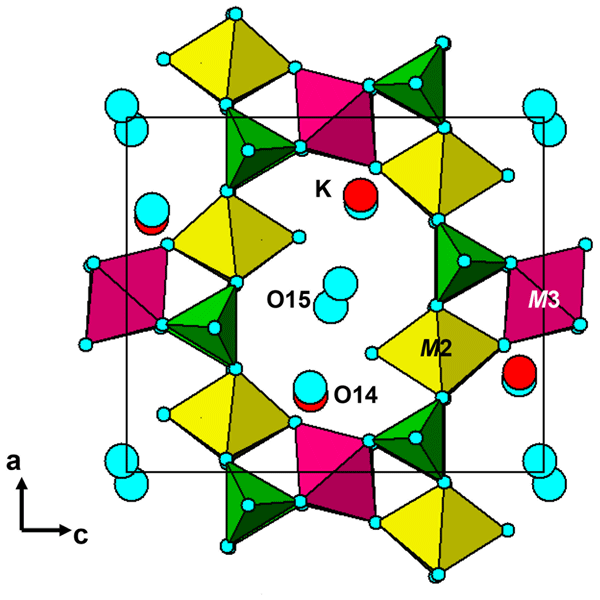
Manganrockbridgeite, Mn2+2Fe3+3(PO4)3(OH)4(H2O), a new member of the rockbridgeite group, has been characterised using electron microprobe analyses, Mössbauer spectroscopy, optical properties and single-crystal X-ray diffraction. Whereas other rockbridgeite-group minerals have orthorhombic symmetry with a statistical distribution of 50%Fe3+/50% vacancies in M3-site octahedra, monoclinic manganrockbridgeite has full ordering of Fe3+ and vacancies in alternate M3 sites along the 5.2 Å axis.
Ian E. Grey, Rupert Hochleitner, Christian Rewitzer, Anthony R. Kampf, Colin M. MacRae, Robert W. Gable, William G. Mumme, Erich Keck, and Cameron Davidson
Eur. J. Mineral., 35, 189–197, https://doi.org/10.5194/ejm-35-189-2023, https://doi.org/10.5194/ejm-35-189-2023, 2023
Short summary
Short summary
Pleysteinite has been approved as a new mineral species, and we describe here the characterisation of the mineral and its relationship to related minerals benyacarite, paulkerrite and mantienneite. The characterisation includes the determination and refinement of the crystal structure, electron microprobe analyses, optical properties and interpretation of its Raman spectrum.

Inna Lykova, Ralph Rowe, Glenn Poirier, Henrik Friis, and Kate Helwig
Eur. J. Mineral., 35, 143–155, https://doi.org/10.5194/ejm-35-143-2023, https://doi.org/10.5194/ejm-35-143-2023, 2023
Short summary
Short summary
Alicewilsonite-(YCe), a new mckelveyite group, was found at Mont Saint-Hilaire, Quebec, Canada, and subsequently at the Saint-Amable sill, Quebec, Canada, and the Khibiny Massif, Kola Peninsula, Russia.

Inna Lykova, Ralph Rowe, Glenn Poirier, Gerald Giester, Kelsie Ojaste, and Henrik Friis
Eur. J. Mineral., 35, 133–142, https://doi.org/10.5194/ejm-35-133-2023, https://doi.org/10.5194/ejm-35-133-2023, 2023
Short summary
Short summary
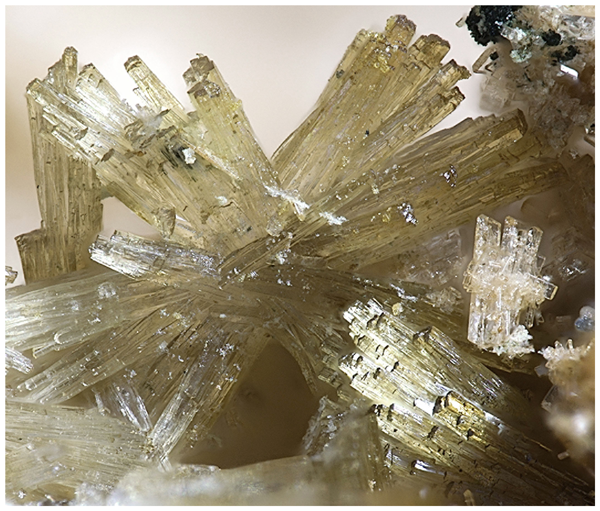
A new mineral group – the mckelveyite group – consisting of seven carbonate minerals was established. One of the seven members, donnayite-(Y), was re-investigated and its belonging to the mckelveyite group was confirmed.
Rupert Hochleitner, Christian Rewitzer, Ian E. Grey, William G. Mumme, Colin M. MacRae, Anthony R. Kampf, Erich Keck, Robert W. Gable, and Alexander M. Glenn
Eur. J. Mineral., 35, 95–103, https://doi.org/10.5194/ejm-35-95-2023, https://doi.org/10.5194/ejm-35-95-2023, 2023
Short summary
Short summary
The paper gives a characterisation of the new mineral species, whiteite-(CaMnFe), which has recently been approved as a new mineral (proposal IMA2022-077). The study included a single-crystal structure refinement that, when combined with electron microprobe analyses, confirmed that the mineral was a new member of the whiteite subgroup of the jahnsite group of minerals. Relationships between the crystal structure and the unit-cell parameters for the whiteite-subgroup minerals are discussed.

Erich Keck, Ian E. Grey, Colin M. MacRae, Stephanie Boer, Rupert Hochleitner, Christian Rewitzer, William G. Mumme, A. Matt Glenn, and Cameron Davidson
Eur. J. Mineral., 34, 439–450, https://doi.org/10.5194/ejm-34-439-2022, https://doi.org/10.5194/ejm-34-439-2022, 2022
Short summary
Short summary
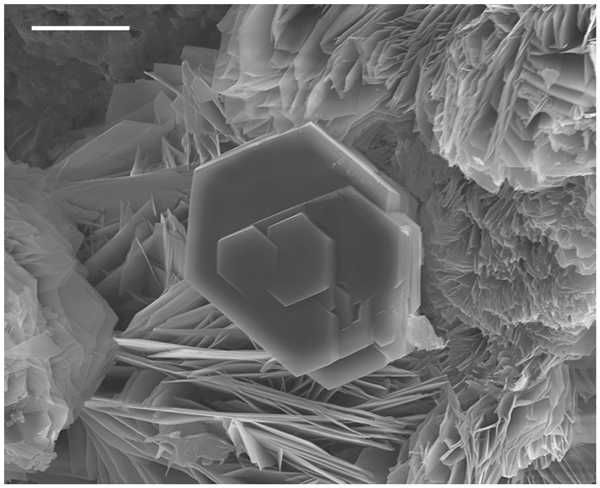
First occurrences of the secondary phosphate minerals kenngottite, Mn32+Fe43+(PO4)4(OH)6(H2O)2; allanpringite, Fe33+(PO4)2(OH)3·5H2O; iangreyite, Ca2Al7(PO4)2(PO3OH)2(OH,F)15·8H2O; and nizamoffite, MnZn2(PO4)2(H2O)4, from the Hagendorf Süd pegmatite are reported, with characterisation of their crystal chemistry and phase associations.
Peter Elliott, Ian E. Grey, William G. Mumme, Colin M. MacRae, and Anthony R. Kampf
Eur. J. Mineral., 34, 375–383, https://doi.org/10.5194/ejm-34-375-2022, https://doi.org/10.5194/ejm-34-375-2022, 2022
Short summary
Short summary
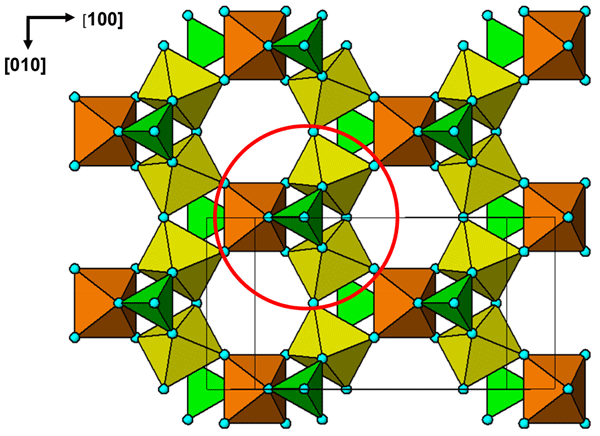
This paper describes the characterisation of a new mineral from a South Australian phosphate quarry. The characterisation included chemical analyses, infrared spectroscopy, and a determination and refinement of the crystal structure. The results showed that the mineral has a unique crystal chemistry, but it is closely related to the well-known phosphate mineral crandallite.
Ian Edward Grey, Peter Elliott, William Gus Mumme, Colin M. MacRae, Anthony R. Kampf, and Stuart J. Mills
Eur. J. Mineral., 34, 215–221, https://doi.org/10.5194/ejm-34-215-2022, https://doi.org/10.5194/ejm-34-215-2022, 2022
Short summary
Short summary
A reinvestigation of angastonite from the type locality has shown that it is a mixture of crystalline phases and an amorphous phase, with the published formula corresponding to the amorphous phase. A redefinition proposal for angastonite as an amorphous mineral was approved by the IMA CNMNC. Our study showed how the amorphous phase formed and how it progressively recrystallises as new crandallite-related minerals.
Cited articles
Ahmed, A. H., Arai, S., and Ikenne, M.: Mineralogy and paragenesis of the
Co-Ni arsenide ores of Bou Azzer, Anti-Atlas, Morocco. Econ. Geol., 104,
249–266, 2009.
Cejka, J., Bahfenne, S., Frost, R. L., and Sejkora, J.: Raman spectroscopic
study of the
arsenite mineral vajdakite,
[(Mo6+O2)2(H2O)2
Dunn, P. J., Peacor, D. R., Roberts, W. L., Campbell, T. J., and Ramik, R. A.:
Walentaite, a new calcium iron arsenate phosphate from the White Elephant
Mine, Pringle, South Dakota, Neues Jahrb. Mineral., Monatsh., 1984,
169–174, 1984.
Favreau, G. and Dietrich, J. E.: Die Mineralien von Bou Azzer, Lapis,
31, 27–68, 2006.
Frost, R. L., Weier, M. L., Martens, W., and Mills, S.: Molecular structure of
segnitite:
A Raman spectroscopic study, J. Mol. Struct., 752, 178–185, 2005.
Grey, I. E., Mumme, W. G., Kampf, A. R., and MacRae, C. M.: Natrowalentaite,
IMA2018-032a. CNMNC Newsletter No. 46, December 2018, p. 1189, Eur. J.
Mineral., 30, 1181–1189, 2018.
Grey, I. E., Mumme, W. G., and Hochleitner, R.: Trimeric
Grey, I. E., Mumme, W. G., Kampf, A. R., MacRae, C. M., and Wilson, N. C.:
Natrowalentaite, a new mineral from the Griffins Find gold deposit, Western
Australia,
Aust. J. Mineral., 20, 7–15, 2019b.
Gunter, M. E., Bandli, B. R., Bloss, F. D., Evans, S. H., Su, S. C., and Weaver,
R.: Results
from a McCrone spindle stage short course, a new version of EXCALIBR, and
how to build a
spindle stage, Microscope, 52, 23–39, 2004.
Hawthorne, F. C.: Schneiderhöhnite,
Fe2+
Kihlborg, L.: Least-squares refinement of crystal structure of molybdenum
trioxide, Arkiv. Kemi, 21, 357–364, 1963.
Mandarino, J. A.: The Gladstone–Dale compatibility of minerals and its use
in selecting mineral species for further study, Can. Mineral., 45, 1307–1324, 2007.
Nickel, E. H.: Tungsten-bearing walentaite from Griffins Find gold deposit,
Western Australia, Aust. Mineral., 1987, 9–12, 1987.
Petříček, V., Dušek, M., and Palatinus, L.: Crystallographic
Computing System
JANA2006: General features, Z. Kristallogr., 229, 345–352, 2014.
Rodriguez-Carvajal, J.: FULLPROF: A Program for Rietveld Refinement and
Pattern
Matching Analysis. Satellite meeting on powder diffraction of the XV
Congress of the IUCr,
Toulouse, France, 1990.
Sasaki, K., Tanaike, O., and Konno, H.: Distinction of jarosite-group
compounds by
Raman spectroscopy, Can. Mineral., 36, 1225–1235, 1998.
Short summary
This paper describes the characterization of a new mineral from the Oumlil mine in the Bou Azzer cobalt mining district in Morocco. This mining district is one of the world's largest producers of the important element cobalt. This study on the new mineral halilsarpite provides useful information on the results of chemical weathering processes on the primary arsenide minerals at the mine.
This paper describes the characterization of a new mineral from the Oumlil mine in the Bou Azzer...


