Articles | Volume 38, issue 3
https://doi.org/10.5194/ejm-38-263-2026
© Author(s) 2026. This work is distributed under
the Creative Commons Attribution 4.0 License.
https://doi.org/10.5194/ejm-38-263-2026
© Author(s) 2026. This work is distributed under
the Creative Commons Attribution 4.0 License.
Retrograde crystallization of clay minerals in metamorphic rocks linked to fluid circulation related to fault activity
Isabel Abad
CORRESPONDING AUTHOR
Departamento de Geología and CEACTEMA, Universidad de Jaén, Campus Las Lagunillas, 23071, Jaén, España
Matías Reolid
Departamento de Geología and CEACTEMA, Universidad de Jaén, Campus Las Lagunillas, 23071, Jaén, España
Juan Jiménez-Millán
Departamento de Geología and CEACTEMA, Universidad de Jaén, Campus Las Lagunillas, 23071, Jaén, España
Fernando Nieto
Departamento de Mineralogía y Petrología, Universidad de Granada, Fuentenueva s/n, 18002, Granada, España
Related authors
Fernando Nieto, Isabel Abad, Blanca Bauluz, and Matías Reolid
Eur. J. Mineral., 33, 503–517, https://doi.org/10.5194/ejm-33-503-2021, https://doi.org/10.5194/ejm-33-503-2021, 2021
Short summary
Short summary
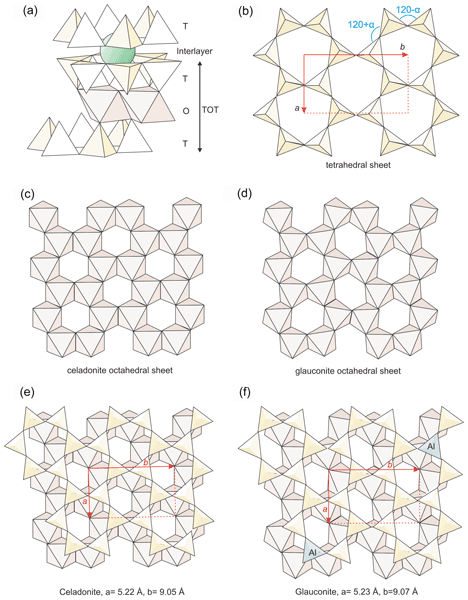
Glauconite and celadonite are green micas which are significant as indicators of palaeoenvironments. They share similar chemical compositions, characterized by their Fe2+, Fe3+ and Mg content despite their white-mica structure; however, the chemical and structural relations were unknown. Their rare coexistence in volcanic rocks due to bacterial activity has allowed us, after an electron microscopy study, to identify a compositional gap between them justified by structural differences.
Claudia Voigt, Fernando Gázquez, Lucía Martegani, Ana Isabel Sánchez Villanueva, Antonio Medina, Rosario Jiménez-Espinosa, Juan Jiménez-Millán, and Miguel Rodríguez-Rodríguez
Hydrol. Earth Syst. Sci., 29, 1783–1806, https://doi.org/10.5194/hess-29-1783-2025, https://doi.org/10.5194/hess-29-1783-2025, 2025
Short summary
Short summary
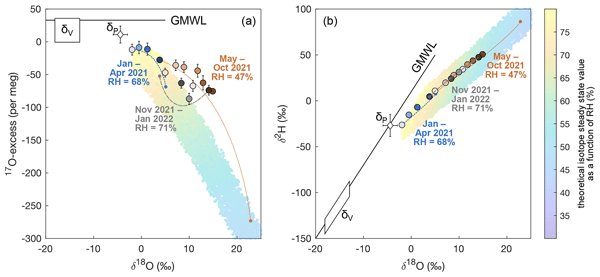
This research explores the use of a new isotope tracer, 17O excess, to better understand how hydrological processes drive large seasonal water level changes in small lakes in semiarid regions. The study shows that triple oxygen isotopes offer a more detailed understanding of these changes compared to traditional methods. These findings are valuable for reconstructing past climates and predicting how climate change, influenced by human activity, will affect small lakes in these dry areas.
Fernando Nieto, Isabel Abad, Blanca Bauluz, and Matías Reolid
Eur. J. Mineral., 33, 503–517, https://doi.org/10.5194/ejm-33-503-2021, https://doi.org/10.5194/ejm-33-503-2021, 2021
Short summary
Short summary
Glauconite and celadonite are green micas which are significant as indicators of palaeoenvironments. They share similar chemical compositions, characterized by their Fe2+, Fe3+ and Mg content despite their white-mica structure; however, the chemical and structural relations were unknown. Their rare coexistence in volcanic rocks due to bacterial activity has allowed us, after an electron microscopy study, to identify a compositional gap between them justified by structural differences.
Cited articles
Abad, I., Nieto, F., Peacor, D. R., and Velilla, N.: Prograde and retrograde diagenetic and metamorphic evolution in metapelitic rocks of Sierra Espuña (Spain), Clay Miner., 38, 1–23, https://doi.org/10.1180/0009855033810074, 2003.
Abad, I., Nieto, F., Reolid, M., and Jiménez-Millán, J.: Evidence of phyllosilicate alteration processes and clay mineral neoformation promoted by hydrothermal fluids in the Padul Fault area (Betic Cordillera, SE Spain), Appl. Clay Sci., 230, 106669, https://doi.org/10.1016/j.clay.2022.106669, 2022.
Airaghi, L., Dubacq, B., Verlaguet, A., Bourdelle, F., Bellahsen, N., and Gloter, A.: From static alteration to mylonitization: a nano- to micrometric study of chloritization in granitoids with implications for equilibrium and percolation length scales, Contrib. Mineral. Petrol., 175, 108, https://doi.org/10.1007/s00410-020-01749-2, 2020.
Aldaya, F., García-Dueñas, V., and Navarro-Vila, F.: Los Mantos Alpujárrides del tercio central de las Cordilleras Béticas. Ensayo de correlación tectónica de los Alpujárrides, Acta Geol. Hisp., 14, 154–166, 1979.
Alfaro, P., Galindo-Zaldivar, J., Jabaloy, A., López-Garrido, A. C., and Sanz de Galdeano, C.: Evidence for the activitly and paleosismicity of the Padul fault (Betic Cordillera, southern Spain), Acta Geol. Hisp., 36, 283–295, 2001.
Algeo, T. J. and Tribovillard, N.: Environmental analysis of paleoceanographic systems based on molybdenum–uranium covariation. Chem. Geol., 268, 211–225, https://doi.org/10.1016/j.chemgeo.2009.09.001, 2009.
Alonso-Chaves, F. M. and Orozco, M.: El sistema de fallas extensionales en La Axarquía (Sierras de Tejeda y La Almijara, Cordilleras Béticas), Geogaceta, 24, 15–18, 1998.
Barrenechea, J. F., Rodas, M., Frey, M., Alonso-Azcarate, J., and Mas, J. R.: Chlorite, corrensite, and chlorite-mica in late Jurassic fluvio-lacustrine sediments of the Cameros basin of northeastern Spain, Clay Clay Miner., 48, 256–265, 2000.
Bourdelle, F.: Low-temperature chlorite geothermometry and related recent analytical advances: A review, Minerals, 11, 130, https://doi.org/10.3390/min11020130, 2021.
Bourdelle, F. and Cathelineau, M.: Low-temperature chlorite geothermometry: a graphical representation based on a T–R2+–Si diagram, Eur. J. Mineral., 27, 617–626, https://doi.org/10.1127/ejm/2015/0027-2467, 2015.
Bourdelle, F., Parra, T., Chopin, C., and Beyssac, O.: A new chlorite geothermometer for diagenetic to low-grade metamorphic conditions, Contrib. Mineral. Petrol., 165, 723–735, https://doi.org/10.1007/s00410-012-0832-7, 2013.
Braga, J. C., Martín, J. M., and Quesada, C.: Patterns and average rates of late Neogene-Recent uplift of the Betic Cordillera, SE Spain, Geomorphology, 50, 3–26, 2003.
Cliff, G. and Lorimer, G. W.: The quantitative analysis of thin specimens, J. Microsc., 103, 203–207, https://doi.org/10.1111/j.1365-2818.1975.tb03895.x, 1975.
Cohen, K. M., Finney, P. L., Gibbard, P. L., and Fan, J. F.: The ICS International Chronostratigraphic Chart, Episodes, 36, 199–204, https://doi.org/10.18814/epiiugs/2013/v36i3/002, 2013.
Collettini, C., Niemejer, A., Viti, C., and Marone C.: Fault zone fabric and fault weakness, Nature, 462, 907–910, https://doi.org/10.1038/nature08585, 2009.
De Larouzière, F.D., Bolze, J., Bordet, P., Hernández, J., Montenat, C., and Ott d'Estevou, P.: The Betic segment of the lithospheric Trans-Alboran shear zone during the Late Miocene, Tectonophysics 152, 41–52, 1988.
Fulignati, P.: Hydrothermal alteration in epithermal and porphyry systems: Processes and products. In: Hydrothermal Mineral Deposits: Principles and Fundamental Concepts for the Exploration Geologist, Springer, 101–135, ISBN: 978-1-4020-8612-0, 2020.
Galindo-Zaldívar, J., Gil, A. J., Borque, M. J., González-Lodeiro, F., Jabaloy, A., Marín-Lechado, C., Ruano, P., and Sanz de Galdeano, C.: Active faulting in the internal zones of the central Betic Cordilleras (SE Spain), J. Geodyn., 36, 239–250, 2003.
Galindo-Zaldívar, J., Gil, A. J., Sanz de Galdeano, C., Shanov, S., Stanica, D.: Monitoring of active tectonic structures in Central Betic Cordillera (Southern Spain), Acta Geodyn. Geomater., 4, 19–29, 2007.
Galindo-Zaldívar, J., Gil, A. J., Sanz de Galdeano, C., Lacy, M. C., García-Armenteros, J. A., Ruano, P., Ruiz, A. M., Martínez-Martos, M., and Alfaro, P.: Active shallow extension in central and Eastern Betic Cordillera from CGPS data, Tectonophysics, 663, 290–401, https://doi.org/10.1016/j.tecto.2015.08.035, 2015.
Gil, A. J., Galindo-Zaldívar, J., Sanz de Galdeano, C., Borque, M.J., Sánchez-Alzola, A., Martínez-Martos, M., and Alfaro, P.: The Padul normal fault activity constrained by GPS data: Brittle extension orthogonal to folding in the central Betic Cordillera, Tectonophysics, 712/713, 64–71, https://doi.org/10.1016/j.tecto.2017.05.008, 2017.
Jiang, W. and Peacor, D.: Formation of corrensite, chlorite and chlorite-mica stacks by replacement of detrital biotite in low-grade pelitic rocks, J. Metamorph. Geol., 12, 867–884, 1994.
Jiménez-Millán, J., Velilla, N., and Vázquez, M.: Two-stage formation of kaolinite in shear-zone slates, southern Iberian Massif, SE Spain, Clay Miner., 42, 273–286, https://doi.org/10.1180/claymin.2007.042.3.01, 2007.
Jiménez-Millán, J., Abad, I., and Nieto, F.: Contrasting alteration processes in hydrothermal altered dolerites from the Betic Cordillera (Spain), Clay Miner., 43, 267–280, 2008.
Johnson, C.: Resolving denudational histories in orogenic belts with apatite fission-track thermochronology and structural data: An example from southern Spain, Geology, 25, 623–626, 1997.
Hürtgen, J., Rudersdorf, A., Grützner, C., and Reicherter, K.: Morphotectonics of the Padul-Nigüelas Fault Zone, southern Spain, Ann. Geophys., 56, S0679, https://doi.org/10.4401/ag-6208, 2013.
Inoue, A., Inoué, S., and Utada, M.: Application of chlorite thermometry to estimation of formation temperature and redox conditions, Clay Miner., 53, 143–158, 2018.
Lanari, P., Wagner, T., and Vidal, O.: A thermodynamic model for di-trioctahedral chlorite from experimental and natural data in the system MgO-FeO-Al2O3- SiO2-H2O: Applications to P-T sections and geothermometry, Contrib. Mineral. Petrol., 167, 968, https://doi.org/10.1007/s00410-014-0968-8, 2014.
Martín, J. M., Torres-Ruiz, J., and Fonboté, L.: Facies control of strata-bound ore deposits in carbonate rocks: the F-(Pb-Zn) deposits in the Alpine Triassic of the Alpujárrides, southern Spain, Mineral. Deposita, 22, 216–226, 1987.
McDonough, W. F. and Sun, S. S.: The composition of the Earth, Chem. Geol., 120, 223–253, https://doi.org/10.1016/0009-2541(94)00140-4, 1995.
Morales, J., Serrano, I., Vidal, F., and Torcal, F.: The depth of the earthquake activity in the Central Betics (Southern Spain), Geophys. Res. Lett., 24, 3289–3292, 1997.
Muñoz-Cemillán, A., Muñoz-Martín, A., Olaiz, A. J., and de Vicente, G.: Analysis of the geotermal potential on the Iberian Peninsula using magnetic spectral method and comparison with other data in different tectonic domains, J. Iber. Geol., 51, 581–596, https://doi.org/10.1007/s41513-025-00320-x, 2025.
Nieto, F., Mata, P., Bauluz, B., Giorgetti, G., Árkai, P., and Peacor, D. R.: Retrograde diagenesis, a widespread process on a regional scale, Clay Mineral., 40, 93–104, 2005.
Pouchou, J. L. and Pichoir, F.: Quantitative Analysis of Homogeneous or Stratified Microvolumes Applying the Model “PAP”, in: Electron Probe Quantification, edited by: Heinrich, K. F. J. and Newbury, D. E., Plenum Press, New York, 31–75, https://doi.org/10.1007/978-1-4899-2617-3_4, 1991.
Rodríguez-Peces, M. J., García-Mayordomo, J., Azañón, J. M., and Jabaloy, A.: GIS application for regional assessment of seismically induced slope failure in the Sierra Nevada Range, South Spain, along the Padul Fault, Environ. Earth Sci., 72, 2423–2435, https://doi.org/10.1007/s12665-014-3151-7, 2014.
Rudersdorf, A., Hürtgen, J., Grützner, C., and Reicherter, K.: Neotectonic activity of the Granada Basin: new evidence from the Padul-Nigüelas Fault Zone, 2nd INQUA, 214–217, ISBN: 978-960-466-093-3, 2011.
Ruiz, A. M., Ferhat, G., Alfaro, P., Sanz de Galdeano, C., Lacy, M. C., Rodríguez-Caderot, G. and Gil, A. J.: Geodetic measurements of crustal deformation on NW-SE faults of the Betic Cordillera, southern Spain, 1999–2001, J. Geodyn., 35, 259–272, 2003.
Sanz de Galdeano, C.: Datos sobre las deformaciones neógenas y cuaternarias del sector del Padul. Reunión sobre la geodinámica de la Cordillera Bética y Mar de Alborán. Universidad de Granada, 1976.
Sanz de Galdeano, C.: Geologic evolution of the Betic Cordilleras in the Western Mediterranean, Miocene to present, Tectonophysics, 172, 107–119, https://doi.org/10.1016/0040-1951(90)90062-D, 1990.
Sanz de Galdeano, C.: La Cordillera Bética, Editorial Punto Rojo Libros, Sevilla, 116 pp., ISBN 9788419093417, 2022.
Sanz de Galdeano, C. and Alfaro, P.: Tectonic significance of the present relief of the Betic Cordillera, Geomorphology, 63, 175–190, https://doi.org/10.1016/j.geomorph.2004.04.002, 2004.
Sanz de Galdeano, C. and López-Garrido, A. C.: Estratigrafía y estructura de las unidades alpujárrides en el borde occidental de Sierra Nevada (Granada, España), Rev. Soc. Geol. Esp., 12, 187–198, 1999.
Sanz de Galdeano, C. and López-Garrido, A. C.: Revisión de las Unidades Alpujárrides de las Sierras de Tejeda, Almijara y Guájares (Sector Central de la Zone Internal Bética, Provincias de Granada y Málaga), Rev. Soc. Geol. Esp., 16, 135–149, 2003.
Sanz de Galdeano, C., García-Tortosa, F. J., Peláez, J. A., Alfaro, P., Azañón, J. M., Galindo-Zaldívar, J., López-Casado, C., López-Garrido, A. C., Rodríguez-Fernández, J., and Ruano, P.: Main active faults in the Granada and Guadix-Baza basins (Betic Cordillera), J. Iber. Geol., 38, 209–223, https://doi.org/10.5209/rev_JIGE.2012.v38.n1.39215, 2012.
Simancas, J. F. and Campos, J.: Compresión NNW-SSE tardi a postmetamórfica, y extensión subordinada, en el Complejo Alpujárride (Dominio de Alborán, Orógeno Bético), Rev. Soc. Geol. Esp., 6, 23–35, 1993.
Smeraglia, L., Billi, A., Carminati, E., Cavallo, A., Di Toro, G., Spagnuolo, E., and Zorzi, F.: Ultra-thin clay layers facilitate seismic slip in carbonate faults, Sci. Rep. 7, 664, https://doi.org/10.1038/s41598-017-00717-4, 2017.
Stich, D., Morales. J., López-Comino. J.A., Araque-Pérez, C., Azañón, J. M., Dengra, M. A., Ruiz, M., and Weber, M.: Seismogenic structures and active creep in the Granada Basin (S-Spain), Tectonopysics, 882, 230368, https://doi.org/10.1016/j.tecto.2024.230368, 2024.
Taylor, S. R. and McLennan, S. M.: The continental crust: its composition and evolution, Blackwell, Oxford, 1985.
Tubía, J. M., Cuevas, J., Navarro-Vilá, F., Álvarez, F., and Aldaya, F.: Tectonic evolution of the Alpujarride Complex (Betic Cordillera, southern Spain), J. Struct. Geol., 14, 193–203, 1992.
Verdecchia, S., Collo, G., Zandomeni, P. S., Wunderlin, C., and Fehrmann, M.: Crystallochemical indexes and geothermobarometric calculations as a multiproxy approach to P-T condition of the low-grade metamorphism: The case of the San Luis Formation, Eastern Sierras Pampeanas of Argentina, Lithos, 324/325, 385–401, https://doi.org/10.1016/j.lithos.2018.11.021, 2019.
Vidal, O., Lanari, P., Munoz, M. Bourdelle, F., and de Andrade, V.: Deciphering temperature, pressure and oxygen-activity conditions of chlorite formation, Clay Miner., 51, 615–633, https://doi.org/10.1180/claymin.2016.051.4.06, 2016.
Warr, L. N.: IMA-CNMNC approved mineral symbols, Miner. Mag., 85, 291–320, https://doi.org/10.1180/mgm.2021.43, 2021.
Wiewiora, A. and Weiss, Z.: Crystallochemical classifications of phyllosilicates based on the unified system of projection of chemical composition; II, The Chlorite Group, Clay Miner., 25, 83–92, https://doi.org/10.1180/claymin.1990.025.1.09, 1990.
Wintsch, R. P., Christoffersen, R., and Kronenberg, A. K.: Fluid-rock reaction weakening of fault zones, J. Geophys. Res.-Sol. Ea., 100, 13021–13032, https://doi.org/10.1029/94JB02622, 1995.
Xu, Z., Yu, T., Lin, P., and Li, S.: Anomalous patterns of clay minerals in fault zone, Eng. Geol., 325, 107279, https://doi.org/10.1016/j.enggeo.2023.107279, 2023.
Short summary
Metamorphic rocks affected by a fault have undergone chemical, mineralogical, and textural changes. The most significant is the enrichment in clay minerals (chlorite, kaolinite, and smectite). Geothermometry of the new chlorites made it possible to determine the temperatures of the processes (predominantly < 225°C), promoted by the fault dynamics (mainly fluid-related alterations). The retrograde alteration also affected the fluid-accessible zones of the original rocks, with growth of the same clay minerals.
Metamorphic rocks affected by a fault have undergone chemical, mineralogical, and textural...