Articles | Volume 38, issue 2
https://doi.org/10.5194/ejm-38-169-2026
© Author(s) 2026. This work is distributed under
the Creative Commons Attribution 4.0 License.
https://doi.org/10.5194/ejm-38-169-2026
© Author(s) 2026. This work is distributed under
the Creative Commons Attribution 4.0 License.
Friisite, Pb8Al3Si8O27Cl3, a new mineral with a polysomatic relation to jagoite, from Långban, Sweden

Department of Geosciences, Swedish Museum of Natural History, P.O. Box 50007, 10405 Stockholm, Sweden
Fernando Cámara
Dipartimento di Scienze della Terra 'A. Desio', Università degli Studi di Milano, Via Luigi Mangiagalli 34, 20133, Milano, Italy
Andreas Karlsson
Department of Geosciences, Swedish Museum of Natural History, P.O. Box 50007, 10405 Stockholm, Sweden
Related authors
Alice Taddei, Dan Holtstam, Erik Jonsson, Hans-Jürgen Förster, Stefan S. Andersson, Oona Appelt, and Luca Bindi
Eur. J. Mineral., 37, 937–951, https://doi.org/10.5194/ejm-37-937-2025, https://doi.org/10.5194/ejm-37-937-2025, 2025
Short summary
Short summary
Åsgruvanite-(Ce) is a new rare Earth element (REE) mineral from Åsgruvan in Västmanland, Sweden, linked to Bastnäs-type mineralisation. The chemical formula ideally includes cerium, aluminium, silicon, arsenic, carbonate groups, chlorine, and fluorine. The mineral forms small, grey-green, lustrous grains with distinct cleavage and high density and is associated with carbonates and REE minerals like gadolinite and an allanite-like mineral. It has a unique layered crystal structure.
Dan Holtstam and Ataollah Hassani
Hist. Geo Space. Sci., 16, 23–29, https://doi.org/10.5194/hgss-16-23-2025, https://doi.org/10.5194/hgss-16-23-2025, 2025
Short summary
Short summary
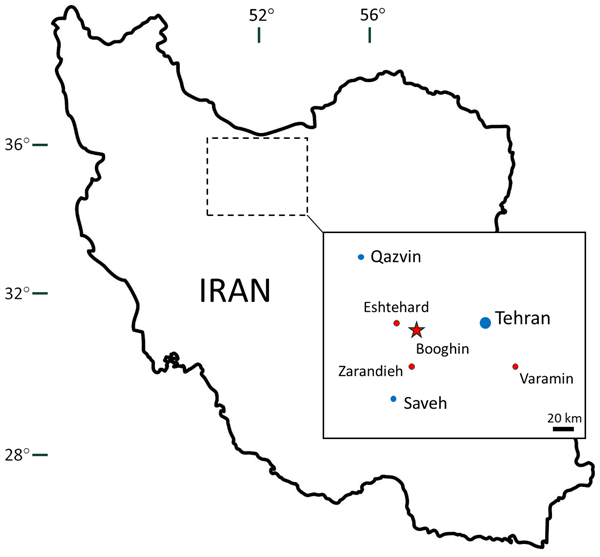
The meteorite "Veramin" fell in Persia ca. 1880. In the records, there are ambiguities about the event and the available sources were scrutinized in this review. The current official name, coined by meteoricist A. Brezina, is not supported by Iranian sources. A key document is a rediscovered label with the main mass of the meteorite. The indicated place of the event, probably occurring in February–April 1880, is Booghin of in the historical Zarand district, 100 km NW from Veramin (Varamin).
Dan Holtstam, Fernando Cámara, Henrik Skogby, Andreas Karlsson, and Alessandro De Leo
Eur. J. Mineral., 37, 221–231, https://doi.org/10.5194/ejm-37-221-2025, https://doi.org/10.5194/ejm-37-221-2025, 2025
Short summary
Short summary
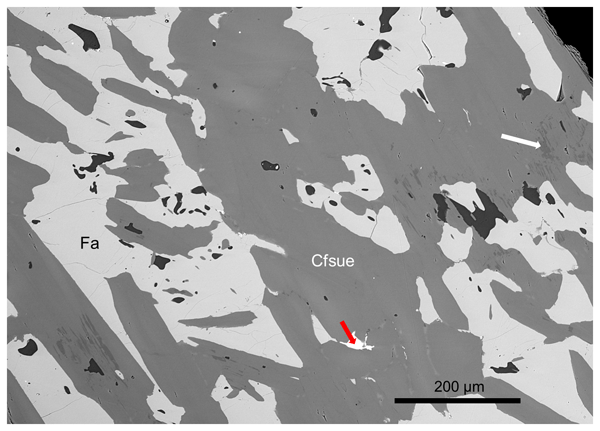
The mineral clino-ferro-suenoite, with the chemical formula ◻Mn2Fe2+5Si8O22(OH)2, was historically named “dannemorite” or “manganogrunerite” and is a member of the amphibole supergroup. It is now formally approved by the International Mineralogical Association. It occurs in iron–manganese-bearing rock from the Hilläng mines, Dalarna, Sweden, and is associated with the minerals fayalite, spessartine, ferro-actinolite, calcite, magnetite and pyrite. It formed by replacement of Mn-bearing fayalite.
Dan Holtstam, Jörgen Langhof, Henrik Friis, Andreas Karlsson, and Muriel Erambert
Eur. J. Mineral., 36, 311–322, https://doi.org/10.5194/ejm-36-311-2024, https://doi.org/10.5194/ejm-36-311-2024, 2024
Short summary
Short summary
We described two new minerals, igelströmite and manganoschafarzikite, from the Långban manganese–iron deposit in Värmland, Sweden. The chemical formulae are Fe3+(Sb3+Pb2+)O4 and Mn2+Sb3+2O4, respectively. They belong to a new mineral group, where all members have the same crystal structure. It is called the minium group, after the lead-oxide mineral that is the oldest known substance of this kind.
Dan Holtstam, Fernando Cámara, Andreas Karlsson, Henrik Skogby, and Thomas Zack
Eur. J. Mineral., 34, 451–462, https://doi.org/10.5194/ejm-34-451-2022, https://doi.org/10.5194/ejm-34-451-2022, 2022
Short summary
Short summary
A new mineral has been discovered, an amphibole, with the name ferri-taramite, which has now been approved by the International Mineralogical Association. The paper discusses the significance of the discovery in relation to other amphiboles found worldwide. This taramite is unique in that it is from a skarn associated with ore and is not of magmatic origin. For the description we have used many methods, including X-ray diffraction, chemical analyses and several types of spectroscopy.
Fernando Cámara, Dan Holtstam, Nils Jansson, Erik Jonsson, Andreas Karlsson, Jörgen Langhof, Jaroslaw Majka, and Anders Zetterqvist
Eur. J. Mineral., 33, 659–673, https://doi.org/10.5194/ejm-33-659-2021, https://doi.org/10.5194/ejm-33-659-2021, 2021
Short summary
Short summary
Zinkgruvanite, a barium manganese iron silicate with sulfate, is a new mineral found in drill core samples from the Zinkgruvan zinc, lead and silver mine in Sweden. It is associated with other minerals like baryte, barytocalcite, diopside and sulfide minerals. It occurs as flattened and elongated crystals up to 1 mm. It is almost black. Zinkgruvanite is closely related to the mineral yoshimuraite and based on its crystal structure, grouped with the ericssonite group of minerals.
Alice Taddei, Dan Holtstam, Erik Jonsson, Hans-Jürgen Förster, Stefan S. Andersson, Oona Appelt, and Luca Bindi
Eur. J. Mineral., 37, 937–951, https://doi.org/10.5194/ejm-37-937-2025, https://doi.org/10.5194/ejm-37-937-2025, 2025
Short summary
Short summary
Åsgruvanite-(Ce) is a new rare Earth element (REE) mineral from Åsgruvan in Västmanland, Sweden, linked to Bastnäs-type mineralisation. The chemical formula ideally includes cerium, aluminium, silicon, arsenic, carbonate groups, chlorine, and fluorine. The mineral forms small, grey-green, lustrous grains with distinct cleavage and high density and is associated with carbonates and REE minerals like gadolinite and an allanite-like mineral. It has a unique layered crystal structure.
Dan Holtstam and Ataollah Hassani
Hist. Geo Space. Sci., 16, 23–29, https://doi.org/10.5194/hgss-16-23-2025, https://doi.org/10.5194/hgss-16-23-2025, 2025
Short summary
Short summary
The meteorite "Veramin" fell in Persia ca. 1880. In the records, there are ambiguities about the event and the available sources were scrutinized in this review. The current official name, coined by meteoricist A. Brezina, is not supported by Iranian sources. A key document is a rediscovered label with the main mass of the meteorite. The indicated place of the event, probably occurring in February–April 1880, is Booghin of in the historical Zarand district, 100 km NW from Veramin (Varamin).
Dan Holtstam, Fernando Cámara, Henrik Skogby, Andreas Karlsson, and Alessandro De Leo
Eur. J. Mineral., 37, 221–231, https://doi.org/10.5194/ejm-37-221-2025, https://doi.org/10.5194/ejm-37-221-2025, 2025
Short summary
Short summary
The mineral clino-ferro-suenoite, with the chemical formula ◻Mn2Fe2+5Si8O22(OH)2, was historically named “dannemorite” or “manganogrunerite” and is a member of the amphibole supergroup. It is now formally approved by the International Mineralogical Association. It occurs in iron–manganese-bearing rock from the Hilläng mines, Dalarna, Sweden, and is associated with the minerals fayalite, spessartine, ferro-actinolite, calcite, magnetite and pyrite. It formed by replacement of Mn-bearing fayalite.
Marco E. Ciriotti, Uwe Kolitsch, Fernando Cámara, Pietro Vignola, Frédéric Hatert, Erica Bittarello, Roberto Bracco, and Giorgio Maria Bortolozzi
Eur. J. Mineral., 36, 863–872, https://doi.org/10.5194/ejm-36-863-2024, https://doi.org/10.5194/ejm-36-863-2024, 2024
Short summary
Short summary
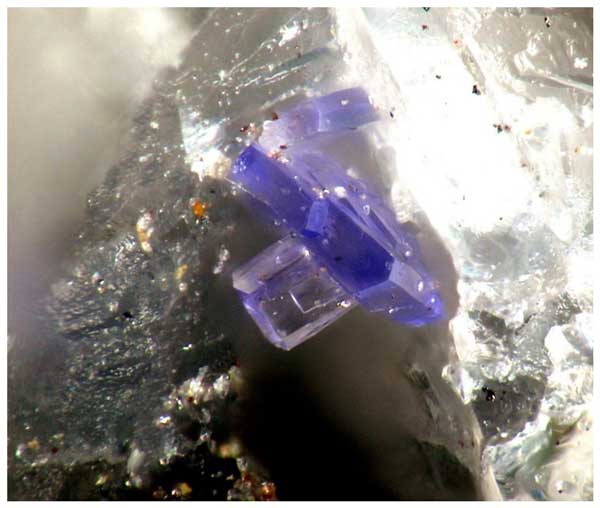
The article provides the standard description of bonacinaite, Sc3+(AsO4)·2H2O, the first natural scandium arsenate. The new mineral species was found in a few specimens in the dumps of the old Varenche Mine, Valle d'Aosta, Italy, which is therefore the type locality and the only locality in the world. Bonacinaite forms colourless (with faint to distinct violet tints), pseudohexagonal, thick tabular crystals, up to 0.25 mm in size, or as small, faintly violet lath-shaped crystals.
Daniel Müller, Thomas R. Walter, Valentin R. Troll, Jessica Stammeier, Andreas Karlsson, Erica de Paolo, Antonino Fabio Pisciotta, Martin Zimmer, and Benjamin De Jarnatt
Solid Earth, 15, 1155–1184, https://doi.org/10.5194/se-15-1155-2024, https://doi.org/10.5194/se-15-1155-2024, 2024
Short summary
Short summary
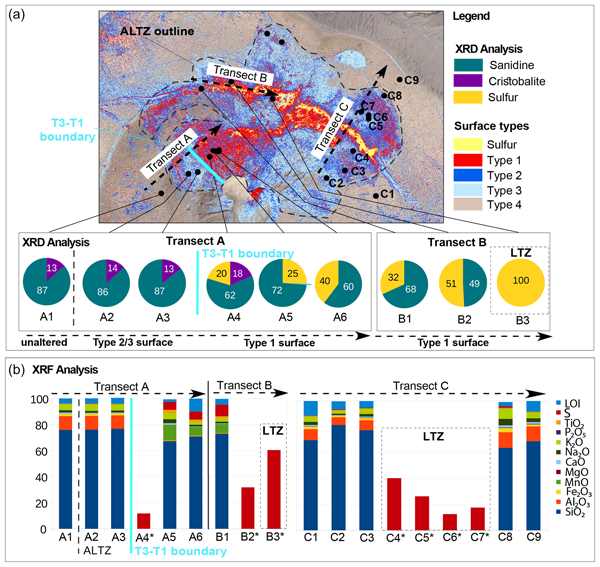
We use uncrewed-aerial-system-derived optical and infrared data, mineralogical and geochemical analyses of rock samples, and surface degassing measurements to analyze degassing and hydrothermal alteration at the fumaroles of the La Fossa cone, Vulcano island, Italy. We give a detailed view of associated structures and dynamics, such as local alteration gradients, diffuse active units that significantly contribute to the total activity, or effects of permeability reduction and surface sealing.
Dan Holtstam, Jörgen Langhof, Henrik Friis, Andreas Karlsson, and Muriel Erambert
Eur. J. Mineral., 36, 311–322, https://doi.org/10.5194/ejm-36-311-2024, https://doi.org/10.5194/ejm-36-311-2024, 2024
Short summary
Short summary
We described two new minerals, igelströmite and manganoschafarzikite, from the Långban manganese–iron deposit in Värmland, Sweden. The chemical formulae are Fe3+(Sb3+Pb2+)O4 and Mn2+Sb3+2O4, respectively. They belong to a new mineral group, where all members have the same crystal structure. It is called the minium group, after the lead-oxide mineral that is the oldest known substance of this kind.
Dan Holtstam, Fernando Cámara, Andreas Karlsson, Henrik Skogby, and Thomas Zack
Eur. J. Mineral., 34, 451–462, https://doi.org/10.5194/ejm-34-451-2022, https://doi.org/10.5194/ejm-34-451-2022, 2022
Short summary
Short summary
A new mineral has been discovered, an amphibole, with the name ferri-taramite, which has now been approved by the International Mineralogical Association. The paper discusses the significance of the discovery in relation to other amphiboles found worldwide. This taramite is unique in that it is from a skarn associated with ore and is not of magmatic origin. For the description we have used many methods, including X-ray diffraction, chemical analyses and several types of spectroscopy.
Fernando Cámara, Dan Holtstam, Nils Jansson, Erik Jonsson, Andreas Karlsson, Jörgen Langhof, Jaroslaw Majka, and Anders Zetterqvist
Eur. J. Mineral., 33, 659–673, https://doi.org/10.5194/ejm-33-659-2021, https://doi.org/10.5194/ejm-33-659-2021, 2021
Short summary
Short summary
Zinkgruvanite, a barium manganese iron silicate with sulfate, is a new mineral found in drill core samples from the Zinkgruvan zinc, lead and silver mine in Sweden. It is associated with other minerals like baryte, barytocalcite, diopside and sulfide minerals. It occurs as flattened and elongated crystals up to 1 mm. It is almost black. Zinkgruvanite is closely related to the mineral yoshimuraite and based on its crystal structure, grouped with the ericssonite group of minerals.
Cited articles
Baur, W. H.: The geometry of polyhedral distortions. Predictive relationships for the phosphate group, Acta Crystallogr. B, 30, 1195–1215, https://doi.org/10.1107/S0567740874004560, 1974.
Brese, N. E. and O'Keeffe, M.: Bond-valence parameters for solids, Acta Crystallogr. B, 47, 192–197, https://doi.org/10.1107/S0108768190011041, 1991.
Boström, K., Rydell, H., and Joensuu, O.: Långban – An exhalative sedimentary deposit?, Econ. Geol., 74, 1002–1011, https://doi.org/10.2113/gsecongeo.74.5.1002, 1979.
Gagné, O. C. and Hawthorne, F. C.: Comprehensive derivation of bond-valence parameters for ion pairs involving oxygen, Acta Crystallogr. B, 71, 562–578, https://doi.org/10.1107/S2052520615016297, 2015.
Hawthorne, F. C., Uvarova, Y. A., and Sokolova, E.: A structure hierarchy for silicate minerals: sheet silicates, Mineral. Mag., 83, 3–55, https://doi.org/10.1180/mgm.2018.152, 2019.
Holland, T. J. B. and Redfern, S. A. T.: Unit cell refinement from powder diffraction data: the use of regression diagnostics, Mineral. Mag., 61, 65–77, https://doi.org/10.1180/minmag.1997.061.404.07, 1997.
Holtstam, D. and Langhof, J. (Eds.): Långban. The mines, their minerals, geology and explorers, Swedish Museum of Natural History and Raster Förlag, Stockholm, 215 pp., ISBN 9789187214882, 1999.
Holtstam, D. and Mansfeld, J.: Origin of a carbonate-hosted Fe-Mn-(Ba-As-Pb-Sb-W) deposit of Långban-type in Central Sweden, Mineral. Deposita, 36, 641–657, https://doi.org/10.1007/s001260100183, 2001.
Holtstam, D., Cámara, F., Karlsson, A., and Zack, T.: Jagoite revisited: crystal structure, mineral composition and paragenesis, Mineral. Mag., 89, 830–842, https://doi.org/10.1180/mgm.2025.10108, 2025.
Kampf, A. R., Pluth, J. J., Chen, Y. S., Roberts, A. C., and Housley, R. M.: Bobmeyerite, a new mineral from Tiger, Arizona, USA, structurally related to cerchiaraite and ashburtonite, Mineral. Mag., 77, 81–91, https://doi.org/10.1180/minmag.2013.077.1.08, 2013.
Magnusson, N. H.: Långbans malmtrakt, Sveriges Geol. Unders., Ser. Ca, 23, 1–111, 1930.
Mandarino, J. A.: The Gladstone–Dale compatibility of minerals and its use in selecting mineral species for further study, Can. Mineral., 45, 1307–1324, https://doi.org/10.2113/gscanmin.45.5.1307, 2007.
Mellini, M. and Merlino, S.: The crystal structure of jagoite, Am. Mineral., 66, 852–858, 1981.
Momma, K. and Izumi, F.: VESTA 3 for three-dimensional visualization of crystal, volumetric and morphology data, J. Appl. Crystallogr., 44, 1272–1276, https://doi.org/10.1107/S0021889811038970, 2011.
Moore, P. B.: Mineralogy & chemistry of Långban-type deposits in Bergslagen, Sweden, Mineral. Rec., 1, 154–172, 1970.
Ondruš, P., Veselovský, F., Gabašová, A., Hloušek, J., Šrein, V., Vavřín, I., Skála, R., Sejkora, J., and Drábek, M.: Primary minerals of the Jáchymov ore district, J. Czech Geol. Soc., 48, 19–147, 2003.
Sandström, F and Holtstam, D.: Geology of the Långban deposit. In: Långban. The mines, their minerals, geology and explorers. Swedish Museum of Natural History and Raster Förlag, Stockholm, 29–41, ISBN 9789187214882, 1999.
Sheldrick, G. M.: SHELXT – Integrated space-group and crystal-structure determination, Acta Crystallogr. A, 71, 3–8, https://doi.org/10.1107/S2053273314026370, 2015a.
Sheldrick, G. M.: Crystal structure refinement with SHELXL, Acta Crystallogr. C, 71, 3–8, https://doi.org/10.1107/S205322961402421, 2015b.
Skelton, A., Mansfeld, J., Ahlin, S., Lundqvist, T., Linde, J., and Nilsson, J.: A compilation of metamorphic pressure–temperature estimates from the Svecofennian province of eastern and central Sweden, GFF, 140, 1–10, https://doi.org/10.1080/11035897.2017.1414074, 2018.
Stephens, M. B. and Jansson, N. F.: Paleoproterozoic (1.9–1.8 Ga) syn-orogenic magmatism, sedimentation and mineralization in the Bergslagen lithotectonic unit, Svecokarelian orogen, in: Lithotectonic Framework, Tectonic Evolution and Mineral Resources, edited by: Stephens, M. B. and Bergman Weihed, J., Geol. Soc. London Mem., 50, https://doi.org/10.1144/M50-2017-40, 2020.
Short summary
Friisite is a newly identified mineral, with the chemical formula Pb8Al3Si8O27Cl3, from the Långban mine in Sweden, found as tiny, white, flaky grains within a skarn matrix alongside jagoite and other silicates. It has a sub-adamantine luster, perfect basal cleavage, a hardness of 4–5, and a high density of 5.54 g cm−³. Structurally it is a hexagonal phyllosilicate, closely related to jagoite in a polysomatic series. The mineral is named in honor of Danish mineralogist Henrik Friis.
Friisite is a newly identified mineral, with the chemical formula Pb8Al3Si8O27Cl3, from the...