Articles | Volume 37, issue 6
https://doi.org/10.5194/ejm-37-937-2025
© Author(s) 2025. This work is distributed under
the Creative Commons Attribution 4.0 License.
the Creative Commons Attribution 4.0 License.
https://doi.org/10.5194/ejm-37-937-2025
© Author(s) 2025. This work is distributed under
the Creative Commons Attribution 4.0 License.
the Creative Commons Attribution 4.0 License.
New minerals, nomenclature, and classification
| 
16 Dec 2025
New minerals, nomenclature, and classification |
| 16 Dec 2025
| 16 Dec 2025
Exploring the unusual occurrence, chemistry, and structural topology of åsgruvanite-(Ce), Ce16Ca5Al(SiO4)6(AsO3)8(CO3)2Cl3(ClF3)(OH)2, a new rare earth element (REE) mineral from Västmanland, Sweden
Alice Taddei
Dipartimento di Scienze della Terra, Università degli Studi di Firenze, via La Pira 4, 50121 Firenze, Italy
Department of Geosciences, Swedish Museum of Natural History, Box 50007, 10405 Stockholm, Sweden
Erik Jonsson
Department of Mineral Resources, Geological Survey of Sweden, Box 670, 751 28 Uppsala, Sweden
SERC, Department of Earth Sciences, Uppsala University, Villavägen 16, 752 36 Uppsala, Sweden
Hans-Jürgen Förster
GFZ Helmholtz Centre for Geosciences, Telegrafenberg, 14473 Potsdam, Germany
Stefan S. Andersson
Department of Mineral Resources, Geological Survey of Sweden, Box 670, 751 28 Uppsala, Sweden
Oona Appelt
GFZ Helmholtz Centre for Geosciences, Telegrafenberg, 14473 Potsdam, Germany
Luca Bindi
Dipartimento di Scienze della Terra, Università degli Studi di Firenze, via La Pira 4, 50121 Firenze, Italy
Related authors
Luca Bindi, Paola Bonazzi, Laura Chelazzi, Matteo M. N. Franceschini, Giovanni O. Lepore, Marta Morana, Giovanni Pratesi, Alice Taddei, Matteo Zoppi, and Silvio Menchetti
Eur. J. Mineral., 36, 615–622, https://doi.org/10.5194/ejm-36-615-2024, https://doi.org/10.5194/ejm-36-615-2024, 2024
Short summary
Short summary
The As4S6 molecule was missing in the reported structures of crystalline As chalcogenides. Here we report the first occurrence of the As4S6 molecule together with the other known As4Sn (n = 3, 4, 5) molecules randomly replacing each other in the crystalline structure of a new monoclinic product obtained by the light-induced alteration of the mineral alacranite, As8S9.
Dan Holtstam, Fernando Cámara, and Andreas Karlsson
Eur. J. Mineral., 38, 169–177, https://doi.org/10.5194/ejm-38-169-2026, https://doi.org/10.5194/ejm-38-169-2026, 2026
Short summary
Short summary
Friisite is a newly identified mineral, with the chemical formula Pb8Al3Si8O27Cl3, from the Långban mine in Sweden, found as tiny, white, flaky grains within a skarn matrix alongside jagoite and other silicates. It has a sub-adamantine luster, perfect basal cleavage, a hardness of 4–5, and a high density of 5.54 g cm−³. Structurally it is a hexagonal phyllosilicate, closely related to jagoite in a polysomatic series. The mineral is named in honor of Danish mineralogist Henrik Friis.
Luca Bindi, Jan B. Kihle, Guangming Cheng, Jinping Hu, Nan Yao, Chi Ma, Yunbin Guan, Paul D. Asimow, and Paul J. Steinhardt
Eur. J. Mineral., 37, 783–791, https://doi.org/10.5194/ejm-37-783-2025, https://doi.org/10.5194/ejm-37-783-2025, 2025
Short summary
Short summary
During project STARDUST, over 5500 specimens were recovered. Among them, a micrometeorite from Oslo (NMM/L2) revealed a new Al–Cu alloy with Al₄Cu₉ stoichiometry. This phase was approved as a new mineral named jonlarsenite. The microspherule shows features typical of micrometeorites. Its extraterrestrial origin is confirmed by oxygen isotope composition and chondritic chemistry, similar to previously known Al–Cu meteoritic materials.
Lorenzo Barni, Simone Tommasini, Marta Morana, Riccardo Avanzinelli, Tiziano Catelani, and Luca Bindi
Eur. J. Mineral., 37, 747–760, https://doi.org/10.5194/ejm-37-747-2025, https://doi.org/10.5194/ejm-37-747-2025, 2025
Short summary
Short summary
A suite of clinopyroxenes from ankaramitic magmas of the Miocene Teno massif and Roque del Conde shield volcanoes (Tenerife, Canary Islands) were studied to obtain geothermobarometric information on the anatomy of the volcano plumbing system.
Dan Holtstam and Ataollah Hassani
Hist. Geo Space. Sci., 16, 23–29, https://doi.org/10.5194/hgss-16-23-2025, https://doi.org/10.5194/hgss-16-23-2025, 2025
Short summary
Short summary
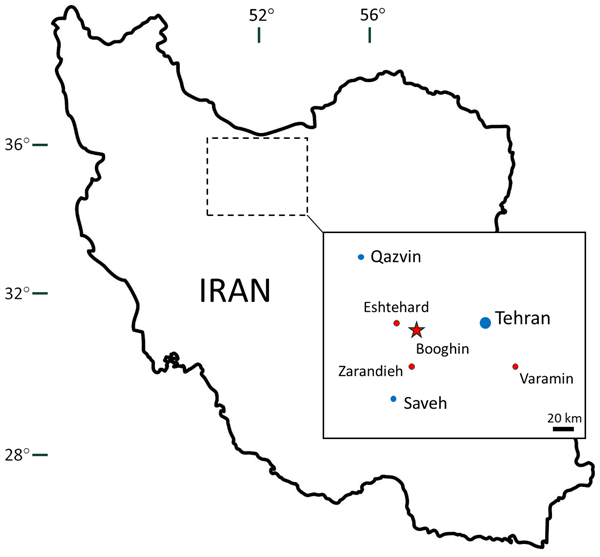
The meteorite "Veramin" fell in Persia ca. 1880. In the records, there are ambiguities about the event and the available sources were scrutinized in this review. The current official name, coined by meteoricist A. Brezina, is not supported by Iranian sources. A key document is a rediscovered label with the main mass of the meteorite. The indicated place of the event, probably occurring in February–April 1880, is Booghin of in the historical Zarand district, 100 km NW from Veramin (Varamin).
Alain Ragu, Luca Bindi, Paola Bonazzi, Laurent Remusat, and Christian Chopin
Eur. J. Mineral., 37, 627–638, https://doi.org/10.5194/ejm-37-627-2025, https://doi.org/10.5194/ejm-37-627-2025, 2025
Short summary
Short summary
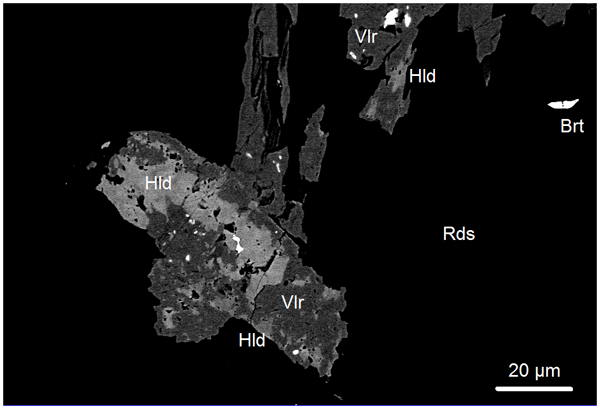
A new rare-earth-bearing silicate is described from a manganese ore deposit in the Pyrenees. It belongs to the epidote family and is characterised by the formula Mn2+Ce(MgAlMn2+)(Si2O7)(SiO4)F(OH). This new mineral commonly contains inclusions of an Mn-rich yttrium borosilicate, a potentially new mineral of the hellandite family. This is a new type of occurrence for hellandite – while rare earths are under the spotlight.
Erik Jonsson, Ulf Hålenius, Jaroslaw Majka, and Ferdinando Bosi
Eur. J. Mineral., 37, 269–277, https://doi.org/10.5194/ejm-37-269-2025, https://doi.org/10.5194/ejm-37-269-2025, 2025
Short summary
Short summary
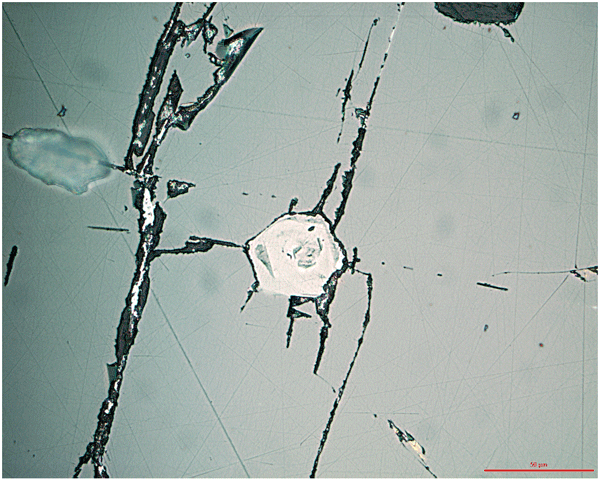
Skogbyite, with the chemical formula Zr(Mg2+2Mn3+4)SiO12, is a new species in the braunite group of minerals. It was discovered in a complex mineral assemblage, essentially a very poor manganese ore, from the Långban Fe–Mn oxide deposit, Värmland County, Bergslagen ore province, Sweden. It is named after the Swedish mineralogist Henrik Skogby (b. 1956). It is a new mineral attesting to the localised mobility and reactivity of zirconium under very special geological conditions.
Dan Holtstam, Fernando Cámara, Henrik Skogby, Andreas Karlsson, and Alessandro De Leo
Eur. J. Mineral., 37, 221–231, https://doi.org/10.5194/ejm-37-221-2025, https://doi.org/10.5194/ejm-37-221-2025, 2025
Short summary
Short summary
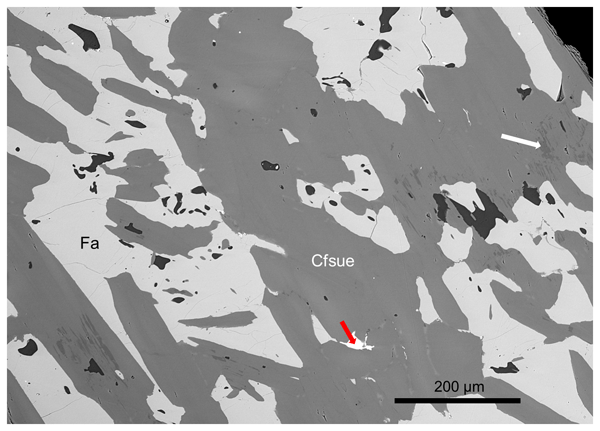
The mineral clino-ferro-suenoite, with the chemical formula ◻Mn2Fe2+5Si8O22(OH)2, was historically named “dannemorite” or “manganogrunerite” and is a member of the amphibole supergroup. It is now formally approved by the International Mineralogical Association. It occurs in iron–manganese-bearing rock from the Hilläng mines, Dalarna, Sweden, and is associated with the minerals fayalite, spessartine, ferro-actinolite, calcite, magnetite and pyrite. It formed by replacement of Mn-bearing fayalite.
Monika Koch-Müller, Christian Lathe, Bernd Wunder, Oona Appelt, Shrikant Bhat, Andreas Ebert, Robert Farla, Vladimir Roddatis, Anja Schreiber, and Richard Wirth
Eur. J. Mineral., 36, 1023–1036, https://doi.org/10.5194/ejm-36-1023-2024, https://doi.org/10.5194/ejm-36-1023-2024, 2024
Short summary
Short summary
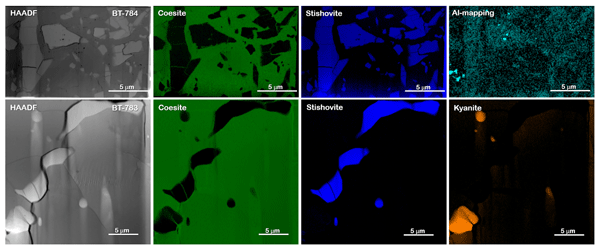
We examined the influence of Al2O3 and H2O on the position of the coesite–stishovite transition by means of in situ X‑ray diffraction measurements with the large-volume press at the synchrotron PETRA III in Hamburg. The position of the transition was found to be shifted almost in parallel by about 1.5 GPa to lower pressures compared to results for the pure SiO2 system by Ono et al. (2017). Stishovite of this study containing Al and H is only partially quenchable but transforms back to coesite.
Luca Bindi, Paola Bonazzi, Laura Chelazzi, Matteo M. N. Franceschini, Giovanni O. Lepore, Marta Morana, Giovanni Pratesi, Alice Taddei, Matteo Zoppi, and Silvio Menchetti
Eur. J. Mineral., 36, 615–622, https://doi.org/10.5194/ejm-36-615-2024, https://doi.org/10.5194/ejm-36-615-2024, 2024
Short summary
Short summary
The As4S6 molecule was missing in the reported structures of crystalline As chalcogenides. Here we report the first occurrence of the As4S6 molecule together with the other known As4Sn (n = 3, 4, 5) molecules randomly replacing each other in the crystalline structure of a new monoclinic product obtained by the light-induced alteration of the mineral alacranite, As8S9.
Dan Holtstam, Jörgen Langhof, Henrik Friis, Andreas Karlsson, and Muriel Erambert
Eur. J. Mineral., 36, 311–322, https://doi.org/10.5194/ejm-36-311-2024, https://doi.org/10.5194/ejm-36-311-2024, 2024
Short summary
Short summary
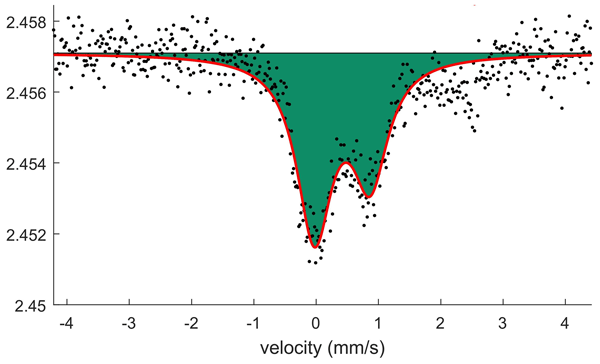
We described two new minerals, igelströmite and manganoschafarzikite, from the Långban manganese–iron deposit in Värmland, Sweden. The chemical formulae are Fe3+(Sb3+Pb2+)O4 and Mn2+Sb3+2O4, respectively. They belong to a new mineral group, where all members have the same crystal structure. It is called the minium group, after the lead-oxide mineral that is the oldest known substance of this kind.
Dan Holtstam, Fernando Cámara, Andreas Karlsson, Henrik Skogby, and Thomas Zack
Eur. J. Mineral., 34, 451–462, https://doi.org/10.5194/ejm-34-451-2022, https://doi.org/10.5194/ejm-34-451-2022, 2022
Short summary
Short summary
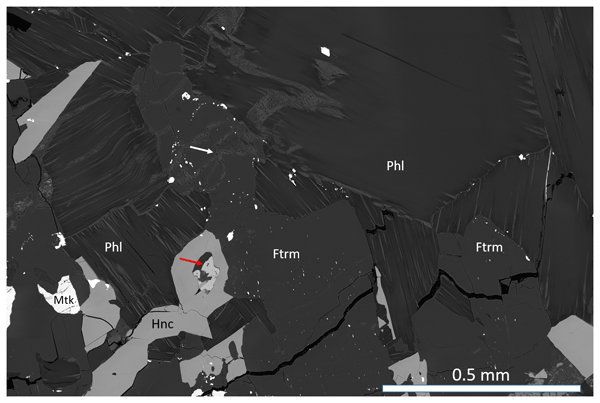
A new mineral has been discovered, an amphibole, with the name ferri-taramite, which has now been approved by the International Mineralogical Association. The paper discusses the significance of the discovery in relation to other amphiboles found worldwide. This taramite is unique in that it is from a skarn associated with ore and is not of magmatic origin. For the description we have used many methods, including X-ray diffraction, chemical analyses and several types of spectroscopy.
Melanie J. Sieber, Max Wilke, Oona Appelt, Marcus Oelze, and Monika Koch-Müller
Eur. J. Mineral., 34, 411–424, https://doi.org/10.5194/ejm-34-411-2022, https://doi.org/10.5194/ejm-34-411-2022, 2022
Short summary
Short summary
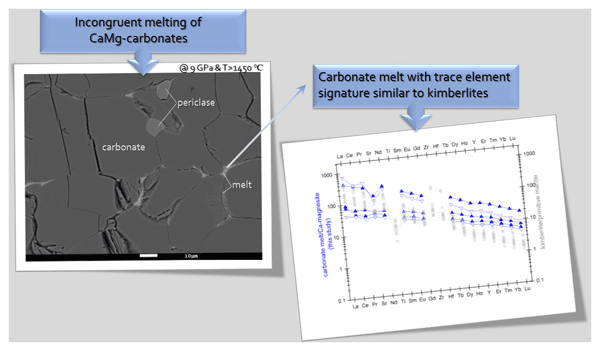
Carbonates reduce the melting point of the mantle, and carbonate melts produced in low-degree melting of a carbonated mantle are considered the precursor of CO2-rich magmas. We established experimentally the melting relations of carbonates up to 9 GPa, showing that Mg-carbonates melt incongruently to periclase and carbonate melt. The trace element signature of carbonate melts parental to kimberlites is approached by melting of Mg-rich carbonates.
Monika Koch-Müller, Oona Appelt, Bernd Wunder, and Richard Wirth
Eur. J. Mineral., 33, 675–686, https://doi.org/10.5194/ejm-33-675-2021, https://doi.org/10.5194/ejm-33-675-2021, 2021
Short summary
Short summary
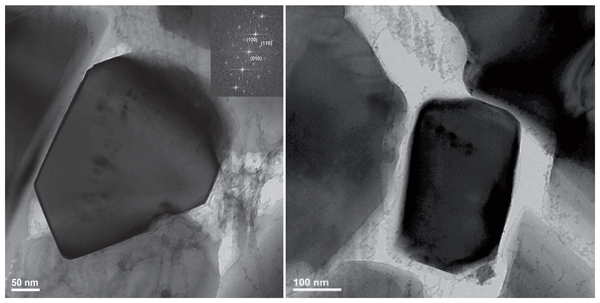
Dense hydrous magnesium silicates, like the 3.65 Å phase, are thought to cause deep earthquakes. We investigated the dehydration of the 3.65 Å phase at P and T. In both directions of the investigated simple reaction, additional metastable water-rich phases occur. The observed extreme reduction in grain size in the dehydration experiments might cause mechanical instabilities in the Earth’s mantle and, finally, induce earthquakes.
Fernando Cámara, Dan Holtstam, Nils Jansson, Erik Jonsson, Andreas Karlsson, Jörgen Langhof, Jaroslaw Majka, and Anders Zetterqvist
Eur. J. Mineral., 33, 659–673, https://doi.org/10.5194/ejm-33-659-2021, https://doi.org/10.5194/ejm-33-659-2021, 2021
Short summary
Short summary
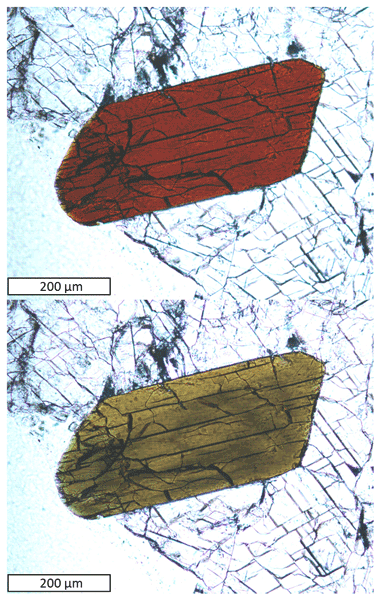
Zinkgruvanite, a barium manganese iron silicate with sulfate, is a new mineral found in drill core samples from the Zinkgruvan zinc, lead and silver mine in Sweden. It is associated with other minerals like baryte, barytocalcite, diopside and sulfide minerals. It occurs as flattened and elongated crystals up to 1 mm. It is almost black. Zinkgruvanite is closely related to the mineral yoshimuraite and based on its crystal structure, grouped with the ericssonite group of minerals.
Cited articles
Allen, R. L., Lundström, I., Ripa, M., Simeonov, A., and Christofferson, H.: Facies analysis of a 1.9 Ga, continental margin, back-arc, felsic caldera province with diverse Zn-Pb-Ag-(Cu-Au) sulfide and Fe oxide deposits, Bergslagen region, Sweden, Econ. Geol., 91, 979–1008, https://doi.org/10.2113/gsecongeo.91.6.979, 1996.
Andersson, S. S., Jonsson, E., and Sadeghi, M.: A synthesis of the REE-Fe-polymetallic mineral system of the REE-line, Bergslagen, Sweden: New mineralogical and textural-paragenetic constraints, Ore Geol. Rev., 174, 106725, https://doi.org/10.1016/j.oregeorev.2024.106275, 2024.
Bahfenne, S., Rintoul, L., Langhof, J., and Frost, R.L.: Single-crystal Raman spectroscopy of natural paulmooreite Pb2As2O5 in comparison with the synthesized analog, Am. Min., 97, 143–149, https://doi.org/10.2138/am.2011.3808, 2012.
Ballirano, P., Callegari, A., Caucia, F., Maras, A., Mazzi, F., and Ungaretti, L.: The crystal structure of vicanite-(Ce), a borosilicate showing an unusual (Si3B3O18)15− polyanion, Am. Min., 87, 1139–1143, https://doi.org/10.2138/am-2002-8-911, 2002.
Bindler, R., Segerström, U., Pettersson-Jensen, I.-M., Berg, A., Hansson, S., Holmström, H., Olsson, K., and Renberg, I.: Early medieval origins of iron mining and settlement in central Sweden: multiproxy analysis of sediment and peat records from the Norberg mining district, J. Archaeol. Sci., 38, 291–300, https://doi.org/10.1016/j.jas.2010.09.004, 2011.
Brese, N. E. and O'Keeffe, M.: Bond-valence parameters for solids, Acta Crystallogr., B47, 192–197, https://doi.org/10.1107/S0108768190011041, 1991.
Bruker: APEX5 software suite, Bruker AXS Inc., Madison, Wisconsin, USA, 2023.
Demartin, F., Gramaccioli, C. M., and Graeser, S.: The crystal structure of cervandonite-(Ce), an interesting example of As
Farmer, V. C.: The infrared spectra of minerals, 4, Mineralogical Society monograph, London, United Kingdom, 539, https://doi.org/10.1180/mono-4, 1974.
Flack, H. D., Bernardinelli, G., Clemente, D. A., Lindenc, A., and Spek, A. L.: Centrosymmetric and pseudo-centrosymmetric structures refined as non-centrosymmetric, Acta Crystallogr., B62, 695–701, https://doi.org/10.1107/S0108768106021884, 2006.
Frost, R. L. and Kloprogge, J. T.: Raman spectroscopy of some complex arsenate minerals – implications for soil remediation, Spectrochim. Acta A Mol. Biomol. Spectrosc., 59, 2797–2804, https://doi.org/10.1016/S1386-1425(03)00103-3, 2003.
Geijer, P.: Norbergs berggrund och malmfyndigheter, Sveriges Geologiska Undersökning, Ca, 24, 1–162, 1936 (in Swedish).
Geijer, P.: The geological significance of the cerium mineral occurrences of the Bastnäs type in central Sweden, Arkiv för Mineralogi och Geologi, 3, 99–105, 1961.
Geijer, P. and Magnusson, N. H.: De mellansvenska järnmalmernas geologi. Sveriges Geologiska Undersökning Ca, 35, 1–654, 1944 (in Swedish).
Holtstam, D. and Andersson, U. B.: The REE minerals of the Bastnäs-type deposits, South-Central Sweden, Can. Mineral., 45, 1073–1114, https://doi.org/10.2113/gscanmin.45.5.1073, 2007.
Holtstam, D., Andersson, U. B., Broman C., and Mansfeld, J.: Origin of REE mineralization in the Bastnäs-type Fe-REE-(Cu-Mo-Bi-Au) deposits, Bergslagen, Sweden, Miner. Deposita, 49, 933–966, https://doi.org/10.1007/s00126-014-0553-0, 2014.
Holtstam, D., Bindi, L., Hålenius, U., and Andersson, U.B.: Delhuyarite-(Ce)–Ce4Mg (Fe
Holtstam, D., Bindi, L., Hålenius, U., Kolitsch, U., and Mansfeld, J.: Ulfanderssonite-(Ce), a new Cl-bearing REE silicate mineral species from the Malmkärra mine, Norberg, Sweden, Eur. J. Mineral., 29, 1015–1026, https://doi.org/10.1127/ejm/2017/0029-2670, 2017b.
Holtstam, D., Biagioni, C., and Hålenius, U.: Brattforsite, Mn19(AsO3)12Cl2, a new arsenite mineral related to magnussonite, from Brattforsgruvan, Nordmark, Värmland, Sweden, Min. Petr., 115, 595–609, https://doi.org/10.1007/s00710-021-00749-9, 2021a.
Holtstam, D., Bindi, L., Bonazzi, P., Förster, H.-J., and Andersson, U.B.: Arrheniusite-(Ce), CaMg[(Ce7Y3)Ca5](SiO4)3(Si3B3O18)(AsO4)(BO3)F11, a new member of the vicanite group, from the Östanmossa mine, Norberg, Sweden, Can. Mineral., 59, 177–189, https://doi.org/10.3749/canmin.2000045, 2021b.
Holtstam, D., Casey, P., Bindi, L., Förster, H.-J., Karlsson, A., and Appelt, O.: Fluorbritholite-(Nd), Ca2Nd3(SiO4)3F, a new and key mineral for neodymium sequestration in REE skarns, Mineral. Mag., 87, 731–737, https://doi.org/10.1180/mgm.2023.45, 2023.
Hopsu, V.: Norbergs gruvor på 1960-70- och 80-talen, Sveriges Geologiska Undersökning, Rapporter och Meddelanden, 71, 1–47, 1992 (in Swedish).
Jonsson, E., Nysten, P., Bergman, T., Sadeghi, M., Söderhielm, J., and Claeson, D.: REE mineralisations in Sweden, in: Rare earth elements distribution, mineralisation and exploration potential in Sweden, edited by: Sadeghi, M., Sveriges geologiska undersökning, Rapporter och meddelanden, 146, 20–111, 2019.
Libowitzky, E.: Correlation of O–H stretching frequencies and O–H…O hydrogen bond lengths in minerals, Monatsh. Chem., 130, 1047–1059, https://doi.org/10.1007/BF03354882, 1999.
Magnusson, N. H.: Malm i Sverige 1. Mellersta och södra Sverige, Almqvist & Wiksell, Stockholm, 320 pp., ISBN 91-20-05545-5, 1973 (in Swedish).
Mandarino, J. A.: The Gladstone-Dale relationship; Part IV, The compatibility concept and its application, Can. Mineral., 19, 441–450, 1981.
Migdisov, A. A. and Williams-Jones, A. E.: Hydrothermal transport and deposition of the rare earth elements by fluorine-bearing aqueous liquids, Miner. Deposita, 49, 987–997, https://doi.org/10.1007/s00126-014-0554-z, 2014.
Migdisov, A., Williams-Jones, A. E., Brugger, J., and Caporuscio, F. A.: Hydrothermal transport, deposition, and fractionation of the REE: Experimental data and thermodynamic calculations, Chem. Geol., 439, 13–42, https://doi.org/10.1016/j.chemgeo.2016.06.005, 2016.
Müller, P., Herbst-Irmer, R., Spek, A. L., Schneider, T. R., and Sawaya, M. R.: Crystal structure refinement, a crystallographer's guide to SHELXL, edited by: Müller, P., OUP Oxford, 213 pp., ISBN 0-19-857076-7, 2006.
Nordstrom, D.K., Majzlan, J., and Königsberger, E.: Thermodynamic properties for arsenic minerals and aqueous species, Rev. Mineral. Geochem., 79, 217–255, https://doi.org/10.2138/rmg.2014.79.4, 2014.
Pekov, I. V., Chukanov, N. V., Britvin, S. N., Kabalov, Y. K., Göttlicher, J., Yapaskurt, V. O., Zadov, A. E., Krivovichev, S. V., Schüller, W., and Ternes, B.: The sulfite anion in ettringite-group minerals: a new mineral species hielscherite, Ca3Si(OH)6(SO4)(SO3)11H2O, and the thaumasite–hielscherite solid-solution series, Mineral. Mag., 76, 1133–1152, https://doi.org/10.1180/minmag.2012.076.5.06, 2012.
Pokrovsky, G., Gout, R., Schott, J., Zotov, A., and Harrichoury, J. C.: Thermodynamic properties and stoichiometry of As(III) hydroxide complexes at hydrothermal conditions, GCA, 60, 737–749, https://doi.org/10.1016/0016-7037(95)00427-0, 1996.
Sädbom, S.: Gruvhål i Norbergs kommun. Risker för människor och egendom. Bergskraft Bergslagen AB, Rapport för Norbergs kommun, 1–20 + appendices, 2015.
Sahlström, F., Jonsson, E., Högdahl, K., Troll, V. R., Harris, C., Jolis, E. M., and Weis, F.: Interaction between high-temperature magmatic fluids and limestone explains `Bastnäs-type' REE deposits in central Sweden, Sci. Rep., 9, 15203, https://doi.org/10.1038/s41598-019-49321-8, 2019.
Sarap, H.: Studien an den Skarnmineralien der Åsgrube im Eisenerzfeld von Norberg, Mittelschweden, GFF, 79, 542–571, https://doi.org/10.1080/11035895709447189, 1957 (in German).
Škoda, R., Plášil, J., Čopjaková, R., Novák, M., Jonsson, E., Galiová, M.V., and Holtstam, D.: Gadolinite-(Nd), a new member of the gadolinite supergroup from Fe–REE deposits of Bastnäs-type, Sweden, Mineral. Mag., 82, S133–S145, https://doi.org/10.1180/minmag.2017.081.047, 2018.
Shannon, R. D.: Revised effective ionic radii and systematic studies of interatomic distances in halides and chalcogenides, Acta Crystallogr., A32, 751–767, 1976.
Sheldrick, G. M.: Crystal structure refinement with SHELXL, Acta Crystallogr., C71, 3–8, 2015.
Spek, A. L.: Structure validation in chemical crystallography, Acta Crystallogr, D Biol. Crystallogr., 65, 148–155, https://doi.org/10.1107/S090744490804362X, 2009.
Taddei, A., Bonazzi, P., Förster, H.-J., Casey, P., Holtstam, D., Karlsson, A., and Bindi, L.: Multi-analytical characterization of an unusual epidote-supergroup mineral from Malmkärra, Sweden: Toward the new (OH)-analog of dollaseite-(Ce), Am. Min., 110, 594–602, https://doi.org/10.2138/am-2024-9438, 2025.
Wilson, A. J. C. (Ed.): International Tables for Crystallography, Volume C: Mathematical, physical and chemical tables, Kluwer Academic, Dordrecht, NL, 1992.
Short summary
Åsgruvanite-(Ce) is a new rare Earth element (REE) mineral from Åsgruvan in Västmanland, Sweden, linked to Bastnäs-type mineralisation. The chemical formula ideally includes cerium, aluminium, silicon, arsenic, carbonate groups, chlorine, and fluorine. The mineral forms small, grey-green, lustrous grains with distinct cleavage and high density and is associated with carbonates and REE minerals like gadolinite and an allanite-like mineral. It has a unique layered crystal structure.
Åsgruvanite-(Ce) is a new rare Earth element (REE) mineral from Åsgruvan in Västmanland, Sweden,...


