the Creative Commons Attribution 4.0 License.
the Creative Commons Attribution 4.0 License.
 | 21 Jul 2026
Xianhuaite-(Ce), K2CeNb5O15, a new niobium mineral from the Bayan Obo deposit, China
Bo Yang
Li Yang
Ningyue Sun
Guowu Li
Junfang Yu
Guoying Yan
Jianyong Liu
Yonggang Zhao
Wenxiang Meng
Zhenyu Chen
Lei Chen
Ze Liu
Zhao Yan
Xinyu Hou
Xin Ao
Jinlong Wang
Xianhuaite-(Ce), K2CeNb5O15, is a new mineral species discovered in the Bayan Obo deposit, Inner Mongolia, China. The mineral is named in honor of Professor Xianhua Li in recognition of his outstanding contributions to research on the Bayan Obo deposit. It occurs as brownish-red to pale yellow-brown tetragonal prisms or irregular granules and exhibits a Mohs hardness of 5–6, an adamantine luster, and a calculated density of 5.23 g cm−3. Electron microprobe analysis yields the empirical formula A1(K1.30Ba0.69Sr0.02)Σ2.01A2(Ce0.39La0.31Nd0.04Pr0.02Ca0.15Na0.09)Σ1.00B(Nb4.75FeTi0.09Mg0.04)Σ5.01O15. Xianhuaite-(Ce) crystallizes in the tetragonal system, space group P4mbm, with unit-cell parameters a=12.5355(4) Å, c=3.9213(2) Å, V=616.19(5) Å3, and Z=2. Its crystal structure adopts a tetragonal tungsten bronze (TTB)-type framework, characterized by corner-sharing NbO6 octahedra forming channels hosting K, Ba, and rare earth element (REE) cations. Xianhuaite-(Ce) is associated with minerals typical of skarnization assemblages (e.g. dolomite, forsterite, phlogopite, and chlorite), as well as other Nb phases, including fersmite, columbite-(Fe), fergusonite-(Ce), and aeschynite. As the first naturally occurring mineral with a TTB-type structure, xianhuaite-(Ce) expands the known structural diversity of Nb minerals and provides new mineralogical constraints on Nb mineralization at Bayan Obo.
- Article
(5582 KB) - Full-text XML
-
Supplement
(297 KB) - BibTeX
- EndNote


The Bayan Obo deposit in northern China is a world-class rare earth element (REE)–niobium (Nb) deposit (Huang et al., 2024; Li et al., 2025). In addition to hosting the largest known global REE reserves, it contains significant Nb resources (She et al., 2021; Ren et al., 2023; Li et al., 2024; Chen et al., 2025). Owing to the strategic importance of REE and Nb in advanced technological and defense applications (Rooks et al., 2025), the deposit has been the focus of sustained geological and mineralogical research (Institute of Geochemistry, Chinese Academy of Sciences, 1988; Yang et al., 2024a; Yu et al., 2024).
Despite decades of investigation, fundamental mineralogical issues concerning Nb enrichment at Bayan Obo remain unresolved (Institute of Geochemistry, Chinese Academy of Sciences, 1988; Yang et al., 2024a). Nb is distributed among numerous discrete mineral species rather than being concentrated in a single dominant host. To date, at least 30 Nb or Nb-bearing minerals have been identified, reflecting exceptional mineralogical diversity and extensive elemental isomorphism (Yang et al., 2024b). Such complexity obscures the crystallochemical mechanisms governing Nb incorporation, stabilization, and redistribution, underscoring the necessity of mineral-scale investigations (Yang et al., 2024a; Yu et al., 2024). In particular, Nb or Nb-bearing minerals with previously unrecognized compositional or structural characteristics are critical for constraining the crystallographic controls on Nb mineralization.
Within this context, xianhuaite-(Ce), a compositionally and structurally distinct Nb mineral, provides new insight into Nb mineralization processes. It is the first naturally occurring mineral exhibiting a tetragonal tungsten bronze (TTB)-type structure and has the ideal chemical formula K2CeNb5O15. The mineral and its name have been approved by the International Mineralogical Association Commission on New Minerals, Nomenclature and Classification (IMA-CNMNC) under proposal number IMA 2024-091.
Xianhuaite-(Ce) is named in honor of Professor Xianhua Li, academician of the Chinese Academy of Sciences, in recognition of his significant contributions to studies of early Earth and planetary evolution and especially to recent advances in the geochronology, geochemistry, and resource development of the Bayan Obo deposit. The approved mineral symbol is Xhu-Ce. The holotype specimen (under catalog no. GMCTM2024012) is deposited in the Geological Museum of China (Xisi Yangrou hutong no. 15, Xicheng District, Beijing), P.R. China. The co-type specimen is deposited at the Crystal Structure Laboratory, China University of Geosciences, Beijing 100083, People's Republic of China, under catalog no. BYEB-3.
Xianhuaite-(Ce) was identified in two specimens collected from the East Orebody and the East Contact Zone of the Bayan Obo deposit. Overviews of the geology and mineralogy of the Bayan Obo deposit can be found in the Institute of Geochemistry, Chinese Academy of Sciences (1988), and Yang et al. (2024b), among other publications.
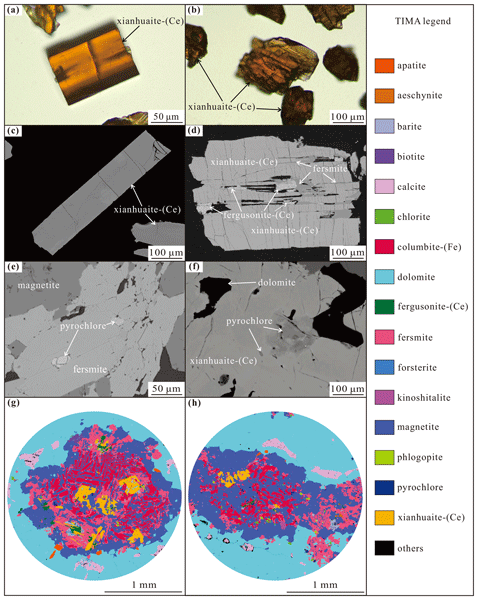
Sample BY-E2024-103 was collected from the East Orebody (coordinates: 41°48′01′′ N, 109°59′39′′ E). The specimen occurs as black-brown megacrystalline aggregates at the contact between aegirine-type Nb–REE–Fe ore and dolomite-type Nb–REE–Fe ore. Analytical work was conducted on fragments mechanically separated from the sample (Fig. 1a–d). The principal minerals in sample BY-E2024-103 are xianhuaite-(Ce), fersmite, and fergusonite-(Ce) (Fig. 1a–d).
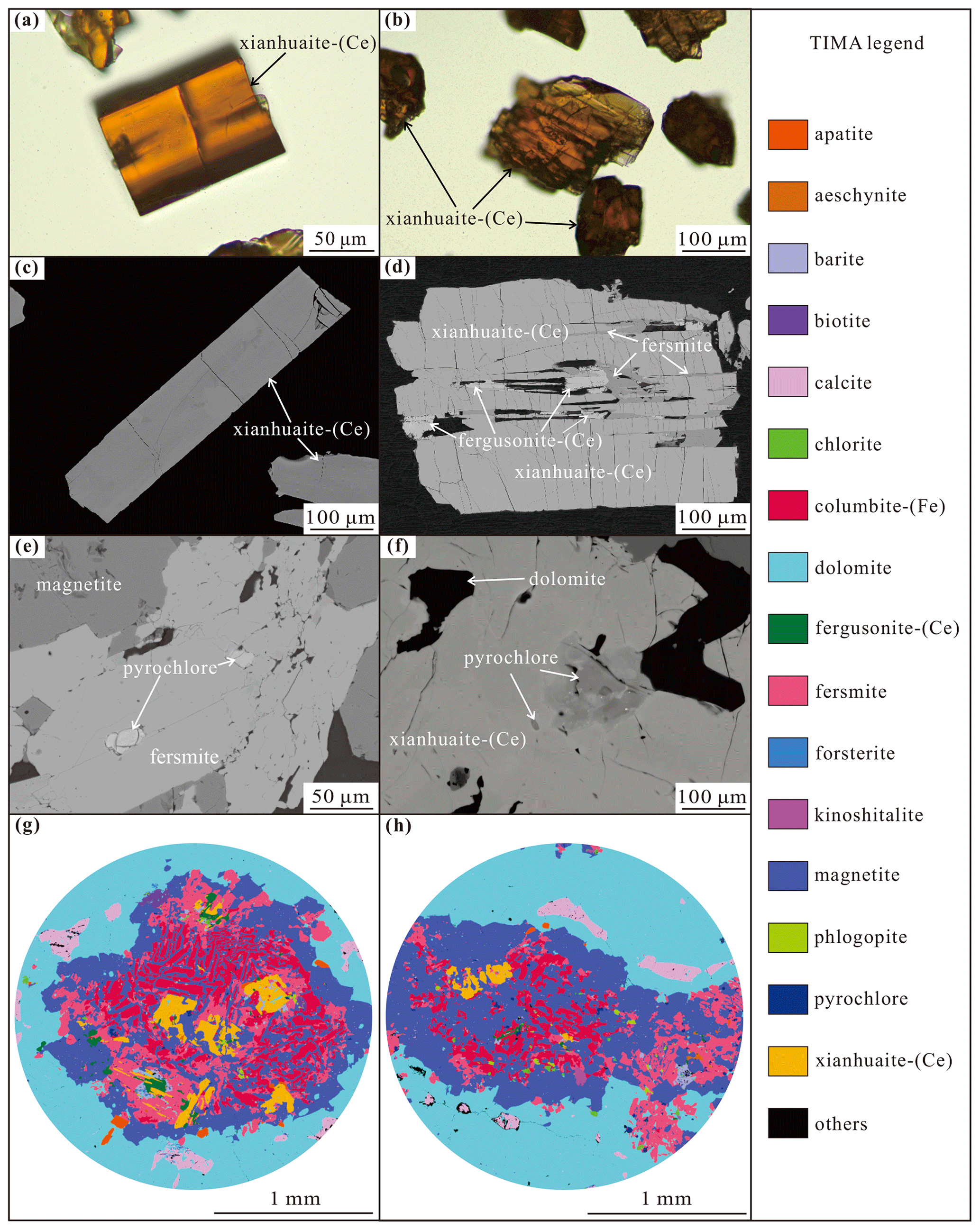
Figure 1Transmitted-light photomicrographs, backscattered electron (BSE) images, and TIMA false-color mineral maps of samples. (a) Euhedral xianhuaite-(Ce) crystals observed under transmitted light in sample BY-E2024-103. (b) Well-developed cleavage sets in xianhuaite-(Ce) from sample BY-E2024-103 (transmitted light). (c–d) Euhedral grains of xianhuaite-(Ce) and associated minerals in sample BY-E2024-103 (BSE). (e–f) Relict pyrochlore enclosed within fersmite and xianhuaite-(Ce) in sample BY-EC2024-14 (BSE). (g–h) TIMA false-color mineral maps illustrating the spatial distribution of xianhuaite-(Ce) and its paragenetic associations with other minerals in sample BY-EC2024-14.
Sample BY-EC2024-14 was collected from the East Contact Zone (coordinates: 41° 48′47′′ N, 110° 01′27′′ E) and belongs to dolomite-type Nb–REE–Fe ore. After cutting and polishing, the specimen was analyzed using a Tescan integrated mineral analyzer (TIMA) (Fig. 1e–h). Quantitative mineralogical data indicate that the sample is composed of dolomite (71.89 vol %), magnetite (12.19 vol %), fersmite (8.00 vol %), calcite (2.69 vol %), columbite-(Fe) (1.72 vol %), xianhuaite-(Ce) (0.40 vol %), aeschynite (0.37 vol %), fergusonite-(Ce) (0.28 vol %), kinoshitalite (0.21 vol %), pyrochlore (0.19 vol %), phlogopite (0.18 vol %), barite (0.15 vol %), apatite (0.10 vol %), chlorite (0.09 vol %), biotite (0.05 vol %), and forsterite (0.02 vol %), with other minerals accounting for 1.47 vol % (Fig. 1g–h). In this sample, xianhuaite-(Ce) occurs in close spatial association with magnetite, fersmite, columbite-(Fe), and fergusonite-(Ce), forming mineral aggregates (Fig. 1g–h). Anhedral pyrochlore grains are commonly preserved as inclusions within both fersmite and xianhuaite-(Ce) (Fig. 1e–f).
Xianhuaite-(Ce) occurs as irregular grains or tetragonal prisms ranging in size from 0.03 × 0.03 × 0.1 to 0.4 × 0.4 × 0.6 mm. In hand specimens the mineral is dark brown to black brown, whereas thin fragments appear pale yellow brown to brownish red in transmitted light (Fig. 1a–b), with a white streak and adamantine luster. No fluorescence is observed under longwave (365 nm) ultraviolet radiation. The mineral has a Mohs hardness of 5–6 (measured using a Mohs hardness test pen) and a micro-indentation hardness of 469.5 (mean) with a range of 448.7–490.2 kg mm−2 (VHN, 200 g load). It displays perfect cleavage on {001} (Fig. 1b), with no parting observed, and is brittle in tenacity, showing a conchoidal fracture. The calculated density, based on the empirical formula and unit-cell volume refined from single-crystal XRD data, is 5.23 g cm−3. Magnetic properties are none.
This translucent mineral has a calculated refractive index (Ncalc) of 2.22 (determined by N= Kd + 1, with K values from Mandarino, 1981). Reflectivity ranges from Rmin–Rmax: 17.6–18.5 (470 nm), 17.4–18.5 (546 nm), 17.3–18.3 (589 nm), and 17.2–18.4 (650 nm). The reflectance values for xianhuaite-(Ce) were measured in air using a CRAIC 20/30PV Pro microspectrophotometer at Westlake University (Hangzhou, China), with aluminum metal (R= 90 %) as the reference material. Data were collected from six spots across six grains (×50 objective, 5×5 µm aperture), and reflectance results are shown in Fig. 2. In reflected light, the mineral appears grey.
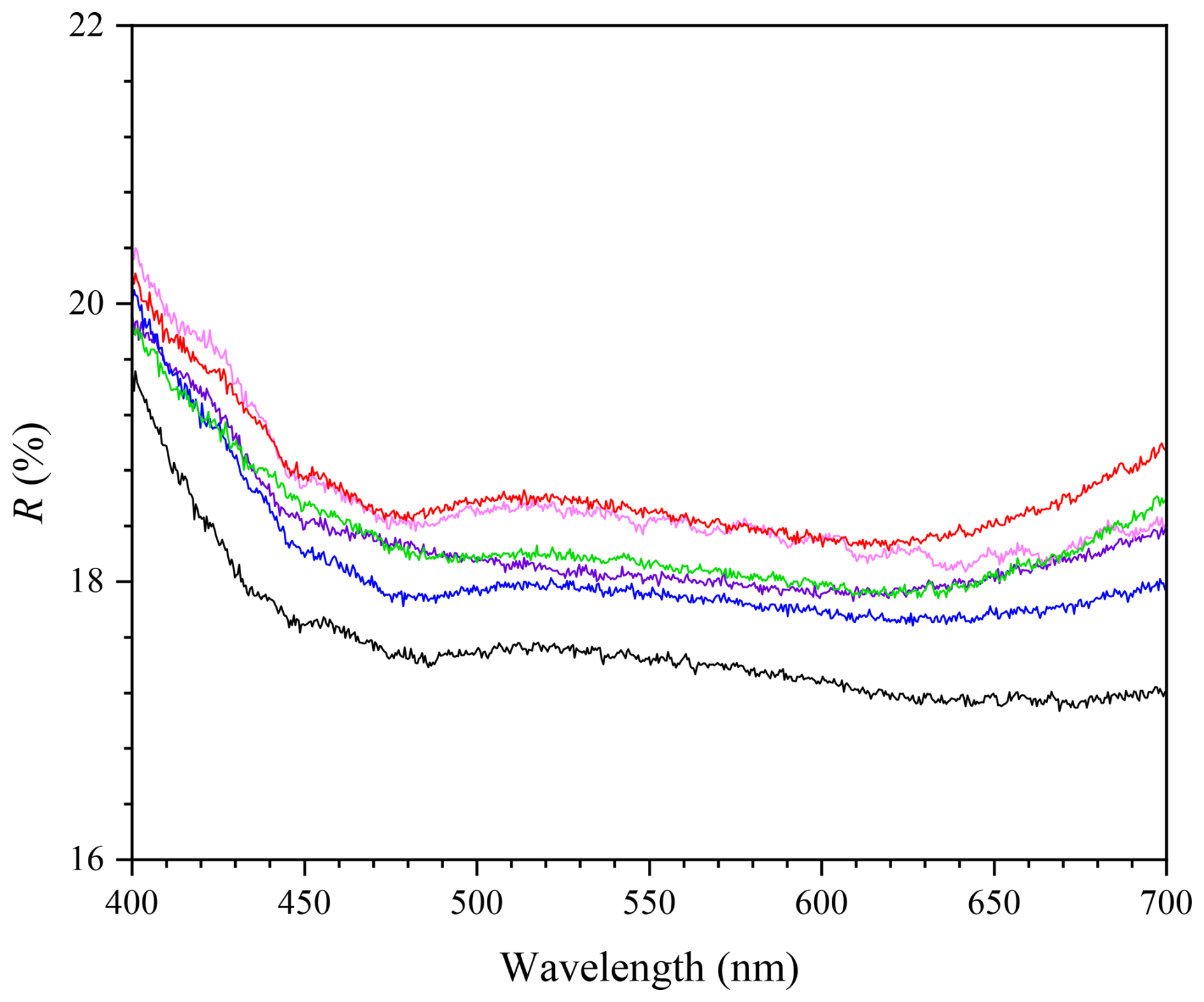
Figure 2Reflectance data (R, %) for xianhuaite-(Ce) in air, plotted versus wavelength in nm.
Electron probe microanalysis (EPMA) with wavelength-dispersive spectrometry (WDS) was performed using a JXA-iHP200F electron probe microanalyzer at the Institute of Mineral Resources, Chinese Academy of Geological Sciences. Analytical conditions were 15 kV accelerating voltage, 20 nA beam current, and 10 spot analyses on a single grain. Backscattered electron imaging (Fig. 1e) confirms the chemical homogeneity at the micrometer scale. Elemental contents and their variation ranges are detailed in Table 1.
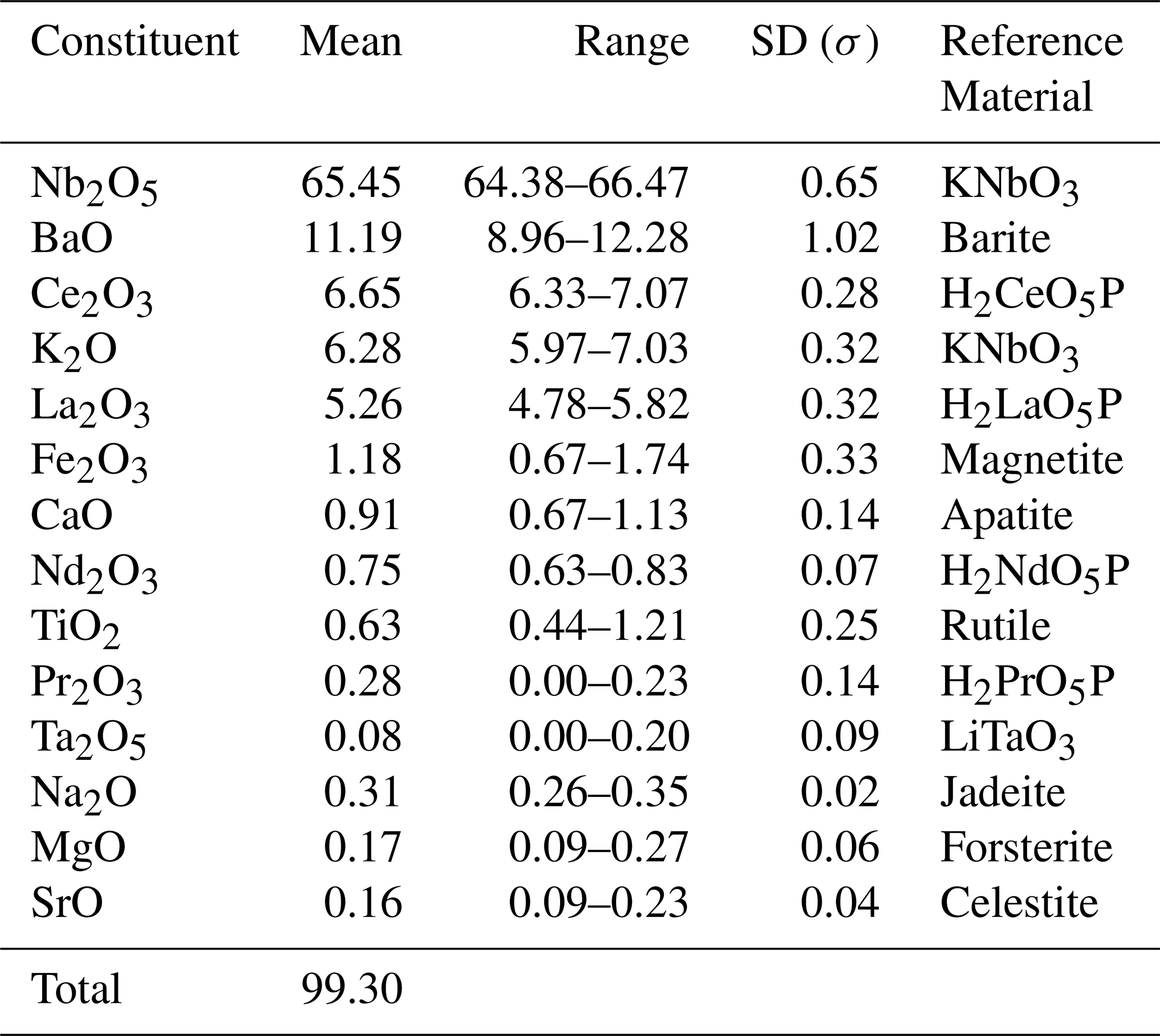
Calculated based on oxygen (O) = 15 atoms per formula unit (apfu), the empirical formula of xianhuaite-(Ce) is A1(K1.30Ba0.69Sr0.02)Σ2.01A2(Ce0.39La0.31Nd0.04Pr0.02Ca0.15 Na0.09)Σ1.00B(Nb4.75FeTi0.09Mg0.04)Σ5.01O15. The simplified formula is (K,Ba)2(Ce,La)(Nb,Fe)5O15, and the further refined ideal formula is K2CeNb5O15. For this ideal formula, the corresponding oxide composition and weight percentages are Nb2O5 72.01, Ce2O3 17.78, and K2O 10.21, with a total of 100 wt %.
Raman measurements were performed using a WITec 300R spectrometer in reflection mode at the Institute of Geology and Geophysics, Chinese Academy of Sciences (IGGCAS), equipped with a 300 line mm−1 grating and laser excitation at 532 nm. Spectral data were acquired over the 50–4000 cm−1 range with a 45 s collection time, 20 scans, and 0.5 cm−1 resolution.
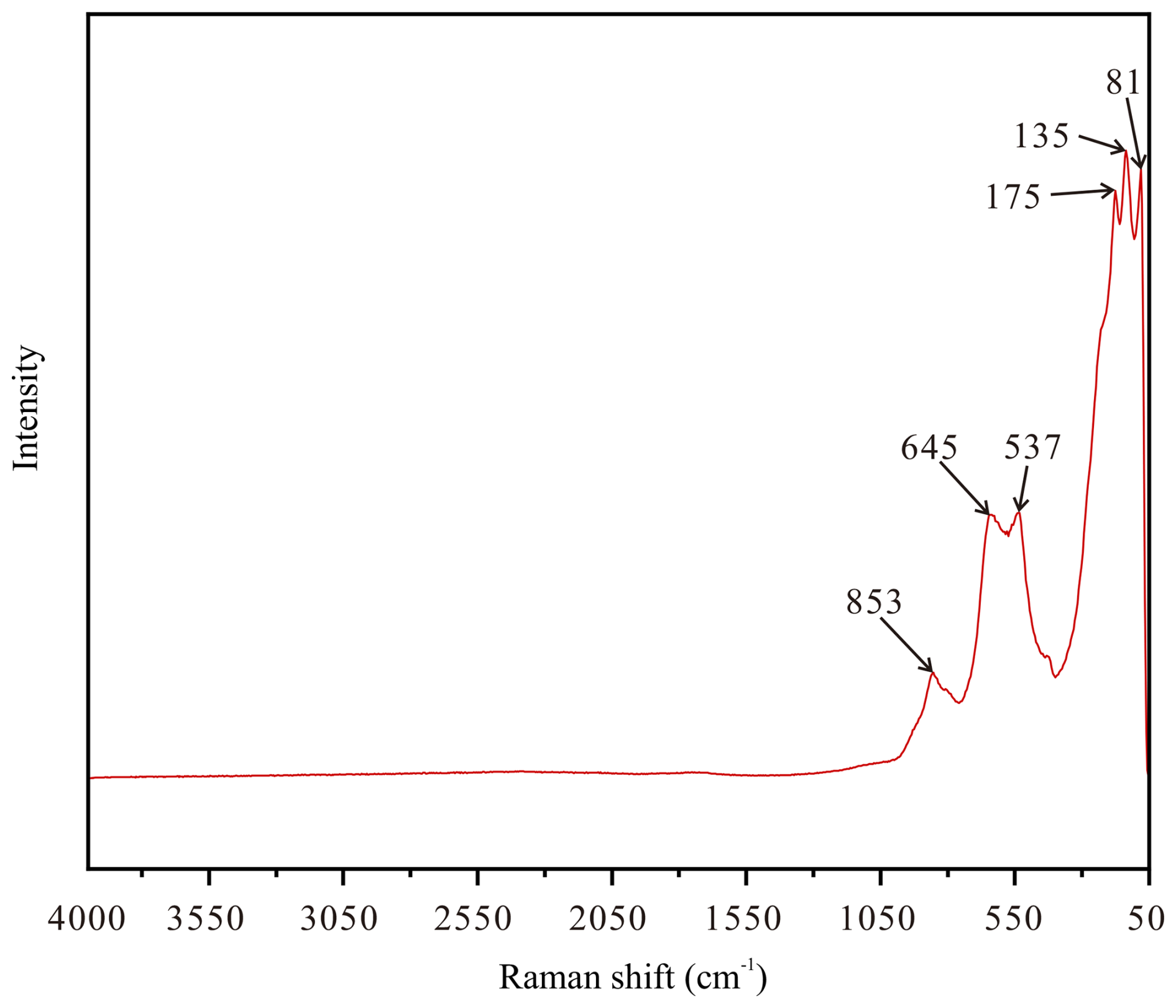
The Raman spectrum of xianhuaite-(Ce) (Fig. 3) exhibits characteristic vibrational modes diagnostic of the TTB-type structure. A prominent band centered at ∼853 cm−1 is assigned to NbO6 octahedral vibrations. Additional peaks at 645 and 537 cm−1 correspond to Nb–O stretching vibrations within the NbO6 octahedra. In the low-frequency region, a peak at 175 cm−1 is attributed to internal NbO6 modes, while external modes at 135 and 81 cm−1 are typical of cation motions in the tetragonal phase of TTB-type structures (Amira et al., 2010). No peaks are observed above 1000 cm−1.
6.1 X-ray powder diffraction
X-ray powder diffraction measurements were performed using a Rigaku XtaLAB PRO-007HF diffractometer operated in crystal rotation mode at the China University of Geosciences. The instrument was configured with a rotating anode microfocus X-ray source (MoKα radiation, λ= 0.71073 Å), generating 50 kV and 24 mA, coupled to a hybrid pixel array detector for signal acquisition. Collected powder patterns were processed to refine unit-cell parameters via Chekcell software. Simulated diffraction patterns, calculated based on the refined structure, were generated using VESTA (Momma and Izumi, 2011) to facilitate phase identification and comparison.
X-ray powder diffraction data of xianhuaite-(Ce) are presented in Table 2. There is a good match between the observed and calculated powder diffraction patterns. The unit-cell parameters refined from the powder-diffraction data are a= 12.5458(8) Å, c= 3.9279(1) Å, and V= 618.24(9) Å3.
Table 2X-ray powder diffraction data (d in Å, intensity is I/I0) for xianhuaite-(Ce).
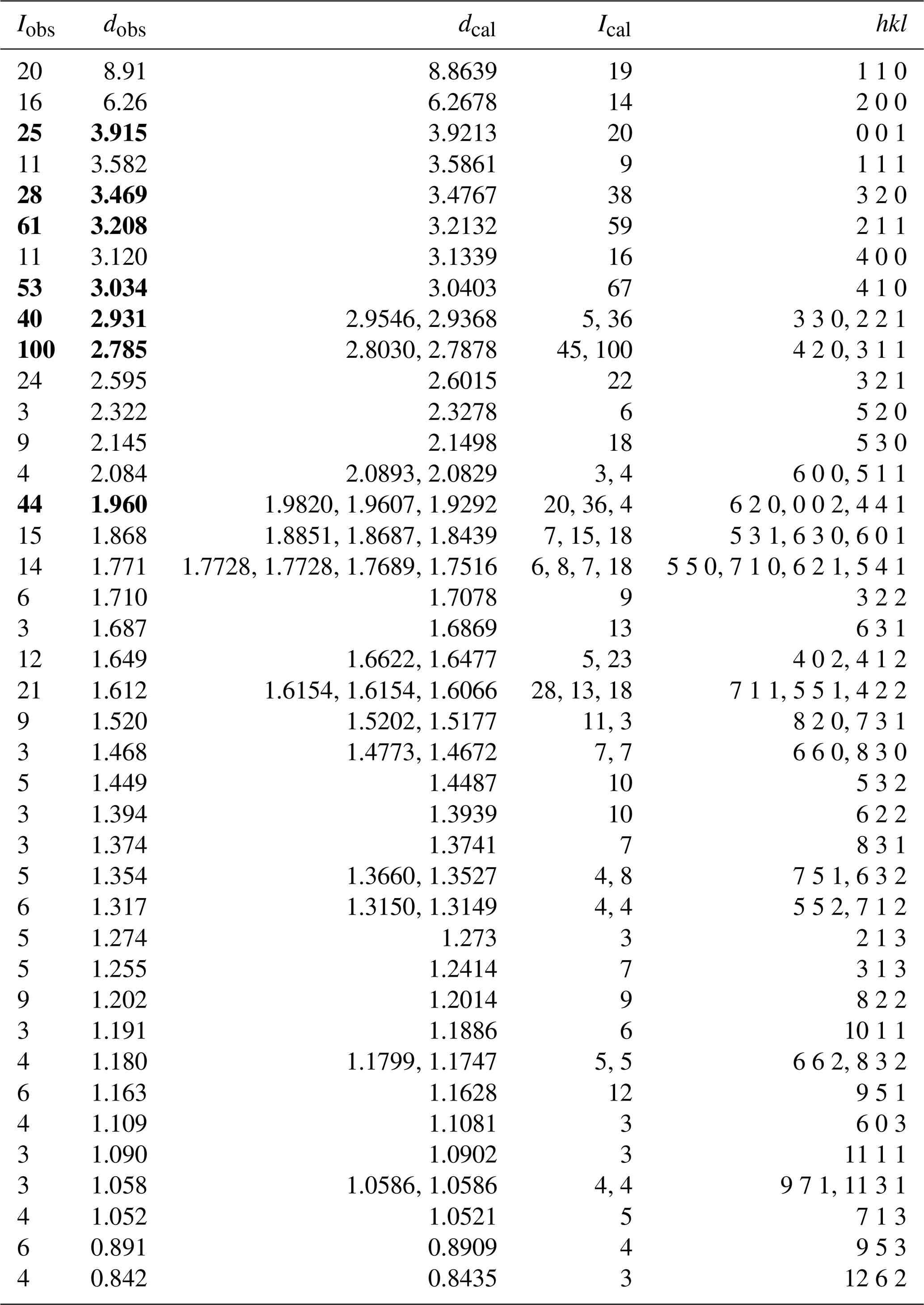
Lines with 3 are listed, and the seven strongest observed lines are in bold.
6.2 Single-crystal X-ray diffraction
Single-crystal X-ray diffraction data were collected using the same Rigaku XtaLAB PRO-007HF diffractometer to maintain methodological consistency. A euhedral crystal fragment (0.02 × 0.02 × 0.01 mm) was selected for analysis, with data collection covering a hemispherical reciprocal space region defined by −15 17, −16 16, and −5 5. Raw intensity data underwent Lorentz-polarization correction and multi-scan absorption correction to minimize systematic errors. Structure determination was initiated with SHELXT (Sheldrick, 2015), followed by full-matrix least-squares refinement of atomic coordinates and displacement parameters using OLEX2-1.3 (Dolomanov et al., 2010).
The unit-cell parameters obtained from single-crystal XRD data are as follows: a= 12.5355 (4) Å, c= 3.9213 (2) Å, and V= 616.19 (5) Å3. The crystal structure is described within the space group mbm (#127). The structure was refined to R1= 0.0189 based on 427 independent reflections with I>2σI. A summary of the details for data collection and refinement procedures can be found in Table 3. Atom coordinates, site occupancies, and bond lengths are given in Tables 4–6. The bond valence sum (BVS) calculation is shown in Table 7. The crystal structure data of the xianhuaite-(Ce) is available in the Online Materials CIF file.
Table 3Information on crystal and structural refinement for xianhuaite-(Ce).
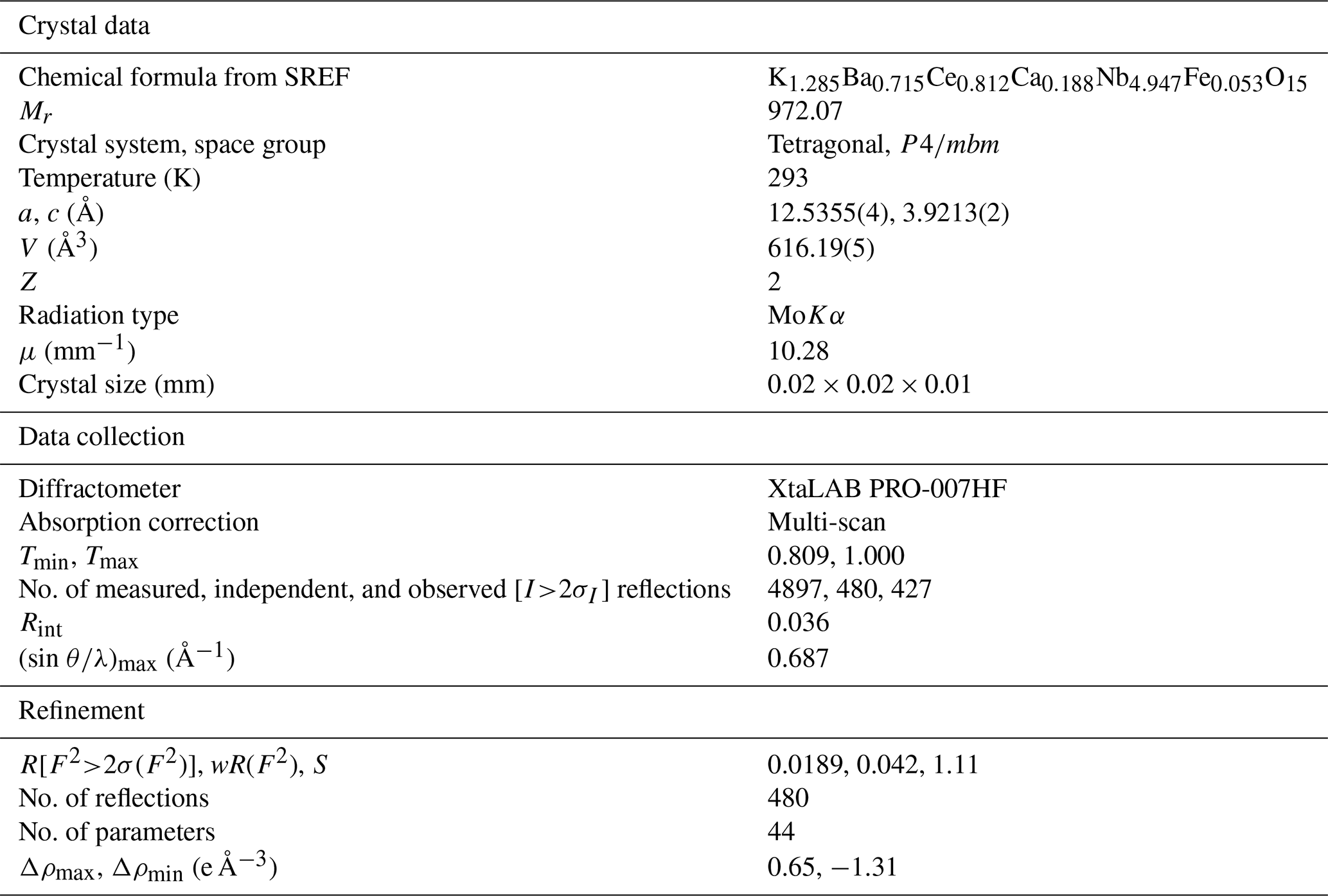
Table 4Site, Wyckoff position (Wyck.), site occupancy, fractional atomic coordinates, and equivalent isotropic displacement parameters (Å2) of atoms for xianhuaite-(Ce).
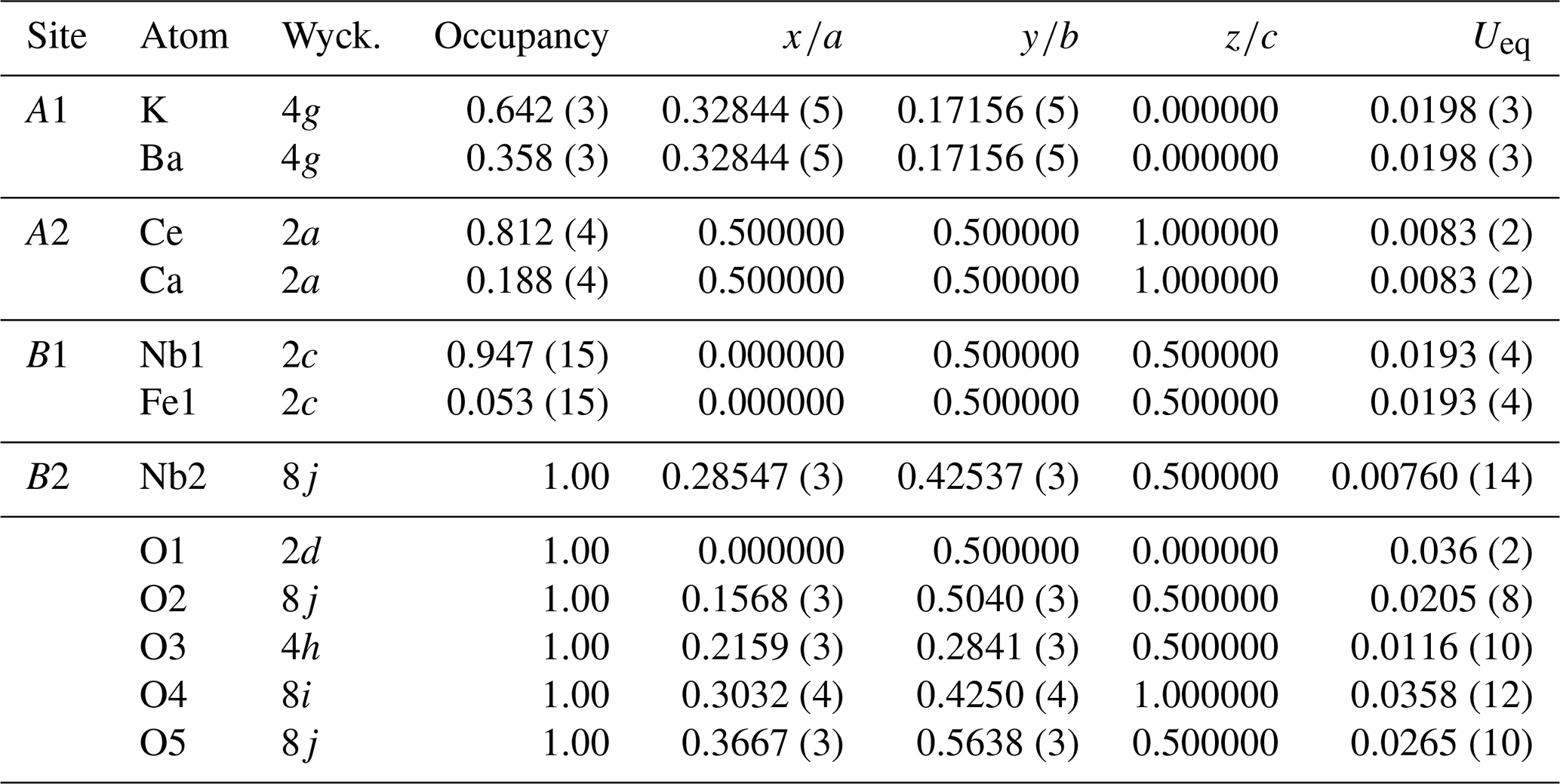
Table 5Anisotropic displacement parameters (in Å2) for xianhuaite-(Ce).
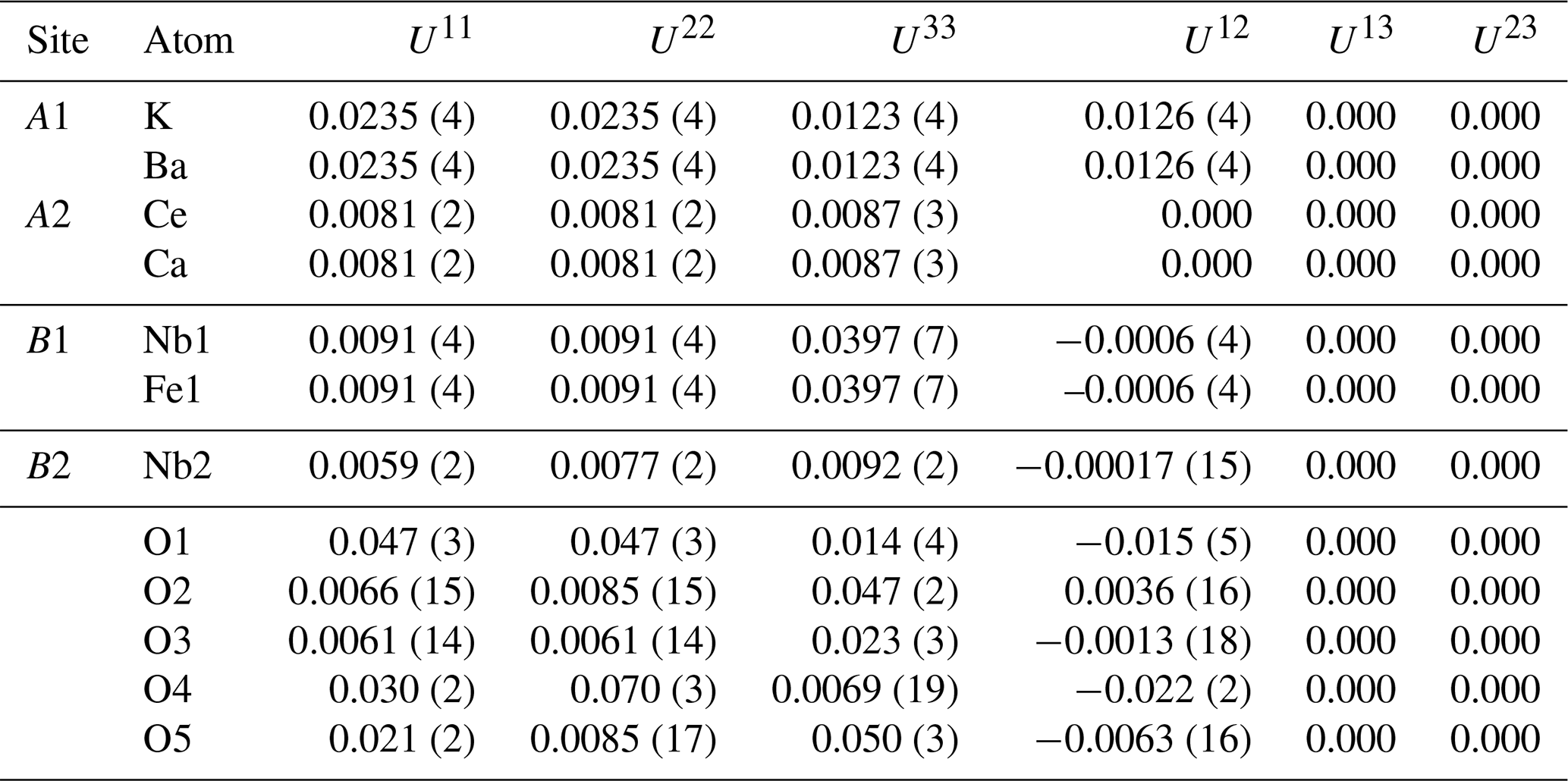
Table 6Selected geometric parameters (Å) for xianhuaite-(Ce). The bold font indicates the mean bond lengths.
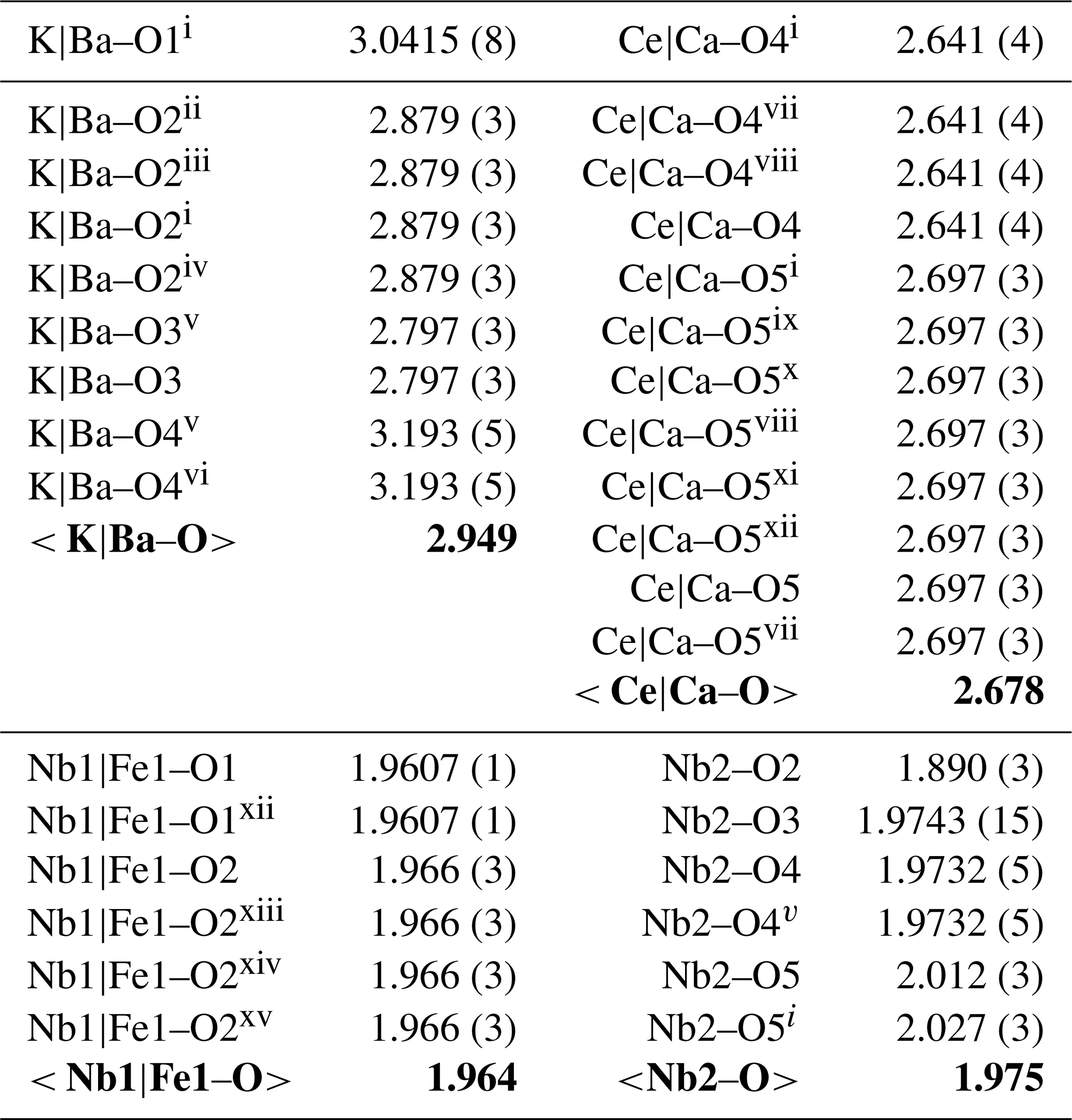
Symmetry codes: (i) 1, x, z; (ii) 1/2, y–, −z; (iii) , , ; (iv) , x, z−1; (v) x, y, z−1; (vi) , , z−1; (vii) , , ; (viii) y, , ; (ix) , , ; (x) , x, z+1; (xi) y, , ; (xii) x, y, z+1; (xiii) −x, , ; (xiv) , , ; (xv) , , z; (xvi) −y, x, z; (xvii) y, , −z; and (xviii) x, y, .
Table 7Bond valence sums for xianhuaite-(Ce).
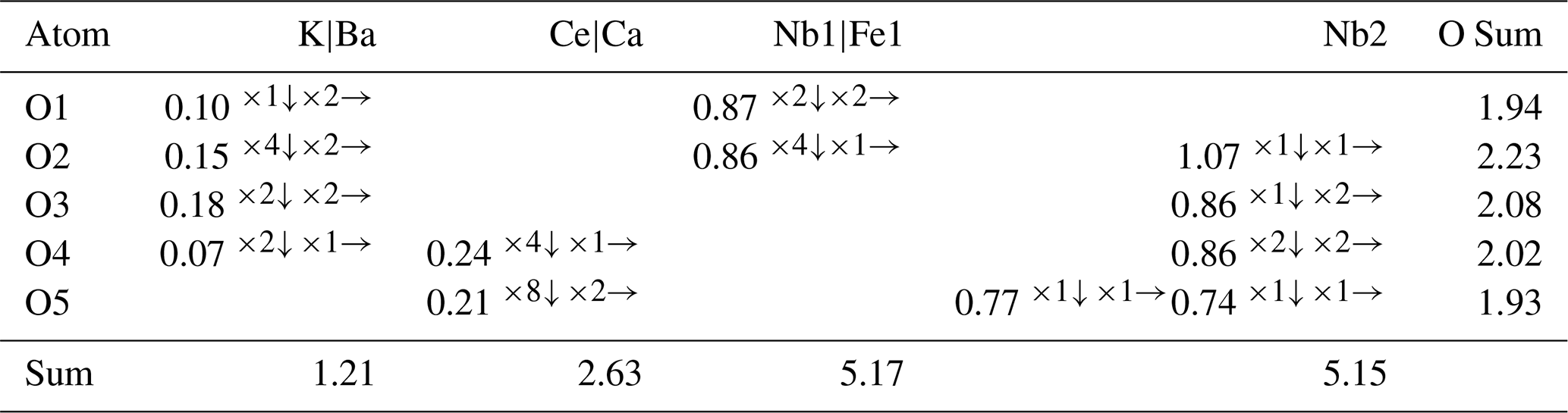
Note: the BVS was calculated from the bond valences using the ECoN21 program (Ilinca, 2022). Site occupancy – A1 site, KBa; A2 site, Ce0.812Ca0.188; B1 site, Nb0.947Fe0.053; B2 site, Nb1.00. The bond valence parameters of K+–O2−, Ba2+–O2−, Ca2+–O2−, Ce3+–O2−, and Fe3+–O2− are from Gagné and Hawthorne (2015), and those of Nb5+–O2− are from Tytko et al. (1999).
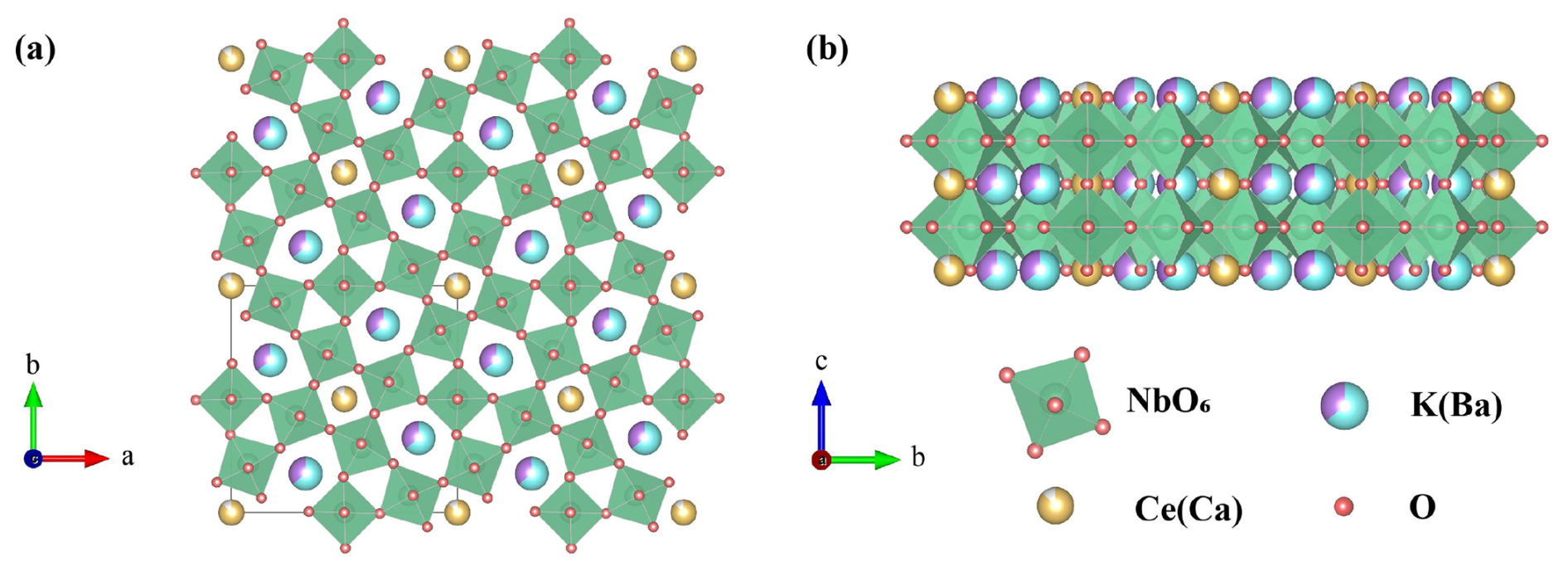
Figure 4The tetragonal tungsten bronze (TTB)-type structure of xianhuaite-(Ce). (a) Two-dimensional network of corner-sharing NbO6 octahedra with four- and five-membered rings in the ab plane. (b) K, Ba, and REE cations distributing in channels along the c axis.
Xianhuaite-(Ce) exhibits a tetragonal tungsten bronze (TTB)-type structure (Fig. 4), with NbO6 octahedra constituting the fundamental framework. These octahedra share corners, creating a tunnel structure along the c axis. In the ab plane, the octahedra interconnect to form a two-dimensional network, generating four-membered and five-membered NbO6 octahedra rings that provide channels for accommodating cations (Fig. 4a). The channels formed by the five-membered rings are slightly larger and, in xianhuaite-(Ce), host K and Ba cations. The channels formed by the four-membered rings accommodate REE and Ca cations. These large cations are distributed between the network layers in the ab plane, stabilizing the structure (Fig. 4b).
-
A1 sites: The A1 sites in the xianhuaite-(Ce) structure, which are identified as the largest cation positions within the channels composed of five-membered rings, are occupied by K and Ba ions, with a coordination number of 9. The bond lengths range from 2.80 to 3.19 Å. Structural refinement results indicate an occupancy of K0.642(3)Ba0.358(3) at the A1 sites.
-
A2 sites: The A2 sites, identified as the cation positions within the channels composed of four-membered rings, are primarily occupied by REE and Ca, with a coordination number of 12 and bond lengths ranging from 2.64 to 2.70 Å. Structural refinement results indicate an occupancy of REECe0.812(4)Ca0.188(4) at this position.
-
B sites: The B sites are octahedrally coordinated positions, further divided into two crystallographically independent sites, B1 and B2, both predominantly occupied by Nb. The atom at the B1 site exhibits a slightly higher atomic displacement parameter than that at the B2 site, suggesting potential minor isomorphic substitution by lighter elements. During structural refinement, a small amount of Fe substitution was modeled at the B1 site, resulting in an occupancy of Nb0.947(15)Fe0.053(15), which is also supported by the chemical composition analysis. The bond lengths at the B1 site closely approximate those of an ideal octahedron, with bond lengths ranging from 1.96 to 1.97 Å and an average bond length of 1.964 Å. The B2 octahedron shows slight distortion, with bond lengths ranging from 1.89 to 2.03 Å and an average bond length of 1.975 Å.
7.1 Genesis of xianhuaite-(Ce)
The Bayan Obo deposit has undergone a complex, multistage geological evolution, resulting in exceptional diversity of Nb and Nb-bearing mineral assemblages (Yang et al., 2023; Yang et al., 2024b). Despite decades of investigation, the mechanisms of Nb mineralization remain highly debated (Yang et al., 2024c; Yu et al., 2024), largely because Nb is distributed among numerous discrete mineral phases rather than being concentrated in a single dominant host. Consequently, elucidating the formation conditions of individual Nb and Nb-bearing minerals is essential for constraining the processes responsible for Nb enrichment. In this context, the occurrence of the new mineral xianhuaite-(Ce) in both the East Orebody (BY-E2024-103) and the East Contact Zone (BY-EC2024-14) provides additional constraints on Nb mineralization at the Bayan Obo deposit.
In sample BY-EC2024-14, Nb minerals such as xianhuaite-(Ce), fersmite, and columbite-(Fe) predominantly occur as interstitial phases between magnetite grains (Fig. 1g–h). In addition, both xianhuaite-(Ce) and fersmite contain relict pyrochlore (Fig. 1e–f), indicating inheritance from an earlier Nb mineralization stage. These textural relationships are inconsistent with primary magmatic crystallization and instead suggest precipitation from Nb-bearing fluids during a later hydrothermal overprint. This interpretation is further supported by petrographic evidence for skarn-type alteration in sample BY-EC2024-14, where the assemblage of forsterite, phlogopite, chlorite, and dolomite is characteristic of magnesian skarn systems typically formed by metasomatism associated with granite intrusion into dolomitic host rocks (Mazurov et al., 2018).
The East Contact Zone is known to have experienced variable degrees of skarnization during emplacement of Permian granites (Yang et al., 2024c). Although this thermal event did not introduce new Nb into the system, it likely facilitated remobilization of pre-existing Nb (Yang et al., 2024c). Taken together, the mineral assemblages, textural relationships, and regional geological context suggest that xianhuaite-(Ce) most plausibly formed under fluid-dominated conditions during the Permian granitic thermal event, thereby recording Nb remobilization and redistribution rather than primary Nb accumulation.
Sample BY-E2024-103 is coarse-grained and lacks diagnostic mineral assemblages that would allow direct petrographic constraints on its formation. However, regional geochronological data indicate that the Permian thermal event affected the entire Bayan Obo district (Institute of Geochemistry, Chinese Academy of Sciences, 1988; Yang et al., 2024c; Yu et al., 2024; Yao et al., 2025). On this basis, xianhuaite-(Ce) in BY-E2024-103 is tentatively interpreted as having formed during the same Permian Nb remobilization event, although direct geochronological constraints are presently lacking.
7.2 Structural significance and comparison with synthetic analogues
Xianhuaite-(Ce), ideally K2CeNb5O15, has a synthetic analogue with the same ideal composition and belongs to the tetragonal tungsten bronze (TTB)-type structural family. Zeng et al. (2024) reported that this TTB-type series may undergo temperature-dependent transitions from P4bm to Ima2 and then to P4mbm upon heating, with P4mbm corresponding to the centrosymmetric high-temperature form and P4bm to a polar lower-symmetry modification of the same framework. Xianhuaite-(Ce), with the ideal formula K2CeNb5O15, is most directly comparable to synthetic K2CeNb5O15, which is described in P4mbm at room temperature. Refinement of the present natural sample in P4bm did not improve the model, giving R1 = 0.0197 compared with R1 = 0.0189 for P4mbm. The intensity statistics also favor centrosymmetry, with a mean |E value of 0.925, closer to the expected value for centrosymmetric structures (0.968) than for non-centrosymmetric structures (0.736). Therefore, P4mbm is adopted as the room-temperature average structure of xianhuaite-(Ce).
Xianhuaite-(Ce) represents a new Nb mineral with a TTB-type structure, a structural topology not previously documented among natural Nb minerals. Its occurrence at Bayan Obo records a late-stage Nb reorganization process rather than primary Nb accumulation. The recognition of xianhuaite-(Ce) broadens the structural diversity of natural Nb minerals and provides additional constraints on Nb behavior during the multistage evolution of the Bayan Obo deposit.
A CIF file is deposited in the Supplement section referred to below.
The supplement related to this article is available online at https://doi.org/10.5194/ejm-38-449-2026-supplement.
BY found the mineral. BY, LY, XH, ZY, AX, and JW carried out fieldwork. GL, YX, and NS processed and interpreted the crystal structure data. ZC, ZL, JY, BY, and LC performed electron microprobe analysis. BY and YX drafted the paper. YZ, GY, JL, and WM supplied valuable critical insights that improved the paper's quality.
The contact author has declared that none of the authors has any competing interests.
Publisher's note: Copernicus Publications remains neutral with regard to jurisdictional claims made in the text, published maps, institutional affiliations, or any other geographical representation in this paper. The authors bear the ultimate responsibility for providing appropriate place names. Views expressed in the text are those of the authors and do not necessarily reflect the views of the publisher.
We thank Xue Lou from the Instrumentation and Service Center for Molecular Sciences at Westlake University for assistance in measuring reflectance values and Xiaoguang Li for supporting the Raman analyses.
This work was jointly supported by the National Natural Science Foundation of China (grant nos. 92262303 and 42302042); the Natural Science Foundation of Inner Mongolia Autonomous Region of China (grant nos. 2025QN04037 and 2025FX060); the Class A Project of Baotou Iron and Steel (Group) Co., Ltd. (grant no. BGKYKJ-ZY-2025-Z-01); the Baotou Municipal Science and Technology Bureau (grant no. 2023H1001); Baotou Iron and Steel (Group) Co., Ltd.; the Grassland Talents Program; the Technology Innovation Guidance Project of Inner Mongolia Autonomous Region; and the Fundamental Research Funds for the Central Universities (grant no. 2652022030).
This paper was edited by Sergey Krivovichev and reviewed by three anonymous referees.
Amira, Y., Gagou, Y., Menny, A., Mezzane, D., Zegzouti, A., Elaatmani, M., and El Marssi, M.: Structural and Raman properties of the tetragonal tungsten bronze ferroelectric Pb2(1−x)K1+xGdxNb5O15, Solid State Commun., 150, 419–423, https://doi.org/10.1016/j.ssc.2009.12.004, 2010.
Chen, Q., Song, W. L., Xu, C., Xue, S. N., Xu, D. N., and Chen, B.: Mineralogical and geochemical study of Nb mineralization in the giant Bayan Obo deposit, Ore Geol. Rev., 184, 106771, https://doi.org/10.1016/j.oregeorev.2025.106771, 2025.
Dolomanov, O. V., Bourhis, L. J., Gildea, R. J., Howard, J. A. K., and Puschmann, H.: Olex2: a complete structure solution, refinement and analysis program, J. Appl. Crystallogr., 42, 339–341, https://doi.org/10.1107/s0021889808042726, 2010.
Gagné, O. C. and Hawthorne, F.C.: Comprehensive derivation of bond-valence parameters for ion pairs involving oxygen, Acta Crystallogr. B., 71, 562–578, https://doi.org/10.1107/S2052520615016297, 2015.
Huang, Y. S., Li, X. C., Xu, X. W., Li, Q. L., Guo, Q., Liu, Y., Tang, G. Q., Li, X. H., and Fan, H. R.: New discovery of the Early Paleozoic carbonatite in Bayan Obo (China): Insights into the giant REE accumulation, Ore Geol. Rev., 170, 106156, https://doi.org/10.1016/j.oregeorev.2024.106156, 2024.
Ilinca, G.: Charge distribution and bond valence sum analysis of sulfosalts: The ECoN21 computer program, Minerals, 12, 924, https://doi.org/10.3390/min12080924, 2022.
Institute of Geochemistry, Chinese Academy of Sciences: Geochemistry of the Bayan Obo ore deposit, Science Press, Beijing, 535 pp., ISBN 7–03–000317–9/P⋅50, 1988 (in Chinese).
Li, X. C., Fan, H. R., Su, J. H., Groves, D. I., Yang, K. F., and Zhao, X. F.: Giant rare earth element accumulation related to voluminous, highly evolved carbonatite: A microanalytical study of carbonate minerals from the Bayan Obo deposit, China, Econ. Geol., 119, 373–393, https://doi.org/10.5382/econgeo.5060, 2024.
Li, Y., Wu, L. G., Yu, Y., Yang, L., Selby, D., and Li, X. H.: Paleozoic carbonatites controlled rare-earth-elements mineralization at Bayan Obo, Sci. Adv., 11, eads9481, https://doi.org/10.1126/sciadv.ads9481, 2025.
Mandarino, J. A.: The Gladstone-Dale relationship: Part IV. The compatibility concept and its application, Can. Mineral., 19, 441–450, 1981.
Mazurov, M. P., Grishina, S. N., Titov, A. T., and Shikhova, A. V.: Evolution of ore-forming metasomatic processes at large skarn iron deposits related to the traps of the Siberian Platform, Petrology, 26, 265–279, https://doi.org/10.1134/s0869591118030049, 2018.
Momma, K. and Izumi, F.: VESTA 3 for three-dimensional visualization of crystal, volumetric and morphology data, J. Appl. Crystallogr., 44, 1272–1276, https://doi.org/10.1107/s0021889811038970, 2011.
Ren, Y. S., Yang, X. Y., Yang, X. M., and Liu, Y. L.: Mineralogical study on the distribution regularity of niobium in various types of ores in the giant Bayan Obo Fe-REE-Nb deposit, Ore Geol. Rev., 161, 105602, https://doi.org/10.1016/j.oregeorev.2023.105602, 2023.
Rooks, C. J., Finch, A. A., Hutchison, W., Herd, D. A., and Frangeskides, G.: Rare earth and niobium mobility at the magmatic-hydrothermal transition: Motzfeldt Sø Centre, Greenland, Ore Geol. Rev., 188, 107009, https://doi.org/10.1016/j.oregeorev.2025.107009, 2025.
She, H. D., Fan, H. R., Yang, K. F., Li, X. C., Yang, Z. F., Wang, Q. W., Zhang, L. F., and Wang, Z. J.: Complex, multi-stage mineralization processes in the giant Bayan Obo REE-Nb-Fe deposit, China, Ore Geol. Rev., 139, 104461, https://doi.org/10.1016/j.oregeorev.2021.104461, 2021.
Sheldrick, G. M.: Crystal structure refinement with SHELXL, Acta Crystallogr., C, 71, 3–8, https://doi.org/10.1107/S2053229614024218, 2015.
Tytko, K. H., Mehmke, J., and Kurad, D.: Bond length–bond valence relationships with particular reference to polyoxometalate chemistry, Struct. Bond., 93, 1–66, https://doi.org/10.1007/BFb0103378, 1999.
Yang, B., Yang, L., Zhao, Y. G., Yan, G. Y., Liu, J. Y., Meng, W. X., Yu, J. F., Chen, L., Li, X. X., and Li, X. H.: Aeschynite group minerals are a potential recovery target for niobium resources at the giant Bayan Obo Nb–REE–Fe deposit in China, Minerals, 14, 1029, https://doi.org/10.3390/min14101029, 2024a.
Yang, K. F., Fan, H. R., Pirajno, F., and Liu, X.: Magnesium isotope fractionation during differentiation of mafic-alkaline-carbonatitic magma and Fe-P-REE-rich melt at Bayan Obo, China, Ore Geol. Rev., 157, 105466, https://doi.org/10.1016/j.oregeorev.2023.105466, 2023.
Yang, L., Yan, G. Y., Yang, B., and Meng, W. X.: Bayan Obo minerals, Geological Publishing House, Beijing, 177 pp., ISBN 978-7-116-13744-8, 2024b (in Chinese).
Yang, L., Li, Y., Liu, Y., Ling, X. X., Wu, L. G., Yu, Y., Meng, W. X., Yan, G. Y., and Li, X. H.: Lead-lead dating reveals Permian remobilization of niobium mineralization at Bayan Obo, Econ. Geol., 119, 1383–1391, https://doi.org/10.5382/econgeo.5096, 2024c.
Yao, L. H., Li, Y., Zhang, W., Yang, L., Yu, Y., and Yang, B.: Geochemical characteristics and in situ Rb-Sr dating of mica from the Bayan Obo deposit: implications for REE-Nb ore formation, Acta Petrol. Sin., 41, 1149–1169, https://doi.org/10.18654/1000-0569/2025.04.03, 2025 (in Chinese).
Yu, Y., Li, Y., Liu, Y., Ling, X. X., Wu, L. G., Yang, L., Yang, B., Zhao, Y. G., and Li, X. H.: Three-stage niobium mineralization at Bayan Obo, China, Natl. Sci. Rev., 11, nwae063, https://doi.org/10.1093/nsr/nwae063, 2024.
Zeng, Q., Ge, H., Wu, M. F., Ruan, S. H., Li, T. T., Wang, Z. S., Li, J. X., Ling, L. S., Tong, W., Huang, S., Liu, A., Zhou, J., Xia, Z. C., Sheng, J. M., Wu, L. S., and Tian, Z. M.: K2RENb5O15 (RE = Ce, Pr, Nd, Sm, Gd−Ho): A Family of Quasi-One-Dimensional Spin-Chain Compounds with Large Interchain Distance, Chem. Mater., 36, 2867–2879, https://doi.org/10.1021/acs.chemmater.3c03217, 2024.
- Abstract
- Introduction
- Occurrence and associated minerals
- Physical and optical properties
- Chemical composition
- Raman spectroscopy
- Crystallography
- Discussion and conclusions
- Data availability
- Author contributions
- Competing interests
- Disclaimer
- Acknowledgements
- Financial support
- Review statement
- References
- Supplement
- Abstract
- Introduction
- Occurrence and associated minerals
- Physical and optical properties
- Chemical composition
- Raman spectroscopy
- Crystallography
- Discussion and conclusions
- Data availability
- Author contributions
- Competing interests
- Disclaimer
- Acknowledgements
- Financial support
- Review statement
- References
- Supplement