the Creative Commons Attribution 4.0 License.
Erzwiesite, Ag8Pb12Bi16S40, the natural orthorhombic N = 8 member of the lillianite homologous series
Dan Topa
Emil Makovicky
Hubert Putz
Werner Hermann Paar
Georg Zagler
Related authors
Keutschite, Cu2AgAsS4, is a new mineral from the Uchucchacua polymetallic deposit, Oyon District, Catajambo, Lima Department, Peru. The ideal formula, derived from the crystal structure, is Cu2AgAsS4. The name honours Frank Keutsch (Harvard University), a German chemist who first drew attention to the mineral during his study of the minerals of the alabandite zone of the Uchucchacua deposit.
We conducted this research to gain an understanding of the unknown crystal structure of mineral launayite, which contains elements like antimony, copper, and lead. Using advanced X-ray techniques, we solved its crystal structure and discovered new details, such as unit cell parameters, symmetry, and substitutions. These findings provide accurate information about its relationship with rouxelite.
We conducted this research to gain understanding of the mineral rouxelite, which contains elements like antimony, copper, mercury, and lead. Using advanced X-ray techniques, we re-examined its crystal structure and discovered new details, such as unit-cell parameters, symmetry, and substitutions. These findings provide accurate information about how the mineral forms and behaves. This work not only updates scientific knowledge of rouxelite but also offers insights into its chemical complexity.
Keutschite, Cu2AgAsS4, is a new mineral from the Uchucchacua polymetallic deposit, Oyon District, Catajambo, Lima Department, Peru. The ideal formula, derived from the crystal structure, is Cu2AgAsS4. The name honours Frank Keutsch (Harvard University), a German chemist who first drew attention to the mineral during his study of the minerals of the alabandite zone of the Uchucchacua deposit.
We conducted this research to gain an understanding of the unknown crystal structure of mineral launayite, which contains elements like antimony, copper, and lead. Using advanced X-ray techniques, we solved its crystal structure and discovered new details, such as unit cell parameters, symmetry, and substitutions. These findings provide accurate information about its relationship with rouxelite.
We conducted this research to gain understanding of the mineral rouxelite, which contains elements like antimony, copper, mercury, and lead. Using advanced X-ray techniques, we re-examined its crystal structure and discovered new details, such as unit-cell parameters, symmetry, and substitutions. These findings provide accurate information about how the mineral forms and behaves. This work not only updates scientific knowledge of rouxelite but also offers insights into its chemical complexity.
Cited articles
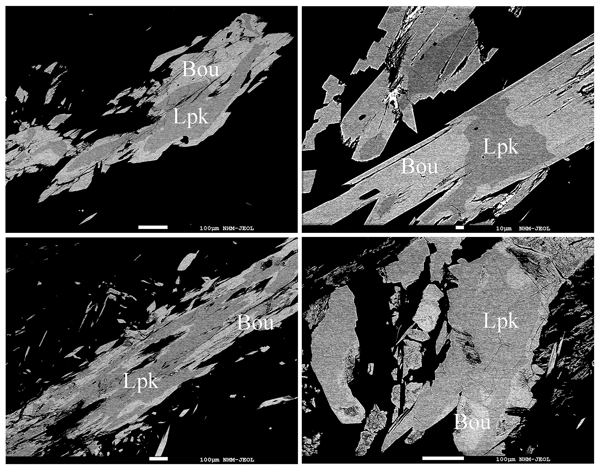
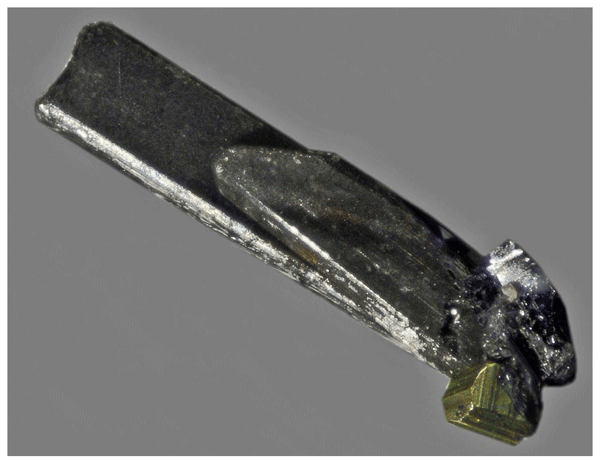
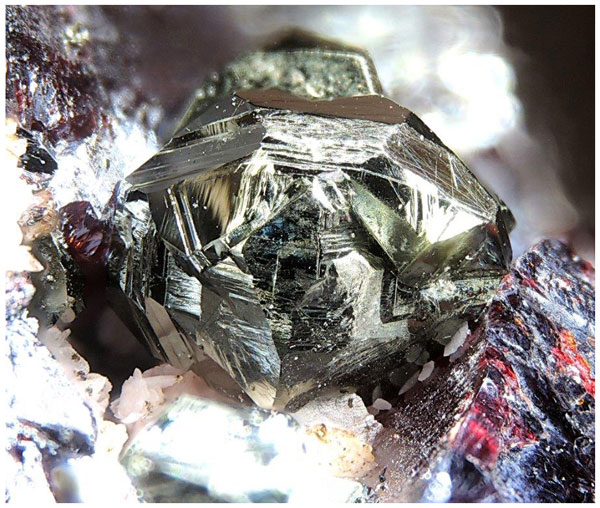
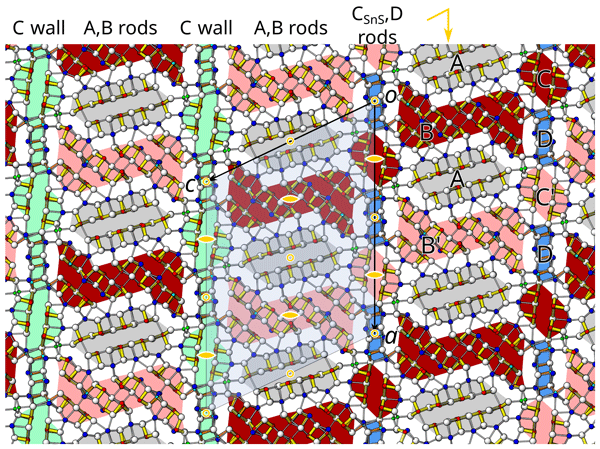
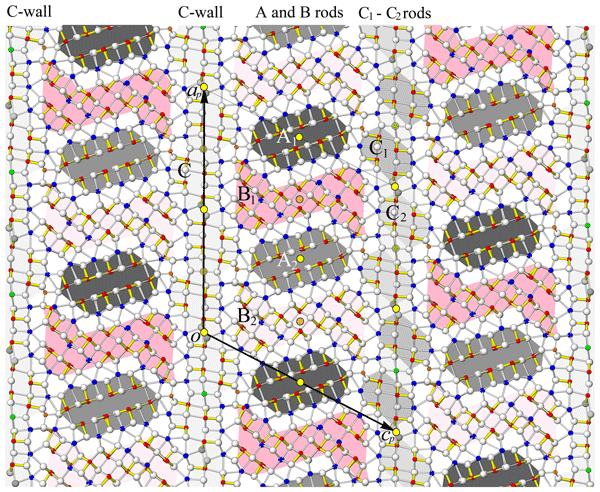
Erzwiesite, ideally Ag8Pb12Bi16S40, Z = 1, is a new sulfosalt mineral discovered in the Erzwies mining area, Gastein Valley, Salzburg Province, Austria. The empirical formula is (Ag,Cu)8.23(Pb,Cd)11.33(Bi,Sb)16.31 (S,Te,Se)40.03 (based on 76 apfu). Erzwiesite crystallises in space group Cmcm (a = 4.085(5), b = 13.462(15), c = 33.92(4) Å, and V = 1866(4) ų). Erzwiesite is the first natural (8:8) homologue of the lillianite homologous series and is named after its type locality.
Erzwiesite, ideally Ag8Pb12Bi16S40, Z = 1, is a new sulfosalt mineral discovered in the Erzwies...