Articles | Volume 38, issue 2
https://doi.org/10.5194/ejm-38-103-2026
© Author(s) 2026. This work is distributed under
the Creative Commons Attribution 4.0 License.
the Creative Commons Attribution 4.0 License.
https://doi.org/10.5194/ejm-38-103-2026
© Author(s) 2026. This work is distributed under
the Creative Commons Attribution 4.0 License.
the Creative Commons Attribution 4.0 License.
Research article
| 
05 Mar 2026
Research article |
| 05 Mar 2026
| 05 Mar 2026
Hydrogen diffusion in hydrous minerals from Raman and NanoSIMS mapping – implications for isotopic characterization of fluid–rock interactions
Univ Lyon, Ens de Lyon, Univ Lyon 1, UJM St Etienne, CNRS, UMR 5276 LGL-TPE, 46 Allée d'Italie, 69007 Lyon, France
Jannick Ingrin
Unité Matériaux et Transformations, CNRS UMR 8207, Université de Lille, 59655 Villeneuve d'Ascq, France
Anne-Céline Ganzhorn
Univ Lyon, Ens de Lyon, Univ Lyon 1, UJM St Etienne, CNRS, UMR 5276 LGL-TPE, 46 Allée d'Italie, 69007 Lyon, France
Julie Jonfal
Univ Lyon, Ens de Lyon, Univ Lyon 1, UJM St Etienne, CNRS, UMR 5276 LGL-TPE, 46 Allée d'Italie, 69007 Lyon, France
Hélène Pilorgé
Univ Lyon, Ens de Lyon, Univ Lyon 1, UJM St Etienne, CNRS, UMR 5276 LGL-TPE, 46 Allée d'Italie, 69007 Lyon, France
Clémentine Fellah
Univ Lyon, Ens de Lyon, Univ Lyon 1, UJM St Etienne, CNRS, UMR 5276 LGL-TPE, 46 Allée d'Italie, 69007 Lyon, France
Nadège Hilairet
Unité Matériaux et Transformations, CNRS UMR 8207, Université de Lille, 59655 Villeneuve d'Ascq, France
Laurent Remusat
Institut de Minéralogie, de Physique des Matériaux et de Cosmochimie (IMPMC), UMR CNRS 7590, Sorbonne Université, Muséum National d'Histoire Naturelle, 57 rue Cuvier, Case 52, 75231 Paris CEDEX 5, France
Related authors
Bruno Reynard and Xin Zhong
Solid Earth, 14, 591–602, https://doi.org/10.5194/se-14-591-2023, https://doi.org/10.5194/se-14-591-2023, 2023
Short summary
Short summary
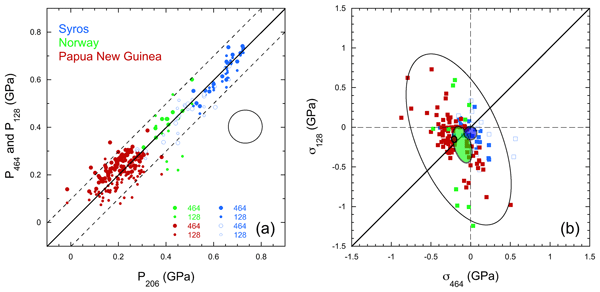
Rocks are brought to great depths and back to the Earth's surface by the tectonic processes that shape mountain ranges. Tiny mineral inclusions can record how deep rocks went. Quartz, a common mineral inclusion, was put in the laboratory at conditions that mimic those encountered at depths to about 100 km. A laser-based spectroscopy (Raman) was calibrated to read pressure from quartz inclusions in rocks and to unravel their deep travel.
Bruno Reynard, Clémentine Fellah, and Catherine McCammon
Eur. J. Mineral., 34, 645–656, https://doi.org/10.5194/ejm-34-645-2022, https://doi.org/10.5194/ejm-34-645-2022, 2022
Short summary
Short summary
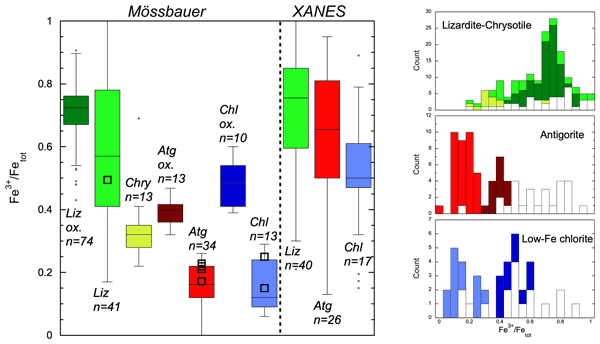
Serpentines, magnesian clay-like minerals formed in subduction zones, contain iron in either ferrous or ferric form. The oxidation state of the iron form controls the composition of fluids that form when they are destabilized by heating. Results obtained here with Mössbauer spectroscopy are compared with X-ray spectroscopy and shown to be more reliable for serpentines and magnesium-rich chlorites. Fluids released by serpentines in subduction may be less oxidized than previously thought.
Thomas Letulle, Guillaume Suan, Mathieu Daëron, Mikhail Rogov, Christophe Lécuyer, Arnauld Vinçon-Laugier, Bruno Reynard, Gilles Montagnac, Oleg Lutikov, and Jan Schlögl
Clim. Past, 18, 435–448, https://doi.org/10.5194/cp-18-435-2022, https://doi.org/10.5194/cp-18-435-2022, 2022
Short summary
Short summary
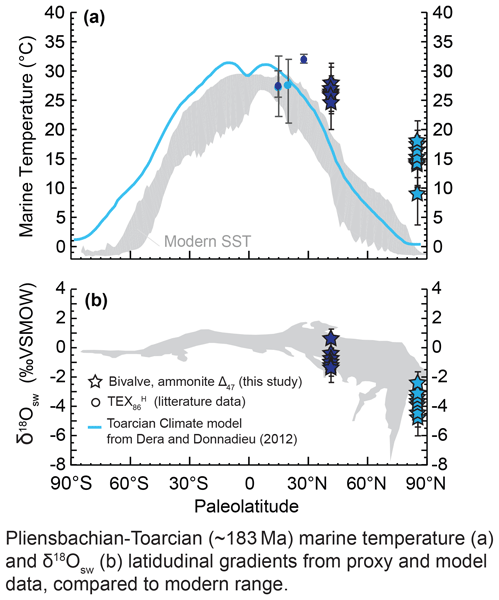
In this study, we applied geochemical tools to well-preserved ∼180-million-year-old marine mollusc shells from polar and mid-latitude seas. These results indicate that polar shells grew at temperatures of 8–18°C, while mid-latitude shells grew at temperatures of 24–28°C. These results, together with previously published data, raise concerns about the ability of climate models to predict accurate polar temperatures under reasonably high atmospheric CO2 levels.
Konstantinos Thomaidis, Jannick Ingrin, Etienne Deloule, Lydéric France, and Huan Chen
Eur. J. Mineral., 38, 477–489, https://doi.org/10.5194/ejm-38-477-2026, https://doi.org/10.5194/ejm-38-477-2026, 2026
Short summary
Short summary
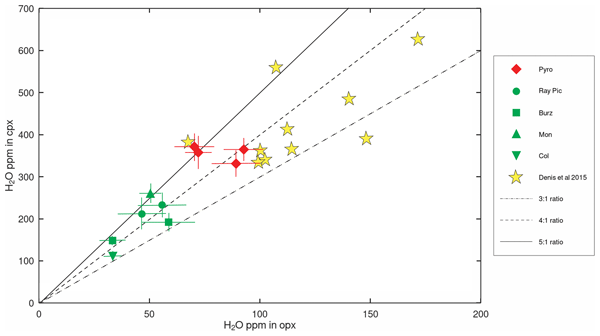
Water in the form of hydrous-point-defect pyroxenes from mantle xenoliths is used to trace the water content in the lithospheric mantle. However, little is known about the mechanism that allows xenoliths to preserve deep hydrogen signatures. In particular, it is unknown how much of the water content of xenoliths is modified during the emplacement of lava and cooling at the surface and by the eruption mode (effusive versus explosive). In this work, we attempted to address these matters.
Thomas Gyomlai, Muriel Andreani, Emeline Caujolle, Baptiste Debret, Valentine Puzenat-Vassor, Benoit Ildefonse, and Clémentine Fellah
EGUsphere, https://doi.org/10.5194/egusphere-2026-3184, https://doi.org/10.5194/egusphere-2026-3184, 2026
This preprint is open for discussion and under review for The Cryosphere (TC).
Short summary
Short summary
Understanding past iceberg activity during the Quaternary is key to constraining ice‑sheet dynamics and freshwater release during melting. We document ice‑rafted dropstones dredged at 36° N on the Mid‑Atlantic Ridge that form a calc‑alkaline magmatic series and yield ages of ~1700–1630 Ma. This indicates derivation from the Labradorian arc‑accretion orogeny in eastern Canada, implying a source in the Gulf of Saint Lawrence that favored southward iceberg transport to lower latitudes.
Alain Ragu, Luca Bindi, Paola Bonazzi, Laurent Remusat, and Christian Chopin
Eur. J. Mineral., 37, 627–638, https://doi.org/10.5194/ejm-37-627-2025, https://doi.org/10.5194/ejm-37-627-2025, 2025
Short summary
Short summary
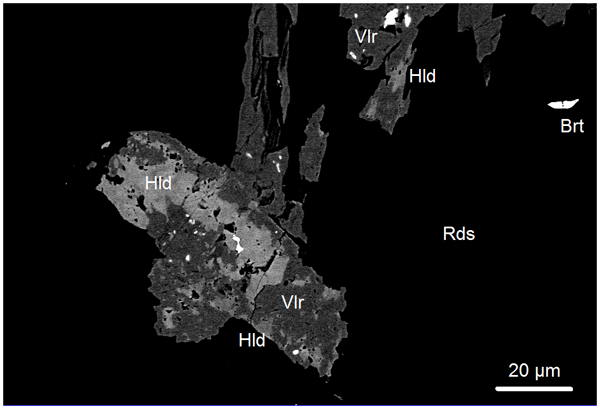
A new rare-earth-bearing silicate is described from a manganese ore deposit in the Pyrenees. It belongs to the epidote family and is characterised by the formula Mn2+Ce(MgAlMn2+)(Si2O7)(SiO4)F(OH). This new mineral commonly contains inclusions of an Mn-rich yttrium borosilicate, a potentially new mineral of the hellandite family. This is a new type of occurrence for hellandite – while rare earths are under the spotlight.
Silvio Ferrero, Alessia Borghini, Laurent Remusat, Gautier Nicoli, Bernd Wunder, and Roberto Braga
Eur. J. Mineral., 35, 1031–1049, https://doi.org/10.5194/ejm-35-1031-2023, https://doi.org/10.5194/ejm-35-1031-2023, 2023
Short summary
Short summary
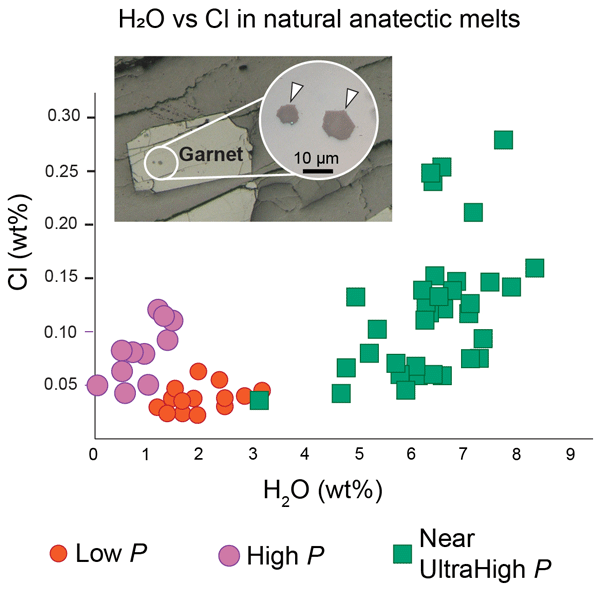
Garnet often entraps small droplets of deep melts generated during mountain building processes. Using high-resolution techniques, we studied these droplets in order to provide hard numbers for the quantification of volatile budgets during crustal evolution, show how even melts formed at >1000°C contain water, and clarify how water behaves during metamorphism and melting at the microscale. Moreover, we provide the very first data on chlorine in natural melts from crustal reworking.
Bruno Reynard and Xin Zhong
Solid Earth, 14, 591–602, https://doi.org/10.5194/se-14-591-2023, https://doi.org/10.5194/se-14-591-2023, 2023
Short summary
Short summary
Rocks are brought to great depths and back to the Earth's surface by the tectonic processes that shape mountain ranges. Tiny mineral inclusions can record how deep rocks went. Quartz, a common mineral inclusion, was put in the laboratory at conditions that mimic those encountered at depths to about 100 km. A laser-based spectroscopy (Raman) was calibrated to read pressure from quartz inclusions in rocks and to unravel their deep travel.
Bruno Reynard, Clémentine Fellah, and Catherine McCammon
Eur. J. Mineral., 34, 645–656, https://doi.org/10.5194/ejm-34-645-2022, https://doi.org/10.5194/ejm-34-645-2022, 2022
Short summary
Short summary
Serpentines, magnesian clay-like minerals formed in subduction zones, contain iron in either ferrous or ferric form. The oxidation state of the iron form controls the composition of fluids that form when they are destabilized by heating. Results obtained here with Mössbauer spectroscopy are compared with X-ray spectroscopy and shown to be more reliable for serpentines and magnesium-rich chlorites. Fluids released by serpentines in subduction may be less oxidized than previously thought.
Thomas Letulle, Guillaume Suan, Mathieu Daëron, Mikhail Rogov, Christophe Lécuyer, Arnauld Vinçon-Laugier, Bruno Reynard, Gilles Montagnac, Oleg Lutikov, and Jan Schlögl
Clim. Past, 18, 435–448, https://doi.org/10.5194/cp-18-435-2022, https://doi.org/10.5194/cp-18-435-2022, 2022
Short summary
Short summary
In this study, we applied geochemical tools to well-preserved ∼180-million-year-old marine mollusc shells from polar and mid-latitude seas. These results indicate that polar shells grew at temperatures of 8–18°C, while mid-latitude shells grew at temperatures of 24–28°C. These results, together with previously published data, raise concerns about the ability of climate models to predict accurate polar temperatures under reasonably high atmospheric CO2 levels.
Cited articles
Amiguet, E., Reynard, B., Caracas, R., Van de Moortèle, B., Hilairet, N., and Wang, Y.: Creep of phyllosilicates at the onset of plate tectonics, Earth and Planetary Science Letters, 345–348, 142–150, https://doi.org/10.1016/j.epsl.2012.06.033, 2012.
Amiguet, E., van de Moortèle, B., Cordier, P., Hilairet, N., and Reynard, B.: Deformation mechanisms and rheology of serpentines in experiments and in nature, Journal of Geophysical Research, 119, https://doi.org/10.1002/2013JB010791, 2014.
Bebout, G. E. and Penniston-Dorland, S. C.: Fluid and mass transfer at subduction interfaces – The field metamorphic record, Lithos, 240–243, 228–258, https://doi.org/10.1016/j.lithos.2015.10.007, 2016.
Biermann, C. and Van Roermund, H. L. M.: Defect structures in naturally deformed clinoamphiboles – a TEM study, Tectonophysics, 95, 267–278, https://doi.org/10.1016/0040-1951(83)90072-0, 1983.
Bosi, F.: Tourmaline crystal chemistry, American Mineralogist, 103, 298–306, https://doi.org/10.2138/am-2018-6289, 2018.
Burns, R. G. and Greaves, C.: Correlations of infrared and Mossbauer site population measurements of actinolites, American Mineralogist: Journal of Earth and Planetary Materials, 56, 2010–2033, 1971.
Carslaw, H. and Jaeger, J.: Conduction of Heat in Solids, 2nd Edn., Clarendon, London, ISBN-13 978-0198533030, 1959.
Corona, J. C. and Jenkins, D. M.: An experimental investigation of the reaction: glaucophane + 2 quartz = 2 albite + talc, European Journal of Mineralogy, 19, 147–158, https://doi.org/10.1127/0935-1221/2007/0019-1719, 2007.
Cranck, J.: The mathematics of diffusion, Oxford University Press, Oxford, ISBN-13 978-0198534112, 1975.
Dawson, P., Hadfield, C. D., and Wilikinson, G. R.: The polarized indrared and Raman spectra of Mg(OH)2 and Ca(OH)2, Journal of Physics and Chemistry of Solids, 34, 1217–1225, 1973.
De, S., Cole, D., Riciputi, L., Chacko, T., and Horita, J.: Experimental determination of hydrogen diffusion rates in hydrous minerals using the ion microprobe, Goldschmidt Journal of Conference Abstracts, 5, 340, https://www.academia.edu/75339628/Experimental_determination_of_hydrogen_diffusion_rates_in_hydrous_minerals_using_the_ion_microprobe?uc-sb-sw=109288510 (last access: 25 February 2026), 2000.
Deloule, E., Albarède, F., and Sheppard, S. M. F.: Hydrogen isotope heterogeneities in the mantle from ion probe analysis of amphiboles from ultramafic rocks, Earth and Planetary Science Letters, 105, 543–553, https://doi.org/10.1016/0012-821X(91)90191-J, 1991.
Desbois, G. and Ingrin, J.: Anisotropy of hydrogen diffusion in tourmaline, Geochimica et Cosmochimica Acta, 71, 5233–5243, https://doi.org/10.1016/j.gca.2007.08.027, 2007.
Dey, A., Choudhury, S. R., Mukherjee, S., Sanyal, S., and Sengupta, P.: Origin of vesuvianite-garnet veins in calc-silicate rocks from part of the Chotanagpur Granite Gneiss Complex, East Indian Shield: the quantitative PTX CO2 topology in parts of the system CaO-MgO-Al2O3-SiO2-H2O-CO2 (+ Fe2O3, F), American Mineralogist, 104, 744–760, 2019.
Dodson, M. H.: Closure temerature in cooling geochronological and petrological systems, Contributions to Mineralogy and Petrology, 40, 259–274, 1973.
Dollinger, G. and Blacic, J. D.: Deformation mechanisms in experimentally and naturally deformed amphiboles, Earth and Planetary Science Letters, 26, 409–416, https://doi.org/10.1016/0012-821X(75)90016-3, 1975.
Franz, G. and Liebscher, A.: Physical and Chemical Properties of the Epidote Minerals – An Introduction, in: Reviews in Mineralogy & Geochemistry 56: Epidotes, edited by: Liebscher, A. and Franz, G., Mineralogical Society of America, 1–82, https://doi.org/10.2113/gsecongeo.101.4.903, 2004.
Galuskin, E., Janeczek, J., Kozanecki, M., Sitarz, M., Jastrzębski, W., Wrzalik, R., and Stadnicka, K.: Single-crystal Raman investigation of vesuvianite in the OH region, Vibrational Spectroscopy, 44, 36–41, 2007.
Game, P.: Zoisite-amphibolite with corundum from Tanganyika, Mineralogical Magazine, 30, 458–466, 1954.
Ganzhorn, A.-C., Pilorgé, H., Le Floch, S., Montagnac, G., Cardon, H., and Reynard, B.: Deuterium-hydrogen inter-diffusion in chlorite, Chemical Geology, 493, 518–524, https://doi.org/10.1016/j.chemgeo.2018.07.010, 2018.
Ganzhorn, A. C., Pilorgé, H., and Reynard, B.: Porosity of metamorphic rocks and fluid migration within subduction interfaces, Earth and Planetary Science Letters, 522, 107–117, https://doi.org/10.1016/j.epsl.2019.06.030, 2019.
Graham, C. M.: Experimental Hydrogen Isotope Studies III: Diffusion of Hydrogen in Hydrous Minerals, and Stable Isotope Exchange in Metamorphic Rocks, Contributions to Mineralogy and Petrology, 76, 216–228, 1981.
Graham, C. M., Sheppard, S. M. F., and Heaton, T. H. E.: Experimental Hydrogen Isotope Studies, 1. Systematics of Hydrogen Isotope Fractionation in the Systems Epidote-H2O, Zoisite-H2O and AlO(OH)-H2O, Geochimica et Cosmochimica Acta, 44, 353–364, 1980.
Graham, C. M., Viglino, J. A., and Harmon, R. S.: Experimental study of hydrogen-isotope exchange between aluminous chlorite and water and of hydrogen diffusion in chlorite, American Mineralogist, 72, 566–579, 1987.
Guo, X., Yoshino, T., Okuchi, T., and Tomioka, N.: H-D interdiffusion in brucite at pressures up to 15 GPa, American Mineralogist, 98, 1919–1929, https://doi.org/10.2138/am.2013.4550, 2013.
Hercule, S. and Ingrin, J.: Hydrogen in diopside: Diffusion, kinetics of extraction-incorporation, and solubility, American Mineralogist, 84, 1577–1587, 1999.
Hyndman, R. and Peacock, S.: Serpentinization of the forearc mantle, Earth and Planetary Science Letters, 212, 417–432, 2003.
Jenkins, D. M.: The transition from blueschist to greenschist facies modeled by the reaction glaucophane + 2 diopside + 2 quartz = tremolite + 2 albite, Contributions to Mineralogy and Petrology, 162, 725–738, https://doi.org/10.1007/s00410-011-0621-8, 2011.
Jibao, G. and Yaqian, Q.: Hydrogen isotope fractionation and hydrogen diffusion in the tourmaline-water system, Geochimica et Cosmochimica Acta, 61, 4679–4688, https://doi.org/10.1016/S0016-7037(97)00252-4, 1997.
Kokaly, R. F., Clark, R. N., Swayze, G. A., Livo, K. E., Hoefen, T. M., Pearson, N. C., Wise, R. A., Benzel, W. M., Lowers, H. A., Driscoll, R. L., and Klein, A. J.: USGS Spectral Library Version 7, U.S. Geological Survey [data set], https://doi.org/10.3133/ds1035, 2017.
Kronenberg, A. K., Kirby, S. H., and Pinkston, J.: Basal slip and mechanical anisotropy of biotite, Journal of Geophysical Research: Solid Earth, 95, 19257–19278, 1990.
Kueter, N., Brugman, K., Miozzi, F., Cody, G. D., Yang, J., Strobel, T. A., and Walter, M. J.: Water speciation and hydrogen isotopes in hydrous stishovite: implications for the deep Earth water cycle, Contributions to Mineralogy and Petrology, 178, 48, https://link.springer.com/article/10.1007/s00410-023-02028-6, 2023.
Kyser, T. K. and Kerrich, R.: Retrograde exchange of hydrogen isotopes between hydrous minerals and water at low temperatures, Stable isotope geochemistry, A tribute to samuel Epstein, Geochemical Society, https://geochemsoc.org/publications/special-publications-series/v3-stable-isotope-geochemistry (last access: 25 February 2026), 1991.
Lodhia, B. H., Peeters, L., and Frery, E.: A review of the migration of hydrogen from the planetary to basin scale, Journal of Geophysical Research: Solid Earth, 129, e2024JB028715, https://doi.org/10.1029/2024JB028715, 2024.
Long, D. A.: Raman spectroscopy, McGraw Hill, 276 pp., ISBN-13 978-0070386754, 1977.
Mares, V. M. and Kronenberg, A. K.: Experimental deformation of muscovite, Journal of Structural Geology, 15, 1061–1075, https://doi.org/10.1016/0191-8141(93)90156-5, 1993.
Masoch, S., Dallai, L., Gomila, R., Fondriest, M., Novella, D., Pennacchioni, G., Cembrano, J., and Di Toro, G.: Evolving Fluid Source During the Growth of a Trench-Parallel Seismogenic Fault System, Geochemistry Geophysics Geosystems, 26, e2024GC011998, https://doi.org/10.1029/2024GC011998, 2025.
Menzies, C. D., Teagle, D. A. H., Craw, D., Cox, S. C., Boyce, A. J., Barrie, C. D., and Roberts, S.: Incursion of meteoric waters into the ductile regime in an active orogen, Earth and Planetary Science Letters, 399, 1–13, https://doi.org/10.1016/j.epsl.2014.04.046, 2014.
Menzies, C. D., Teagle, D. A., Niedermann, S., Cox, S. C., Craw, D., Zimmer, M., Cooper, M. J., and Erzinger, J.: The fluid budget of a continental plate boundary fault: Quantification from the Alpine Fault, New Zealand, Earth and Planetary Science Letters, 445, 125–135, 2016.
Mittempergher, S., Dallai, L., Pennacchioni, G., Renard, F., and Di Toro, G.: Origin of hydrous fluids at seismogenic depth: Constraints from natural and experimental fault rocks, Earth and Planetary Science Letters, 385, 97–109, https://doi.org/10.1016/j.epsl.2013.10.027, 2014.
Noguchi, N. and Shinoda, K.: Proton migration in portlandite inferred from activation energy of self-diffusion and potential energy curve of OH bond, Physics and Chemistry of Minerals, 37, 361–370, 2010.
Pavese, A., Prencipe, M., Tribaudino, M., and Aagaard, S. S.: X-ray and neutron single-crystal study of P4/n vesuvianite, The Canadian Mineralogist, 36, 1029–1038, 1998.
Pilorgé, H., Reynard, B., Remusat, L., Le Floch, S., Montagnac, G., and Cardon, H.: D
Quérel, G. and Reynard, B.: High-pressure luminescence spectroscopy of transition elements: experimental setup and preliminary results on Cr3+ in silicate glasses, Chemical Geology, 128, 65–75, 1996.
Reynard, B. and Ballevre, M.: Coexisting Amphiboles in an Eclogite from the Western Alps – New Constraints on the Miscibility Gap between Sodic and Calcic Amphiboles, Journal of Metamorphic Geology, 6, 333–350, 1988.
Reynard, B. and Caracas, R.: D
Reynard, B., Gillet, P., and Willaime, C.: Deformation mechanisms in naturally deformed glaucophanes: a TEM and HRTEM study, European Journal of Mineralogy, 1, 611–624, 1989.
Reynard, B., Ganzhorn, A.-C., and Coltice, N.: Primordial serpentinized crust on the early Earth, Physics of the Earth and Planetary Interiors, 332, 106936, https://doi.org/10.1016/j.pepi.2022.106936, 2022.
Scaillet, B., Pichavant, M., Roux, J., Humbert, G., and Lefvre, A.: Improvements of the Shaw membrane technique for measurement pressures control of fH2 at high temperatures and pressures, American Mineralogist, 77, 647–655, 1992.
Schmidt, M. W. and Poli, S.: Experimentally based water budgets for dehydrating slabs and consequences for arc magma generation, Earth and Planetary Science Letters, 163, 361–379, 1998.
Shilobreeva, S., Martinez, I., Busigny, V., Agrinier, P., and Laverne, C.: Insights into C and H storage in the altered oceanic crust: results from ODP/IODP Hole 1256D, Geochimica et Cosmochimica Acta, 75, 2237–2255, 2011.
Thomen, A., Robert, F., and Remusat, L.: Determination of the nitrogen abundance in organic materials by NanoSIMS quantitative imaging, Journal of Analytical Atomic Spectrometry, 29, 512–519, https://doi.org/10.1039/C3JA50313E, 2014.
Valley, J. W., Peacor, D. R., Bowman, J. R., Essene, E. J., and Allard, M. J.: Crystal chemistry of a Mg-vesuvianite and implications of phase equilibria in the system CaO-MgO-Al2O3-SiO2-H2O-CO2, Journal of Metamorphic Geology, 3, 137–153, https://doi.org/10.1111/j.1525-1314.1985.tb00311.x, 1985.
Yaqian, Q. and Jibao, G.: Study of hydrogen isotope equilibrium and kinetic fractionation in the ilvaite-water system, Geochimica et Cosmochimica Acta, 57, 3073–3082, https://doi.org/10.1016/0016-7037(93)90294-7, 1993.
Zarei, A., Klumbach, S., and Keppler, H.: The Relative Raman Scattering Cross Sections of H2O and D2O, with Implications for In Situ Studies of Isotope Fractionation, ACS Earth and Space Chemistry, 2, 925–934, https://doi.org/10.1021/acsearthspacechem.8b00078, 2018.
Short summary
Interactions between minerals and water are fundamental to many geological processes on Earth, in meteorites, and on other planetary bodies, for instance, in the development of plate tectonics. In this study, we experimentally determine how quickly hydrogen isotopes are exchanged between minerals and fluids. We then explore how exchange rates can inform us about past interactions between rocks and water on the Earth and in meteorites using hydrogen isotope measurements in natural minerals.
Interactions between minerals and water are fundamental to many geological processes on Earth,...


