New minerals, nomenclature, and classification |
| 06 Jan 2026
Keutschite, Cu2AgAsS4, a new mineral with a stannite structure from the Uchucchacua polymetallic deposit, Lima Department, Peru
Keutschite, Cu2AgAsS4, a new mineral with a stannite structure from the Uchucchacua polymetallic deposit, Lima Department, PeruKeutschite, Cu2AgAsS4, a new mineral with a stannite structure from the Uchucchacua polymetallic...Dan Topa et al.
Dan Topa,Rie Takagi Fredrickson,Chris Stanley,and George Dincă
Mineralogisch-Petrographische Abteilung, Naturhistorisches Museum, Burgring 7, 1010 Wien, Austria
Rie Takagi Fredrickson
Department of Chemistry, University of Wisconsin, Madison, WI 53706, USA
Chris Stanley
Natural History Museum, Cromwell Road, London SW7 5BD, UK
George Dincă
Geological Institute of Romania, 1 Caransebeş Street, 012271 Bucharest, Romania
Research Centre for Ecological Services (CESEC), University of Bucharest, 1–3 Aleea Portocalelor, 060101 Bucharest, Romania
Abstract
Keutschite, Cu2AgAsS4, is a new mineral from the Ag–Pb–Zn deposit at Uchucchacua, Oyon District, Catajambo, Lima Department, Peru. The mineral occurs as metallic, highly lustrous, blocky, free-standing crystals measuring up to 3 mm. These crystals exhibit a grey colour with a slight green-brassy tint and a grey-black streak, and they are present on both manganoquadratite and proustite. It was observed that keutschite was brittle, and no fractures or cleavages were identified. In plane-polarised light, keutschite exhibits a grey hue devoid of any discernible internal reflections. It demonstrates a minimal manifestation of pleochroism and exhibits a negligible degree of bireflectance. Between crossed polars, the mineral is weakly anisotropic with rotation tints in shades of greenish grey to grey. Reflectance measurements in air yield the following values for wavelengths recommended by the Commission on Ore Mineralogy of the International Mineralogical Association: 25.2/26.1 (470 nm), 29.6/29.4 (546 nm), 29.4/29.2 (589 nm), and 28.5/28.6 (650 nm).
Keutschite crystallises in a tetragonal geometry and is classified as space group .
The unit cell parameters are as follows: a=5.5834(15), c=10.021(3) Å, V=312.40(14) Å3, , and Z=2. The crystal structure was refined to R1=0.0199 for 286 reflections with I>3σ(I). The structure of keutschite is derived from that of sphalerite by ordered substitution of Zn atoms, analogous to the substitution pattern for deriving stannite from sphalerite. The crystal structure of the mineral can be derived from that of luzonite through the complete substitution of one of the two copper sites with silver. The five strongest intensities in the X-ray powder diagram are [d in Å (intensity) hkl]: 3.101 (100) 110; 2.792 (11) 200; 1.974 (20) 220; 1.665 (34) 204; and 2.846 (27) 312. The chemical formula, as determined by electron microprobe analysis, is Cu2.05Ag0.96(As0.95Sb0.04)Σ0.99S4.00 (based on eight atoms). The ideal formula, derived from the crystal structure, is Cu2AgAsS4. The name honours Frank Keutsch (born 1971) for his contribution to the mineralogy of the Uchucchacua deposit.
Received: 16 Oct 2025 – Revised: 07 Dec 2025 – Accepted: 15 Dec 2025 – Published: 06 Jan 2026
1 Introduction
It has been determined that there is a multitude of minerals that are characterised by MMIMVS4 composition and that are derived from the sphalerite structure through ordered substitution of Zn (Bonazzi et al., 2003). These include the isotypic luzonite (Cu2CuAsS4)–famatinite (Cu2CuSbS4) series (LF series, space group ). Enargite (Cu2CuAsS4) is a polymorph of luzonite and is derived from the wurtzite structure by ordered substitution of Zn. Furthermore, there are several minerals belonging to the MMIIMIVS4 group that are closely related to the LF series. These minerals can be classified into two subgroups: the stannite subgroup (space group ), which consists of Cu2FeSnS4, and the kësterite subgroup (space group I), which consists of Cu2ZnSnS4. The two subgroups are characterised by two distinct but closely related patterns of ordered substitution of the Zn atoms in sphalerite. In the stannite subgroup minerals, which are more closely related to the LF series, (001) layers of Zn atoms are substituted by layers of Cu atoms which alternate with layers in which Zn atoms are substituted by ordered (MII+ MIV) atoms. By contrast, in luzonite and famatinite, the ordered (MII+ MIV) is replaced by ordered (Cu + As) or (Cu + Sb) substitution. To the best of the author's knowledge, no minerals have previously been described in which the Cu in this position is replaced by another metal. Lastly, in agmantinite, Ag2MnSnS4, which is the only known MMIIMIVS4 mineral derived from the wurtzite structure, layers of Zn atoms are substituted by layers of Ag atoms in alternation with those occupied by ordered (Sn+Mn) atoms (Bonazzi et al., 2003).
This paper presents a comprehensive account of the occurrence, physical properties, and crystal structure of keutschite (Cu2AgAsS4), a mineral that represents the first occurrence of a MMIMVS4 composition with two different metals for MI. The mineral was discovered in a sample extracted from the alabandite zone of the Ag–Pb–Zn-deposit at Uchucchacua, Oyon District, Lima Department, Peru.
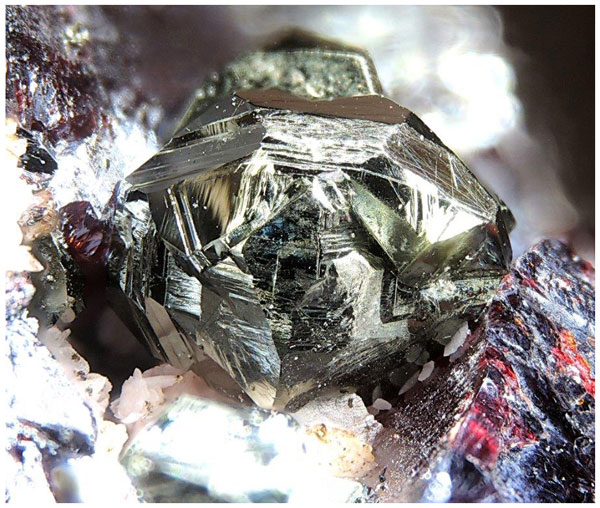
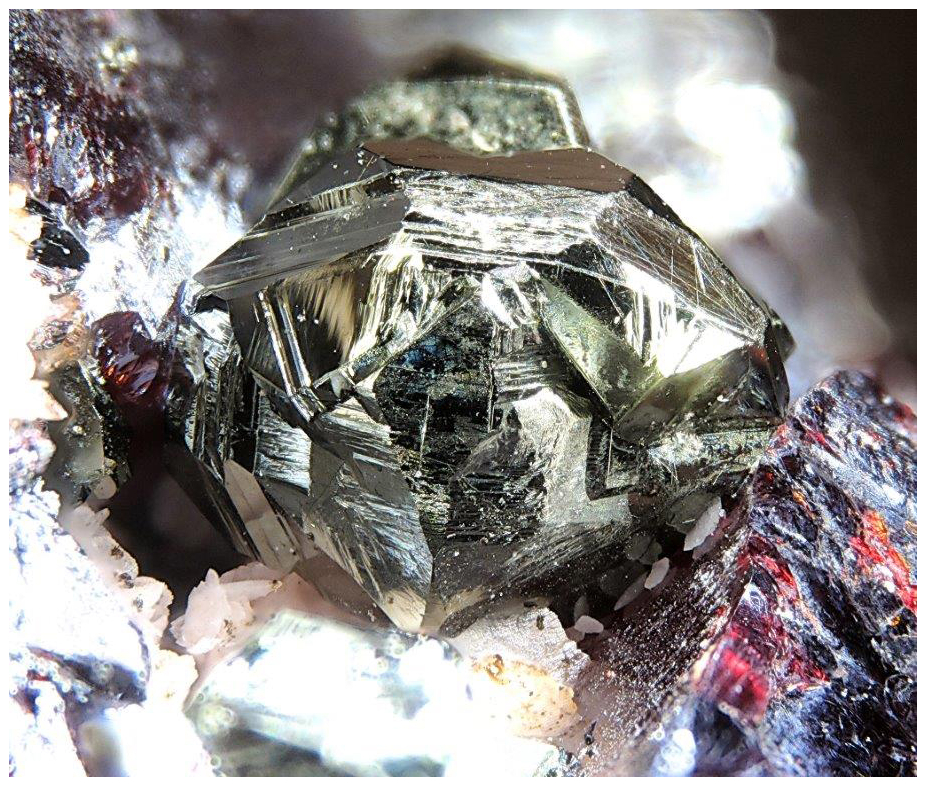
The mineral was named in honour of Frank Keutsch (born 1971) for his significant contributions to the mineralogy of the Uchucchacua deposit. He first brought attention to this mineral during his study of the alabandite zone of the deposit. Frank Keutsch has been instrumental in the discovery and description of several minerals from this locality, including manganoquadratite, menchettiite, agmantinite, spryite, hyršlite, ramosite, and oyonite. He also identified, for the first time at this site, the presence of argyrodite, billingsleyite, canfieldite, diaphorite, ferdowsiite, metastibnite, pirquitasite, smithite, stannite, stephanite, and trechmannite. The new mineral and mineral name have been approved by the Commission on New Minerals, Nomenclature and Classification, IMA (2014-038). The holotype material has been deposited in the reference collection of the Naturhistorisches Museum Wien, Wien, Austria, specimen no. N 9736, and part of the specimen used for this study was deposited in the collection of the Mineralogical & Geological Museum Harvard, no. 2017.13.10, and another part (Fig. 1) was deposited in the Frank Keutsch collection.
2 Occurrence and physical properties
The sample containing keutschite was identified during an investigation into the mineralogy of the Uchucchacua polymetallic deposit. This investigation focused on a particular zone (Socorro section of the mine), which was characterised by high concentrations of Ag and Mn and was distinguished by the presence of alabandite and silver minerals. The Uchucchacua ore deposit is of particular interest due to the fact that it serves as the type locality for seven Mn-bearing sulfides and/or sulfosalts: benavidesite, Pb4MnSb6S14 (Oudin et al., 1982); uchucchacuaite, AgPb3MnSb5S12 (Moëlo et al., 1984); manganoquadratite, AgMnAsS3 (Bonazzi et al., 2012); menchettiite, AgPb2.40Mn1.60Sb3As2S12 (Bindi et al., 2012); oyonite, Ag3Mn2Pb4Sb7As4S24 (Bindi et al., 2018); agmantinite, Ag2MnSnS4 (Keutsch et al., 2019); and ramosite, Pb25.7Sn8.3Mn3.4Sb6.4S56.2 (Keutsch et al., 2020). It is also the type locality for seven Ag minerals, with agmantinite, Ag2MnSnS4 (Keutsch et al., 2019), and spryite, Ag8(As3+,As5+)S6 (Bindi et al., 2017), in addition to the five Ag minerals listed above. Geological and metallogenetic data relevant to the Uchucchacua deposit district have been reported by Oudin et al. (1982).
The sample utilised for description consists predominantly of alabandite and Mn-bearing calcite with associated crystals of manganoquadratite, proustite, and billingsleyite, as well as massive diaphorite and seligmannite-bournonite. Keutschite occurs as rare metallic, highly lustrous, blocky, free-standing crystals up to 3 mm that have a grey colour with a slight green-brassy tint on manganoquadratite and proustite crystals (Fig. 1).
Figure 1Photograph of part of the type specimen that shows keutschite crystals on proustite and manganoan calcite. The size of the twinned crystal is 2.5 mm. Photography courtesy of Christian Rewitzer.
Keutschite displays metallic lustre and a black streak and is non-fluorescent. The mineral has a Mohs hardness of 4–5, a VHN25 range of 352–380, and a mean of 368 kg mm−2. Keutschite is brittle, and neither fracture nor cleavage was observed. It was not possible to measure the density due to the limited size and material available. The density was therefore calculated using the empirical formula and X-ray single-crystal data, yielding a result of 4.663 g cm−3.
In plane-polarised incident light, keutschite exhibits a grey hue without any discernible internal reflections. It demonstrates a minimal manifestation of pleochroism and exhibits a negligible degree of bireflectance. Between crossed polars, the mineral exhibits a minimal degree of anisotropy, manifesting rotation tints in shades of greenish grey to grey. Reflectance data over the range of 400 to 700 nm were obtained in air using a Zeiss Axiotron microscope. A Crystal Structures (Lanham) superstage was employed to level the specimen and standard prior to measurement with a J&M Tidas diode array spectrometer.
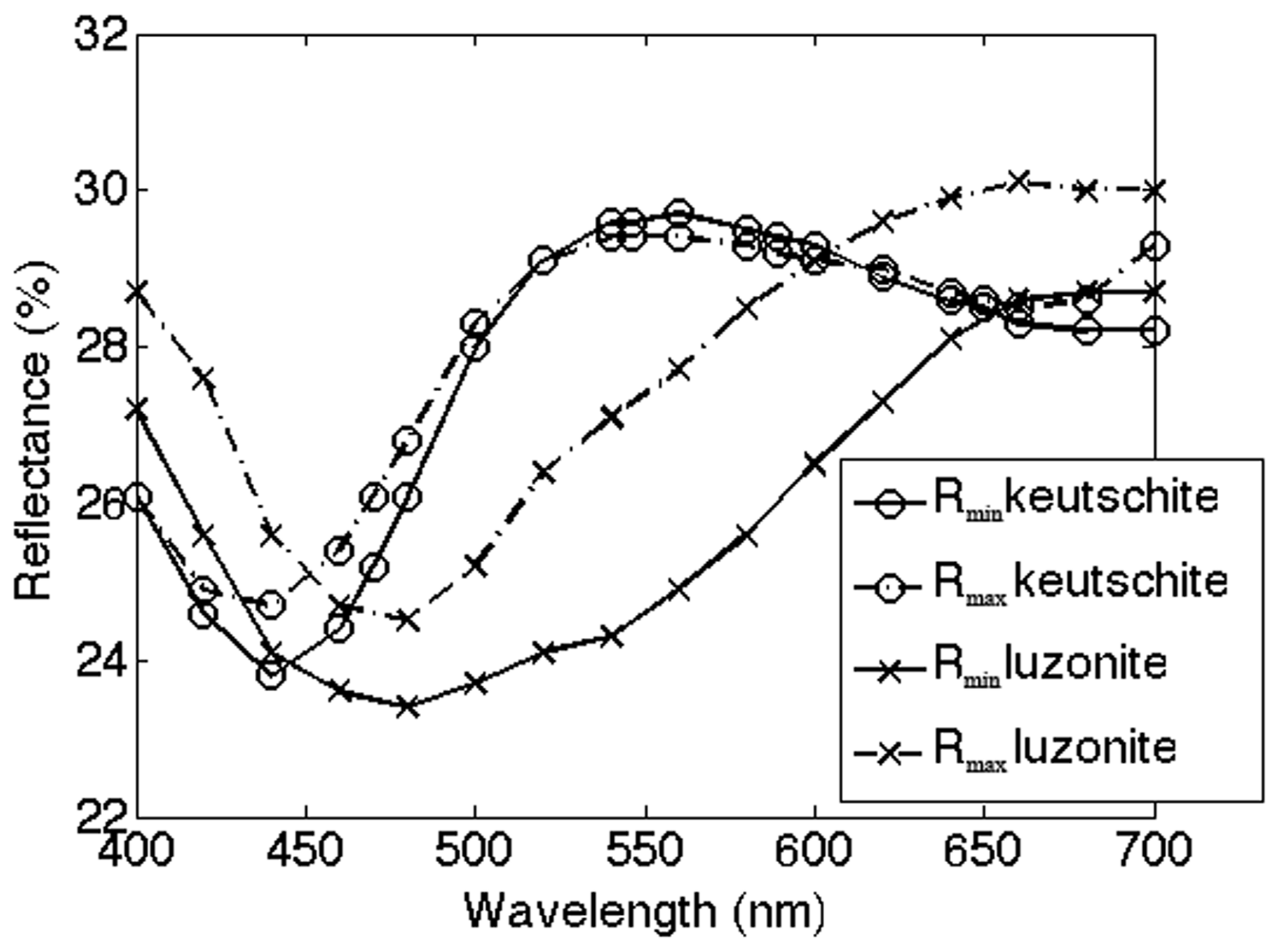
Figure 2Reflectance curves for keutschite and luzonite (Anthony et al., 1990) in air.
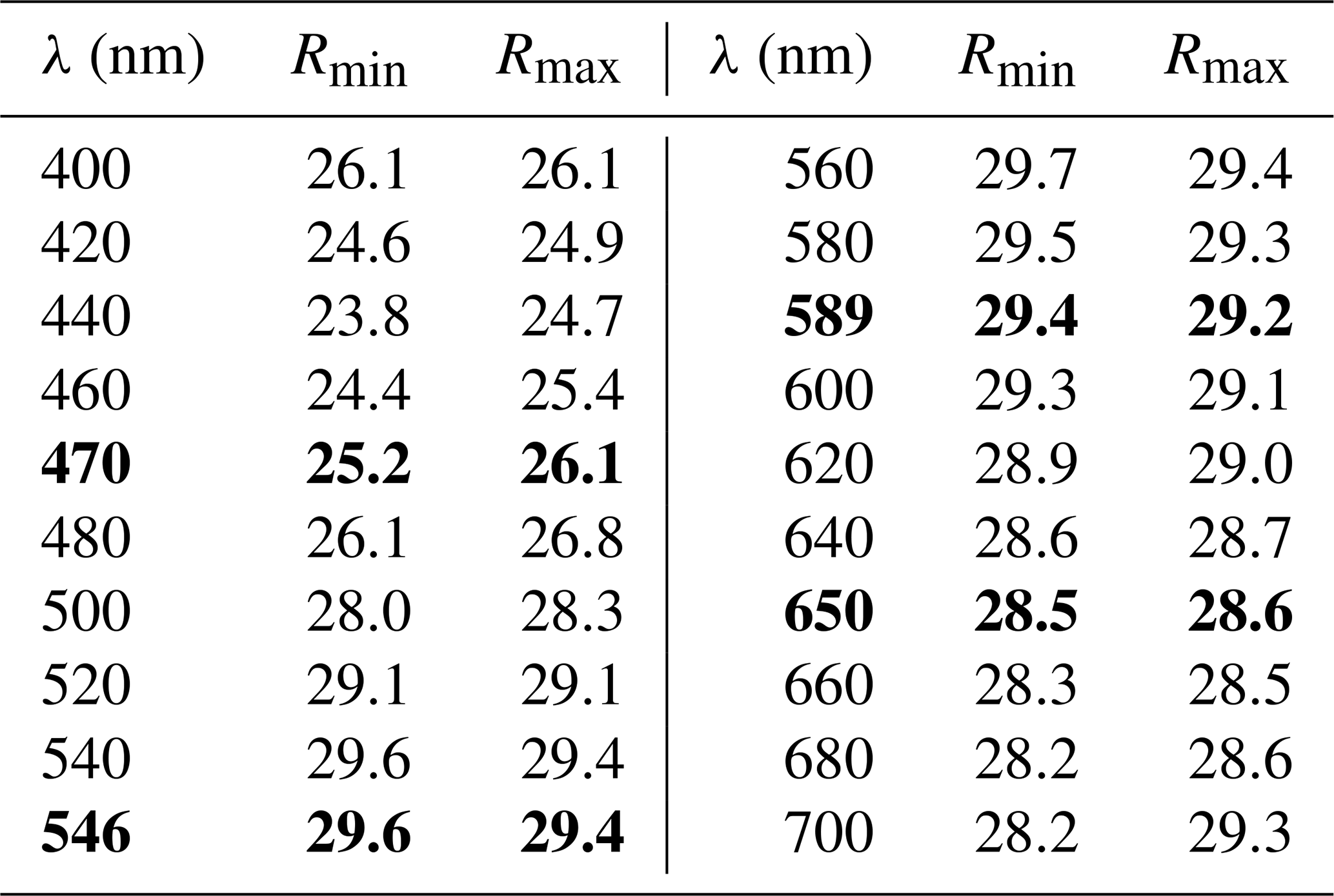
The measurements were made in air relative to a Zeiss WTiC standard using Cavendish Instruments Onyx software at intervals of 0.823 nm from 400 to 700 nm, following the procedure described by Stanley et al. (2002). The reflectance data of keutschite are listed in Table 1. As illustrated in Fig. 2, the reflectance percentages obtained for keutschite are compared with those of luzonite (Cu2CuAsS4) (Anthony et al., 1990). This highlights the weaker anisotropy and difference in optical properties of the two minerals, which are chemically related by substitution of Cu with Ag.
Table 1Reflectance data for keutschite, with values recommended by the Commission of Ore Mineralogy of IMA marked in bold.
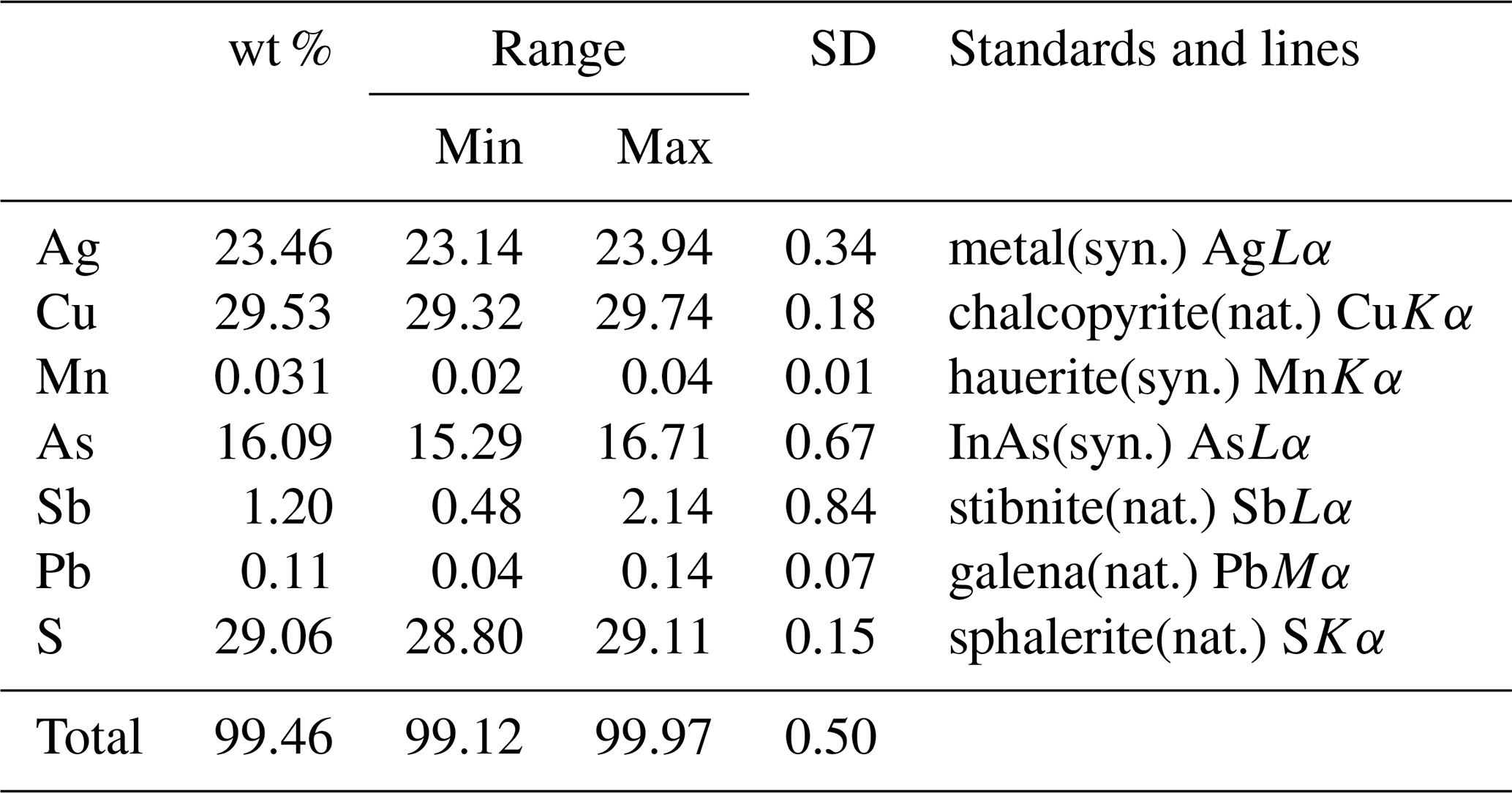
The chemical composition of a keutschite grain was determined using wavelength dispersive analysis (WDS) by means of a JEOL “Hyperprobe” JXA 8530F field emission gun electron microprobe (FE-EPMA) of Central Research Laboratories of the Natural History Museum, Vienna, employing JEOL analysis software (WDS mode, 25 kV, 20 nA, 2 µm beam diameter, count times of 10 s in peak positions and 5 s in background positions). The following emission lines and standards were used: AsLα (InAs), AgLα (Ag metal), CuKα (chalcopyrite), MnKα (hauerite), PbMα (galena), SbLα (stibnite) and SKα (sphalerite). The chemical compositions (five analyses on one grain) are reported in Table 2. The chemical formula, Cu2.05Ag0.96(As0.95Sb0.04)Σ0.99S4.00, was calculated on the basis of eight atoms. The simplified crystal structure and ideal formula is Cu2AgAsS4, which requires (in wt %) 29.01 Cu, 24,62 Ag, 17.10 As, and 29.28 S, for a total of 100.00.
Table 2Analytical data for keutschite.
The empirical formula (based on 8 apfu, 4Me + 4S) is Cu2.00Ag0.97(As0.95Sb0.04)Σ1.99S4.03 (ΣMe = 3.97). The empirical formula (based on 4 S apfu) is Cu1.99Ag0.96(As0.95Sb0.04)Σ1.99S4.00 (ΣMe = 3.95). The empirical formula (based on 4 Me apfu) is Cu2.02Ag0.97(As0.96Sb0.04)Σ2.00S4.05 (ΣMe = 4). The crystal structure formula is Cu2AgAsS4. The simplified formula is Cu2AgAsS4. The simplified formula is analogous to that of the stannite (Cu2FeSnS4) group.
4 X-ray crystallography and crystal structure determination
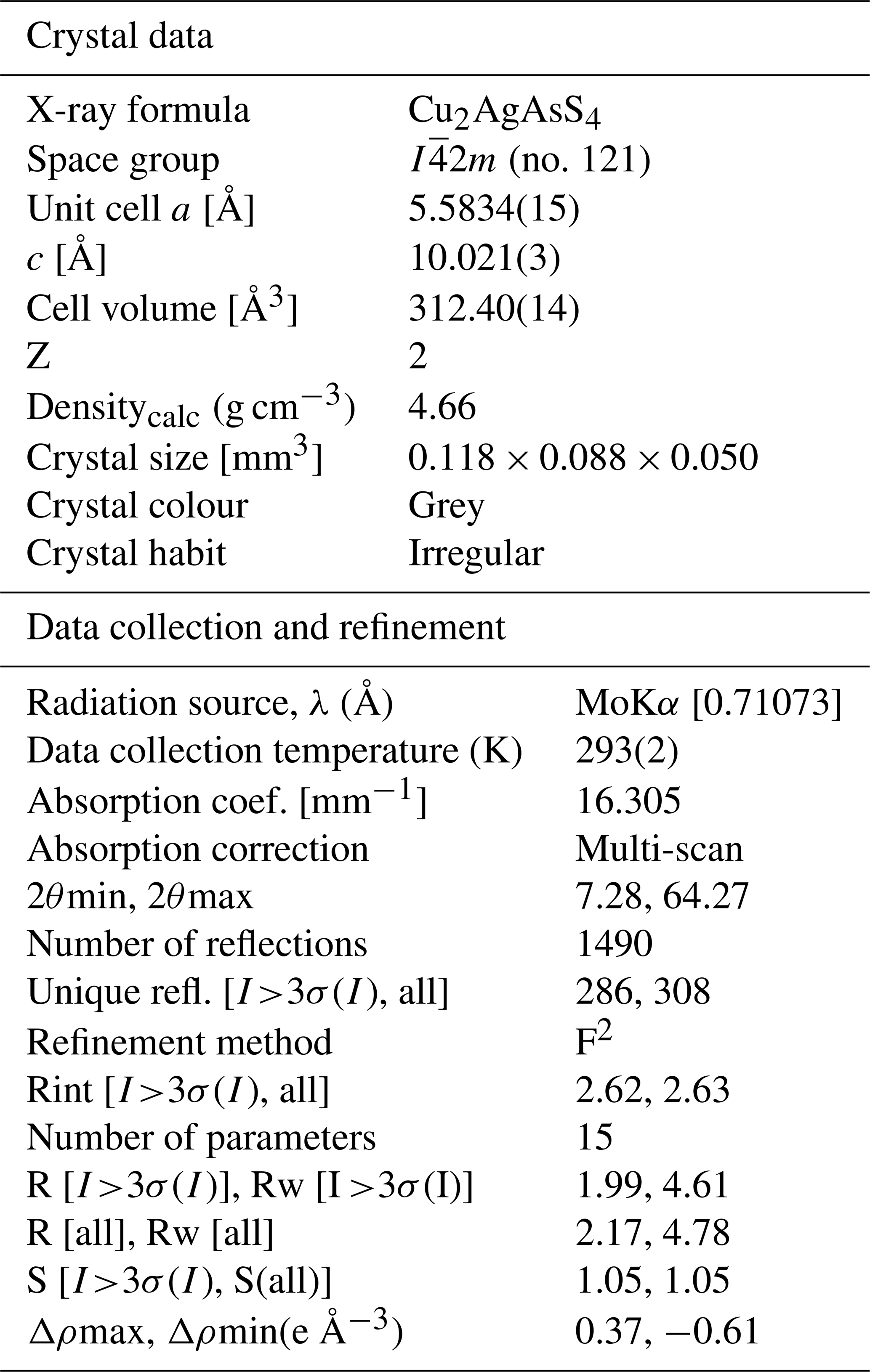
A crystal fragment of keutschite, exhibiting an irregular shape with dimensions of 0.118 × 0.088 × 0.050 mm, was selected from the rock sample and examined using an Oxford Diffraction Xcalibur E diffractometer using graphite monochromatised Mo Kα radiation (λ=0.7173 Å) at ambient temperature. The peak search and the run list optimisation, the data processing to create the list of integrated peak intensities, the unit cell determination and refinement, the creation of reciprocal lattice reconstructions, the multi-scan absorption correction, and the frame scaling were all performed using the CrysAlis Pro v.171.35.15 software, which was supplied by the manufacturer. The structure was solved by the charge flipping algorithm (Oszlanyi and Suto, 2004; Palatinus, 2004; Oszlanyi and Suto, 2005) using the program SUPERFLIP (Palatinus and Chapuis, 2007) and was refined on F2 using the program JANA2006 (Petříček et al., 2006). The crystal data and summary of parameters describing data collection and refinement for keutschite are given in Table 3, and full details are given in the CIF file deposited in the Supplement (Files S1 and S2).
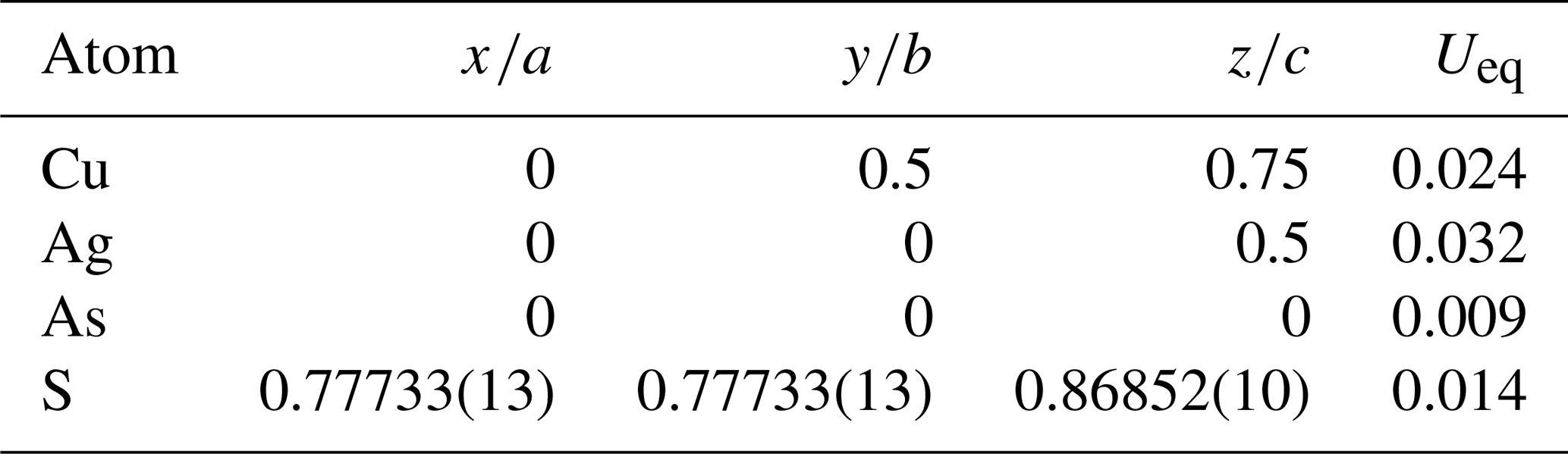
The visualisation of the Fourier electron densities conducted using the VESTA program (Momma and Izumi, 2011). As illustrated in Table 4, the structure of keutschite contains one Cu site, one Ag site, one As site, and one S site.
Table 4Final atom coordinates and Ueq values (Å2).
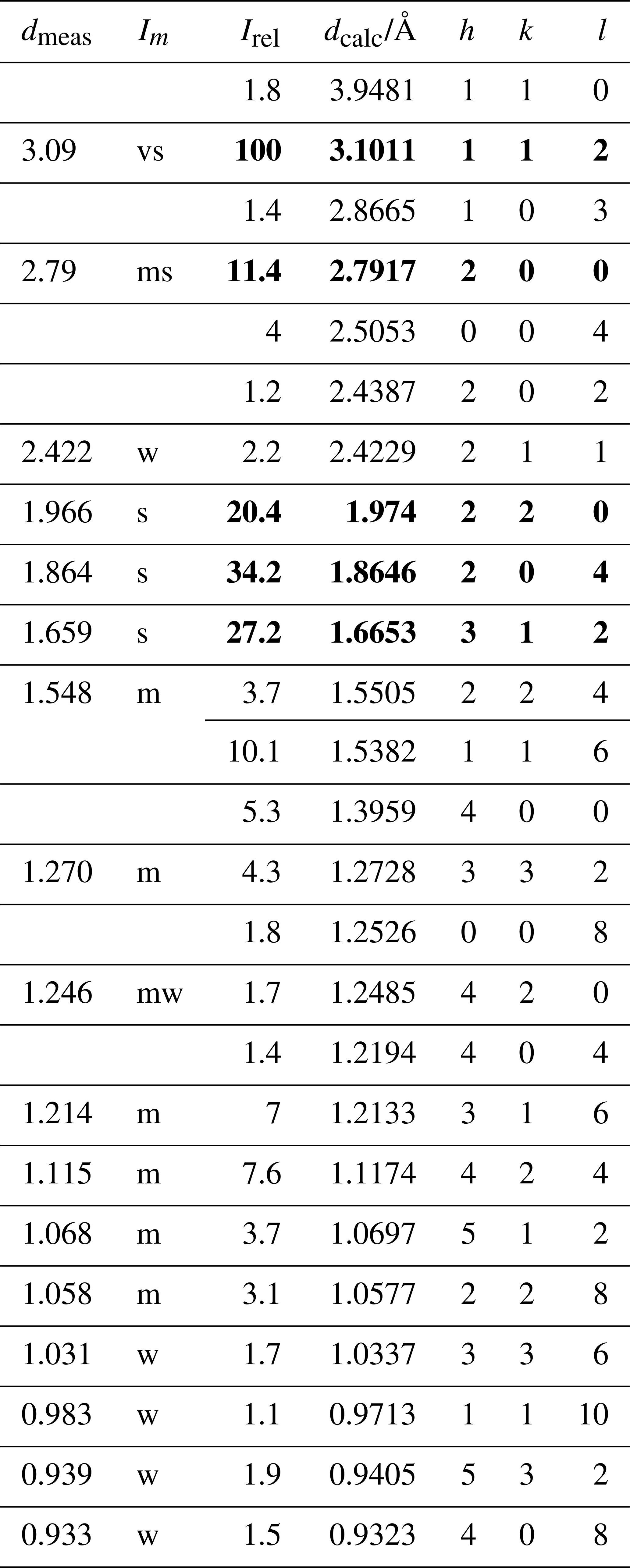
X-ray powder diffraction data were measured using a RIGAKU Rapid II Powder Diffractometer with monochromatised Mo Kα radiation (λ=0.71073 Å) at ambient temperature. The measurement of diffraction intensities was conducted on a 2D image plate detector, with an exposure time of 15 min. The diffraction data were integrated for the 2θ range from 3 to 45° using the 2DP programme supplied by the manufacturer. Intensity and dhkl were calculated using the software Jade9 (v9.5.0, 2012) based on the structural model; only calculated reflections with Icalc >1 are reported (if not observed). Observed intensities were visually estimated. Note that vs denotes very strong, s denotes strong, ms denotes medium–strong, m denotes medium, mw denotes medium–weak, and w denotes weak. The data can be found in Table 5.
Table 5Measured and calculated X-ray powder diffraction data, with bold indicating the five most intense lines.
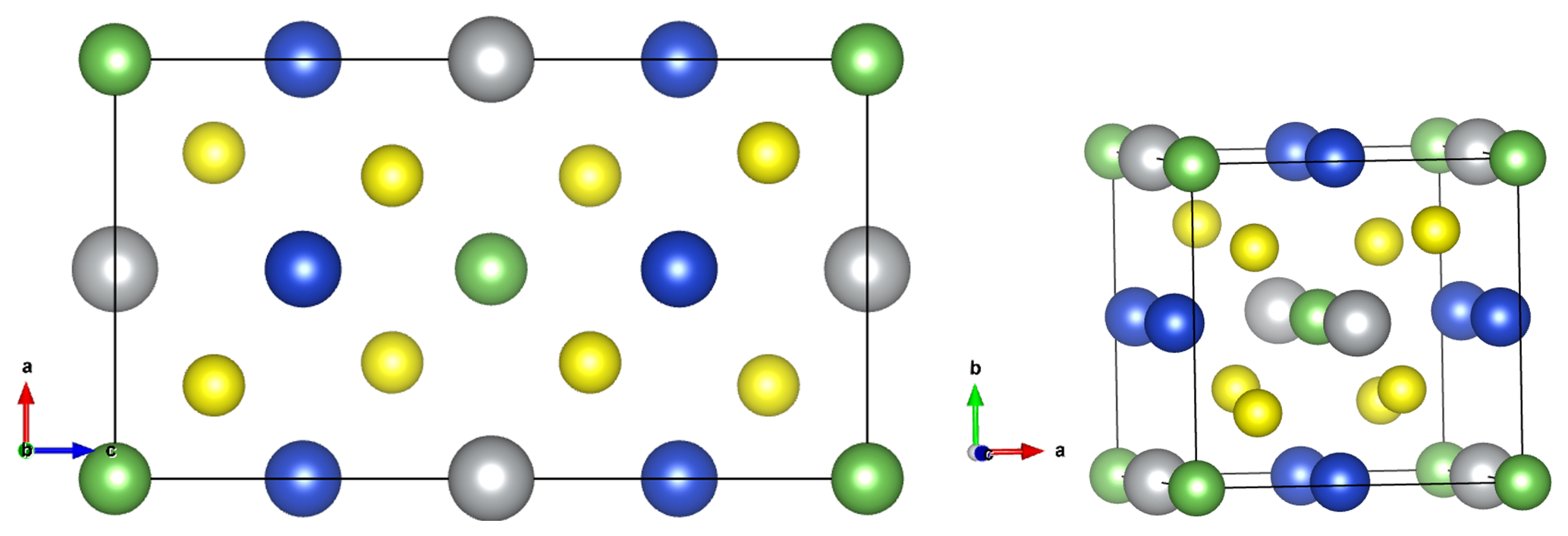
The crystal structure of keutschite (Fig. 3) is a derivative of the cubic sphalerite, from which it can be derived by ordered substitution of Zn. Furthermore, it is closely related to the stannite structure, from which it can be derived via complete substitution of iron with silver and tin with arsenic. In the stannite (001) layers of Zn, atoms are substituted by alternating layers of Cu atoms and layers in which Zn atoms are substituted by ordered (Fe + Sn) atoms. Analogously to stannite, keutschite features alternating layers of Zn atoms that are substituted by layers of Cu atoms and layers in which Zn atoms are substituted by ordered (Ag + As) atoms. These substitutions proceed on alternating (001) cation levels. The substitution process results in the formation of a tetragonal unit cell and an increase in unit cell dimensions compared to the corresponding dimensions in sphalerite. The corresponding dimensions in sphalerite are a, b=5.41 Å and c=10.82 Å, whereas those in keutschite are a, b=5.5834 and c=10.021 Å. Compared to stannite, the larger size of the silver cation in the ordered Ag–As layer results in an increase in a and b in keutschite. The trend in (a+b)>c increases from famatinite to keutschite, (famatinite: and c=10.75 (Garin and Parthé, 1972); luzonite: and c=10.57 (Marumo and Nowaki, 1967); stannite: and c=10.73 (Bonazzi et al., 2003); keutschite, and c=10.02). In general, keutschite demonstrates a greater deviation from the ideal formula of compared to the other minerals under consideration. As is the case in stannite, in keutschite, the metal cations are tetrahedrally surrounded by sulfur.
Figure 3The crystal structure of keutschite: downward, as seen on b, and slightly oblique, as seen on c. Grey shows Ag sites, blue shows Cu sites, green shows As sites, and yellow shows S sites.
The mineral is added to the list of Ag-bearing minerals described from the Uchucchacua deposit. Furthermore, the study of the alabandite zone revealed the presence of additional minerals that are either chemically or structurally related to keutschite, including agmantinite, pirquitasite, stannite, and kësterite. The Uchucchacua deposit is unusual for the occurrence of rare Ag-bearing minerals that were either first discovered or have only been identified there, namely keutschite, uchucchacuaite, manganoquadratite, menchettiite, spryite, oyonite, and agmantinite, as well as other Ag minerals discovered elsewhere but that are only known from a few locations, such as argyrodite, canfieldite, ferdowsiite, pirquitasite, smithite, and trechmannite. Keutschite has since been described at two different locations: the Clara mine in Germany (Kolitsch et al., 2019) and the Săcărâmb ore deposit in Romania (Dincă et al., 2025). A mineral with a similar composition to that of keutschite was described by Shimizu et al. (1999) as an Ag-bearing luzonite from the Toya-Takarada mine in Japan without further description.
Data availability
Crystallographic data for keutschite are available in the Supplement in Files S1 and S2.
DT performed the EMPA. RTF performed the single crystal X-ray diffraction (SCXRD) experiment and described the structure. CS worked on the optical properties. All of the authors interpreted the obtained data. The paper was written by DT and RTF, with contributions by GD.
Competing interests
The contact author has declared that none of the authors has any competing interests.
Disclaimer
Publisher's note: Copernicus Publications remains neutral with regard to jurisdictional claims made in the text, published maps, institutional affiliations, or any other geographical representation in this paper. The authors bear the ultimate responsibility for providing appropriate place names. Views expressed in the text are those of the authors and do not necessarily reflect the views of the publisher.
Special issue statement
This article is part of the special issue “New minerals: EJM support”. It is not associated with a conference.
Acknowledgements
The authors express their gratitude to Goran Batic for the help with the sample preparation; to Daniel Fredrickson, Madison, for the helpful discussions; to Christian Rewitzer, Furth im Wald, for the photograph of keutschite; to Jiří Sejkora and Richard Pažout for the constructive comments; and to Cristian Biagioni, the editor handling the paper.
Review statement
This paper was edited by Cristian Biagioni and reviewed by Richard Pažout and Jiří Sejkora.
References
Anthony, J. W., Bideaux, R. A., Bladh, K. W., and Nichols, M. C.: Handbook of Mineralogy (Volume I – Elements, Sulfides, Sulfosalts): Mineral Data Publishing, Tucson, Arizona, 1990.
Bindi, L., Keutsch F. N., and Bonazzi, P.: Menchettiite, AgPb2.40Mn1.60Sb3As2S12, a new sulfosalt belonging to the lillianite series from the Uchucchacua polymetallic deposit, Lima Department, Peru, Am. Mineral., 97, 440–446, https://doi.org/10.2138/am.2012.3944, 2012.
Bindi, L., Keutsch F. N., Morana, M., and Zaccarini, F.: Spryite, Ag8(AsAs)S6: structure determination and inferred absence of superionic conduction of the first As3+–bearing argyrodite, Phys. Chem. Minerals, 44, 75–82, https://doi.org/10.1007/s00269-016-0838-1, 2017.
Bindi, L., Biagioni, C., and Keutsch F. N.: Oyonite, Ag3Mn2Pb4Sb7As4S24, a New Member of the Lillianite Homologous Series from the Uchucchacua Base-Metal Deposit, Oyon District, Peru, Minerals, 8, 192, https://doi.org/10.3390/min8050192, 2018.
Bonazzi, P., Bindi, L., Bernardini, G. P., and Menchetti, S.: A model for the mechanism of incorporation of Cu, Fe, and Zn in the stannite – kësterite series, Cu2FeSnS4 – Cu2ZnSnS4, Can. Mineral., 41, 639–647, https://doi.org/10.2113/gscanmin.41.3.639, 2003.
Bonazzi, P., Keutsch, F. N., and Bindi, L.: Manganoquadratite, AgMnAsS3, a new manganese-bearing sulfosalt from the Uchucchacua polymetallic deposit, Lima Department, Peru: description and crystal structure, Am. Mineral., 97, 1199–1205, https://doi.org/10.2138/am.2012.4004, 2012.
Dincă, G., Popescu, G. C., and Topa, D.: Decoding the mineralogy and geochemistry of sulfosalts in the Săcărâmb Au-Ag-Te ore deposit (Romania): Unveiling a fresh insight into the evolution of a complex hydrothermal system, Ore Geology Reviews, 178, 106424, https://doi.org/10.1016/j.oregeorev.2024.106424, 2025.
Garin, J. and Parthé, E.: The crystal structure of Cu3PSe4 and other ternary normal tetrahedral structure compounds with composition 13564, Acta Crystallographica, B28, 3672–3674, 1972.
Keutsch, F. N., Topa, D., Takagi Fredrickson, R., Makovicky, E., and Paar, W. H.: Agmantinite, Ag2MnSnS4, a new mineral with a wurtzite derivative structure from the Uchucchacua polymetallic deposit, Lima Department, Peru, Mineralogical Magazine, 83, 233–238, https://doi.org/10.1180/mgm.2018.139, 2019.
Keutsch, F. N., Zheng, S.-L., Topa, D., and Stanley, C.: Ramosite, IMA 2019-099, in: CNMNC Newsletter 53, Eur. J. Mineral., 32, https://doi.org/10.5194/ejm-32-209-2020, 2020.
Kolitsch, U., Bayerl, R., and Topa, D.: Neufunde aus der Grube Clara im mittleren Schwarzwald (V), Mineralien Welt, 30, 12–27, 2019.
Marumo, F. and Nowaki, W.: A refinement of the crystal structure of luzonite, Cu3AsS4, Zeitschrift für Kristallographie, 124, 1–8, 1967
Moëlo, Y., Oudin, E., Picot, P., and Caye, R.: L'uchucchacuaite, AgMnPb3Sb5S12, une nouvelle espece minerale de la serie de l'andorite, Bullettin de Minéralogie, 107, 597–604, 1984
Momma, K. and Izumi, F.: VESTA 3 for three-dimensional visualization of crystal, volumetric and morphology data, Journal of Applied Crystallography, 44, 1272–1276, https://doi.org/10.1107/S0021889811038970, 2011.
Oszlanyi, G. and Suto, A.: Ab initio structure solution by charge flipping. II. Use of weak reflections, Acta Crystallographica, A61, 147–152, https://doi.org/10.1107/S0108767304027746, 2005.
Oudin, E., Picot, P., Pillard, F., Moëlo, Y., Burke, E., and Zakrzewski, A.: La benavidesite, Pb4(Mn,Fe)Sb6S14, un nouveau mineral de la serie de la jamesonite. Bullettin de Minéralogie, 105, 166–169, 1982.
Palatinus, L.: Ab initio determination of incommensurately modulated structures by charge flipping in superspace, Acta Crystallographica, A60, 604–610, https://doi.org/10.1107/S0108767304022433, 2004.
Palatinus, L. and Chapuis, G.: SUPERFLIP – a computer program for the solution of crystal structures by charge flipping in arbitrary dimensions, Journal of Applied Crystallography, 40, 786–790, https://doi.org/10.1107/S0021889807029238, 2007.
Petříček, V., Dušek, M., and Palatinus, L.: Jana2006: The Crystallographic Computing System, Institute of Physics, Praha, Czech Republic [software], https://doi.org/10.1515/zkri-2014-1737, 2006.
Shimizu, M., Matsuyama, F., and Shimizu, M.: Hutchinsonite, TlPb(As,Sb)5S9, chabourneite, Tl2Pb(Sb,As)10S17, and unnamed (Tl,Ag)2Pb6(As, Sb)16S31 from the Toya-Takarada mine, Hokkaido, Japan – Tl mineralisation in the Kuroko deposits, Resource Geology Special Issue, 20, 31–37, 1999.
Stanley, C. J., Criddle, A. J., Foerster, H.-J., and Roberts, A. C.: Tischendorfite, Pd8Hg3Se9, a new mineral from Tilkerode, Harz Mountains, Germany, Can. Mineral., 40, 739–745, https://doi.org/10.2113/gscanmin.40.2.739, 2002.
Keutschite, Cu2AgAsS4, is a new mineral from the Uchucchacua polymetallic deposit, Oyon District, Catajambo, Lima Department, Peru. The ideal formula, derived from the crystal structure, is Cu2AgAsS4. The name honours Frank Keutsch (Harvard University), a German chemist who first drew attention to the mineral during his study of the minerals of the alabandite zone of the Uchucchacua deposit.
Keutschite, Cu2AgAsS4, is a new mineral from the Uchucchacua polymetallic deposit, Oyon...